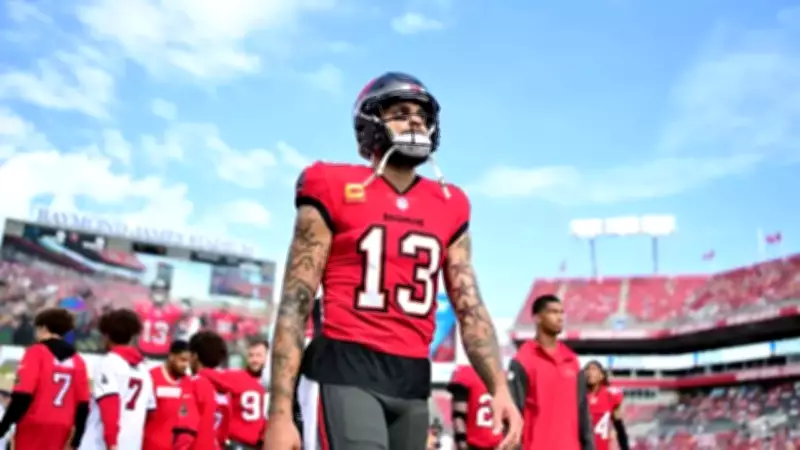
Tampa Bay Buccaneers Face Critical Draft Decisions After Mike Evans Departure
The Tampa Bay Buccaneers have officially closed one of the most significant chapters in franchise history with the departure of star wide receiver Mike Evans after twelve remarkable seasons. The organization confirmed his exit in free agency, with multiple reports indicating he has agreed to join the San Francisco 49ers. This move creates an obvious void in the Buccaneers' offensive lineup, but according to a detailed post-free agency mock draft analysis, the team's most pressing concerns lie elsewhere.
Mock Draft Analysis Reveals Defensive Priorities
In a comprehensive mock draft scenario presented by J.T. Olson of Bucs Report, the Buccaneers' primary focus shifts dramatically from replacing Evans to overhauling Todd Bowles' defensive unit. The mock proposes a strategic trade where Tampa Bay moves down from the No. 15 overall pick to No. 23 in a deal with the Philadelphia Eagles, acquiring additional selections including Picks 68 and 122 in the process.
The defensive rebuild begins immediately with this approach. At pick No. 23, the Buccaneers select Texas A&M edge rusher Cashius Howell, followed by Georgia defensive lineman Christen Miller at No. 46 and Texas A&M linebacker Taurean York at No. 68. Later rounds continue the defensive emphasis with California cornerback Hezekiah Masses, Arizona State linebacker Keyshaun Elliott, and Maryland safety Jalen Huskey.

Why Defense Takes Precedence Over Wide Receiver Needs
The fundamental message of this mock draft is strikingly clear: while replacing Mike Evans matters significantly, Todd Bowles' defensive squad requires more immediate attention, additional personnel, enhanced speed, and concrete solutions. The analysis suggests Tampa Bay emerged from free agency not with one clean problem to solve, but with several interconnected challenges.
A to Z Sports has similarly identified edge rusher as the Buccaneers' most obvious first-round target following the initial wave of free agency, aligning perfectly with Olson's strategic thinking. This mock draft essentially treats the defensive shortcomings as the larger, more urgent fire that needs extinguishing before addressing offensive skill positions.
Delayed Replacement Strategy for Mike Evans
The most intriguing aspect of this mock draft is the deliberate patience shown in addressing the wide receiver position. Rather than forcing a selection at No. 15 or No. 23, Olson waits until the third round at pick No. 77 to select Georgia State wide receiver Ted Hurst. At 6-foot-4 and 206 pounds, Hurst is pitched as the physical size replacement for Evans, though this represents a calculated gamble.
This approach acknowledges that pretending Evans' monumental production can be seamlessly replaced by a single draft move would be overly simplistic and potentially lazy roster management. The Buccaneers officially lost their franchise receiver this month, creating a substantial offensive gap that requires thoughtful, multi-faceted solutions rather than a quick fix.
Broader Roster Philosophy Revealed
What this mock draft fundamentally communicates is that Tampa Bay's front office likely doesn't believe one receiver alone can fix their overall roster challenges. It suggests the Buccaneers can temporarily patch the pass-catching deficiency later in the draft or through other means, but they can no longer afford to ignore a defense that appears dangerously thin across multiple positions.
This may not represent the flashiest or most emotionally satisfying answer following Mike Evans' emotional departure from the franchise. However, it probably reflects the honest, pragmatic assessment required for sustainable team building. The Buccaneers face a critical offseason where balancing immediate needs with long-term roster construction will determine their competitive trajectory in the coming seasons.