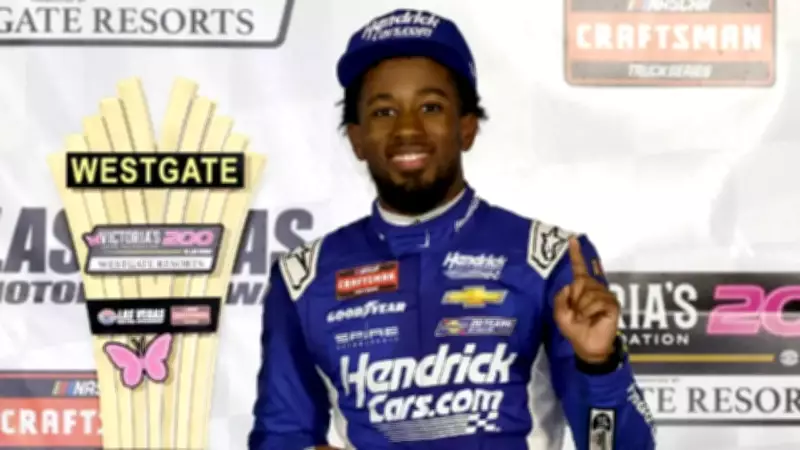
Rajah Caruth Voices Opposition to NASCAR's Confrontational Culture Following Las Vegas Incident
In the aftermath of the dramatic post-race confrontation between Daniel Suarez and Ross Chastain at Las Vegas Motor Speedway, young driver Rajah Caruth has publicly rejected the culture of heated altercations that often follows NASCAR events. The incident, which saw Suarez confront Chastain over an on-track move, escalated into a physical pushing match before officials intervened, capturing widespread attention across the racing community.
The Las Vegas Confrontation That Sparked Debate
The altercation occurred immediately following the race at Las Vegas Motor Speedway, where Daniel Suarez, visibly upset with Ross Chastain's aggressive driving maneuver, approached his former teammate for a confrontation. What began as verbal exchange quickly turned physical, with both drivers engaging in pushing and shoving before NASCAR officials separated them. The incident carried additional emotional weight given that Suarez and Chastain were previously teammates at Trackhouse Racing before Suarez's move to Spire Motorsports in 2026.
Caruth Advocates for Calm and Professionalism
Speaking on the Rubbin' is Racing podcast, Rajah Caruth explained his opposition to such confrontational behavior in detail. "You have to take a deep breath after the race because it's so easy," Caruth emphasized. "You cross the checkered flag and you're immediately thinking, 'That guy just pulled up in front of me or drove into my door.' It takes real discipline to step back and recognize that reacting in anger damages not only your car but their car, likely results in fines, and simply isn't worth the consequences."

Caruth further elaborated on his personal philosophy, drawing from his own experiences with post-race tensions. "From my experience, because I've been in similar situations before—either confronting someone after a race or being confronted—I know all the emotions are running high," he shared. "The question becomes: Is this going to be a productive conversation? Almost always, the answer is no. Will it make for good television? Absolutely yes. So it ultimately comes down to who you are as a person and whether you feel it's worth it in the moment. Personally, I choose to take the high road."
NASCAR Leadership's Divergent Perspective
While Caruth advocates for restraint, NASCAR leadership maintains a different viewpoint on driver emotions. Brad Moran, the NASCAR Cup Series managing director, expressed on SiriusXM NASCAR Radio that the organization values authentic emotional expression. "Every situation is unique, but we recognize that raw emotion is part of competitive racing," Moran stated. "We don't want to suppress that entirely. Drivers have the right to share their thoughts and feelings, and honestly, when fans get to witness some of that genuine passion, it's not necessarily the worst outcome."
Notably, NASCAR chose not to fine either Suarez or Chastain for the Las Vegas incident, though historical precedent shows penalties for similar altercations. In 2024, Ricky Stenhouse Jr. received a $75,000 fine following a fight with Kyle Busch, while Marcos Ambrose was fined $25,000 in 2014 for a garage area confrontation.
The Ongoing Cultural Debate in NASCAR
The Las Vegas incident has reignited the perennial debate within NASCAR circles about the appropriate boundaries for driver expression and sportsmanship. Supporters of emotional displays argue that such moments:
- Add excitement and drama for fans
- Demonstrate genuine passion for competition
- Create memorable storylines that enhance the sport's appeal
Conversely, advocates for restraint, including Caruth, emphasize:

- The importance of maintaining professional respect between competitors
- The potential safety risks of uncontrolled confrontations
- The negative example set for younger drivers and fans
- The financial and competitive consequences of fines and penalties
As the discussion continues, the Las Vegas confrontation between former teammates has highlighted the delicate balance NASCAR must maintain between allowing authentic emotional expression and promoting sportsmanlike conduct. With drivers like Rajah Caruth advocating for a more measured approach, the sport faces ongoing questions about how best to handle the intense emotions that naturally accompany high-stakes competition.