Eileen Gu's Olympic Dominance Reignites Language and Identity Questions
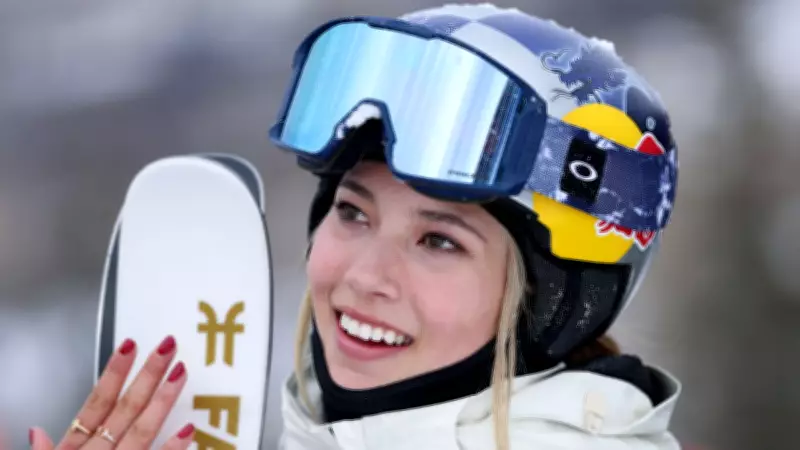
When freestyle skiing sensation Eileen Gu took to the slopes at the 2026 Winter Olympics in Milan, she delivered far more than just athletic excellence. The 22-year-old phenom captured global attention by securing an impressive three medals: gold in the halfpipe event, along with silver medals in both slopestyle and big air competitions.
From Beijing to Milan: Building an Olympic Legacy
With this remarkable achievement, Gu's total Olympic medal count now stands at six prestigious awards, combining her three medals from Milan with the three she previously earned at the 2022 Beijing Winter Games. This consistent performance across multiple Olympic cycles has solidified her status as one of freestyle skiing's most dominant contemporary athletes.
However, as the medals were being awarded, an old controversy resurfaced across social media platforms. The question that captured public attention once again was whether Eileen Gu can actually speak Chinese fluently, despite representing China in international competition.

The Social Media Debate Over Language Proficiency
The controversy gained momentum when a viral post on X claimed that Gu lacked Chinese language skills and had never actually lived in China. This assertion quickly sparked widespread discussion and debate among sports fans and cultural commentators alike.
Soon after the initial claim circulated, a counter-narrative emerged with another post stating clearly: "Fact: Eileen speaks Chinese natively. She's been going back and forth between China and the US since childhood." This response highlighted the polarized nature of the discussion surrounding Gu's cultural identity and linguistic abilities.
Examining Eileen Gu's Bilingual Background
Eileen Gu was born in San Francisco to a Chinese mother originally from Beijing and an American father. Her upbringing featured daily exposure to Mandarin Chinese within her household environment. In numerous interviews throughout her career, Gu has openly discussed how her mother insisted on rigorous Chinese language education during her formative years.
"She would always make me do my homework and practice writing characters," Gu revealed in one interview. "At first, I didn't really like it, but I'm so glad she did it now." This early language training has proven invaluable throughout her athletic career and public life.
Substantial video evidence exists demonstrating Gu's Mandarin proficiency. During an interview with CCTV+, she conversed fluently in Mandarin while discussing her Olympic aspirations and competitive goals. Observant viewers have even noted that she speaks with a distinctive Beijing accent, which directly corresponds to her mother's hometown and linguistic background.
Cultural Identity and Olympic Representation
Gu's connection to China extends well beyond mere language capability. As she explained to ESPN in a 2021 interview: "Since I was little, I've always said when I'm in the US, I'm American, but when I'm in China, I'm Chinese." This statement reflects her nuanced understanding of bicultural identity and her comfort moving between different national contexts.
The athlete has shared that she spent approximately thirty percent of her childhood years in Beijing, traveling there regularly during summer breaks and living in China for extended periods throughout her development. During these stays, she consistently used Mandarin in everyday interactions with family members and friends, further strengthening her language skills and cultural familiarity.
The Decision to Compete for China
In 2019, at just fifteen years old, Gu made the significant announcement that she would represent China rather than the United States in international competition. She explained this choice by stating: "The opportunity to help inspire millions of young people where my mom was born, during the 2022 Beijing Olympic Winter Games, is a once in a lifetime opportunity."

Despite this competitive allegiance to China, Gu's life has remained closely connected to the United States. She continues to train primarily in American facilities, pursued her education within the U.S. system, and eventually enrolled at Stanford University. When not actively competing, she maintains her residence in the United States, balancing her dual cultural affiliations.
Resolving the Language Question
The evidence clearly demonstrates that Eileen Gu does indeed speak Chinese with native-level proficiency. She acquired the language naturally during childhood, regularly employs it in media interviews and public appearances, and has lived substantial portions of her life in Beijing. Her linguistic abilities are well-documented and verifiable through multiple sources.
Ultimately, Gu's story transcends simplistic narratives about choosing between national identities. Instead, it represents the experience of growing up within two distinct cultural frameworks and developing genuine comfort and belonging in both environments. Her athletic success has become intertwined with broader conversations about globalization, cultural hybridity, and how public figures navigate complex identities in an increasingly interconnected world.