German Paralympians Stage Silent Protest Against Russia's Return at Winter Games
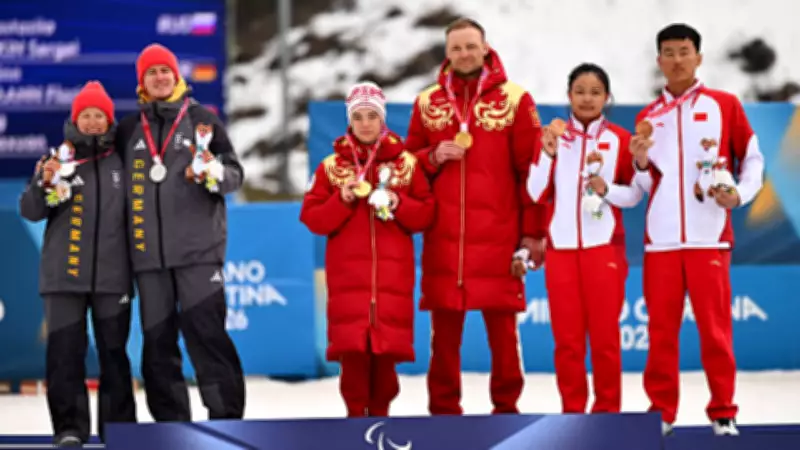
A medal ceremony at the Winter Paralympics transformed into a powerful political statement when German cross-country skiers demonstrated against Russia's participation in the international sporting event. During the podium ceremony for the women's sprint classic vision impaired competition, the German silver medalists deliberately turned their backs while the Russian national anthem played, refusing to face the gold-winning Russian athletes.
Political Tensions Overshadow Athletic Achievement
The incident occurred following Russia's return to compete under its national flag for the first time since 2014. The International Paralympic Committee had originally suspended Russia due to a state-sponsored doping scandal, with additional restrictions implemented after the country's invasion of Ukraine in 2022. The suspension was lifted in September, permitting Russian athletes to compete once again, though their return has generated mixed reactions throughout the Paralympic community.
Russian skier Anastasiia Bagiian and her guide Sergei Siniakin secured the gold medal in the women's sprint classic event for visually impaired athletes, marking Russia's second gold medal at the Winter Paralympics. As the medal ceremony commenced and the Russian anthem began playing, Germany's Linn Kazmaier and her guide Florian Baumann, who finished second, quietly turned away from the flag in a subtle yet unmistakable protest.

A Deliberate Gesture of Disapproval
The German athletes maintained their hats throughout the ceremony and steadfastly refused to face the Russian flag during the national anthem. While the protest was neither loud nor dramatic, it conveyed a clear message of disagreement with Russia's participation in the Games. Many observers interpreted the act as symbolic opposition to the political circumstances surrounding Russia's return to international competition.
Following the ceremony, Kazmaier described the experience as strange and uncomfortable, noting how politics had unexpectedly become a significant element of what should have been a celebratory athletic moment. She clarified that her protest was not directed at the individual Russian athletes, whom she acknowledged might simply be dedicated competitors passionate about their sport.
Navigating Complex Political Realities
Kazmaier explained that under different circumstances, the Russian athletes might even be friendly individuals and potential friends. However, the current political situation surrounding Russia made the ceremony difficult to accept. The decision to turn away from the flag, she emphasized, was intended to demonstrate that she and Baumann do not support what the Russian flag represents in today's geopolitical climate.
Their silent protest was carefully calculated to express their position without disrupting the ceremony itself. By keeping their hats on and turning their backs, the German athletes found a way to make their political statement while maintaining respect for the formal proceedings. This incident highlights how international sporting events increasingly intersect with global politics, creating complex situations for athletes who must navigate both athletic competition and political expression.
The Winter Paralympics continue with this protest serving as a reminder that sports cannot always remain separate from the political realities of our world. As more competitions unfold, athletes and officials alike will be watching to see how these tensions manifest throughout the remainder of the Games.