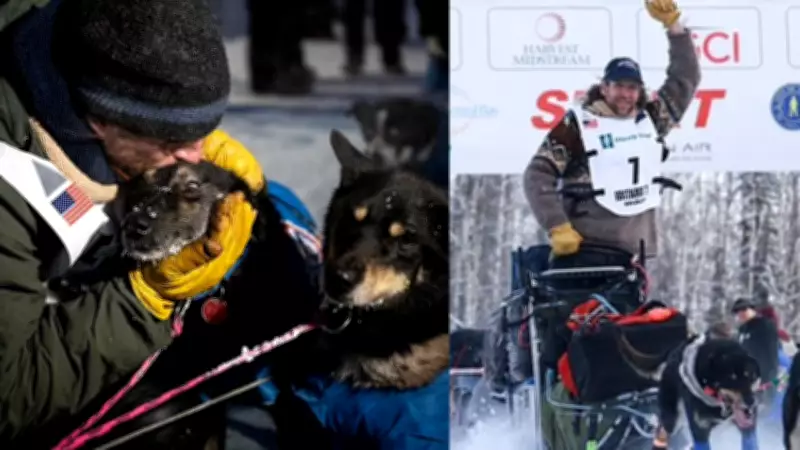
Jessie Holmes Claims Victory in Grueling Iditarod Trail Sled Dog Race
Former Life Below Zero star Jessie Holmes has reclaimed the top spot in one of the world's most demanding athletic competitions. On Tuesday night, Holmes crossed the finish line in Nome, Alaska, securing his win in the legendary 1,000-mile Iditarod Trail Sled Dog Race. This triumph marks another significant achievement in his mushing career, but the celebration is tempered by ongoing controversies surrounding the event's impact on animal welfare.
The Challenging Journey Across Alaska's Frozen Wilderness
The Iditarod is renowned as one of the planet's toughest races, traversing Alaska's vast frozen landscapes, treacherous mountain ranges, and unstable sea ice. This year's race commenced with a ceremonial start in Anchorage on March 8, followed by the competitive launch from Willow. Mushers and their dog teams navigated through two formidable mountain ranges, followed the icy path of the Yukon River, and battled across the rough, frozen terrain of the Bering Sea before reaching the final destination in Nome.
Holmes attributed his success largely to his exceptional lead dogs, Polar and Zeus. "Zeus led every single run except one. I just wanted to let someone else have some fun. And Polar deserves it more than anybody. He leads by example," Holmes stated after completing the race. His victory earned him approximately $80,000 in prize money, bolstered by new financial support from Norwegian businessman Kjell Rokke, who also contributed additional funds for Alaska Native communities along the race route.

Animal Rights Concerns Intensify Following Dog Death
While Holmes celebrated his hard-fought win, animal rights organizations swiftly voiced strong objections to the race's continuation. The death of a 4-year-old dog named Charly during this year's event has reignited longstanding debates about the safety and ethics of the Iditarod. People for the Ethical Treatment of Animals (PETA) has been particularly vocal, noting that over 150 dogs have died in the race throughout its history.
Melanie Johnson from PETA emphasized in a 2024 statement, "These are not super dogs; they're not indestructible pieces of sporting equipment. But the Iditarod continues to push them beyond their capabilities, and as a result, dogs continue to suffer and die." The organization has repeatedly called for the event to be discontinued, arguing that the extreme conditions pose unacceptable risks to the animals.
Controversial Moose Incident Adds to Race Scrutiny
Further controversy emerged during the race when veteran musher Dallas Seavey was forced to shoot a moose that became entangled with his dog team. One dog sustained injuries and was subsequently withdrawn from the race for medical treatment. Seavey described the chaotic scene, stating, "It fell on my sled; it was sprawled on the trail. I gutted it the best I could, but it was ugly."
Race officials imposed a two-hour penalty on Seavey for failing to properly gut the animal as required by competition rules. This incident has added fuel to the ongoing discussion about the race's dangers and ethical considerations.
Declining Participation Reflects Growing Challenges
The Iditarod is facing significant challenges beyond animal welfare concerns. This year's race saw only 34 mushers at the starting line, highlighting a trend of declining participation. Soaring costs and increasing public scrutiny are deterring many potential competitors, raising questions about the event's future viability.
Despite these pressures, supporters maintain that the Iditarod is an integral part of Alaska's cultural heritage and history. The race represents a tradition of endurance and survival that has defined the region for generations. Holmes himself embodies this spirit, having used earnings from his television career to establish a remote lifestyle near Denali National Park, far from conventional comforts.

As Jessie Holmes lifts his championship prize, the Iditarod finds itself at a crossroads. The race continues to celebrate human and canine athleticism while grappling with mounting ethical questions and practical obstacles. The debate between preserving tradition and adapting to modern values grows louder with each passing year, ensuring that the Iditarod remains as controversial as it is celebrated.