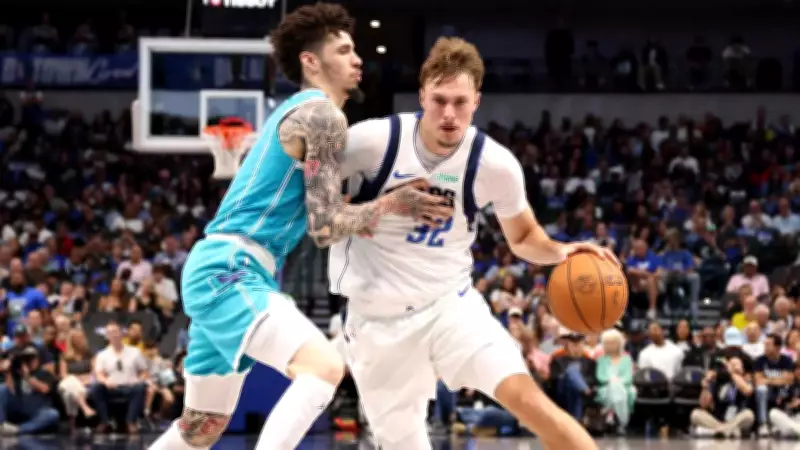
The Charlotte Hornets travel to face the Dallas Mavericks in a crucial NBA encounter that could significantly impact the tight playoff race in both conferences. With postseason aspirations on the line, both franchises are determined to maintain their momentum despite facing substantial injury challenges that threaten to reshape their game strategies.
Injury Report Casts Shadow Over Key Matchup
Both teams enter this contest with depleted rosters that could dramatically influence the outcome. The Charlotte Hornets are navigating significant absences in their frontcourt, while the Dallas Mavericks face even more severe personnel shortages across multiple positions.
Charlotte Hornets Injury Situation
The Hornets will be without center Mason Plumlee, who continues to recover from a groin injury with no definitive return timeline. His absence creates substantial vulnerabilities in Charlotte's rebounding capabilities and rim protection schemes. Additionally, guard KJ Simpson remains questionable with a hip flexor strain, while center Moussa Cisse battles illness-related concerns. Should both Simpson and Cisse miss the game, Charlotte's rotation depth would be severely compromised.

Dallas Mavericks Injury Crisis
The Mavericks confront a more dire injury scenario, missing several cornerstone players. Star guard Kyrie Irving remains sidelined with a knee injury, while Dante Exum and Dereck Lively II have been ruled out for the remainder of the season. Anthony Davis continues to recover from hand and finger issues, further depleting Dallas's interior presence. The situation worsens with two key wings listed as day-to-day: rookie sensation Cooper Flagg struggles with ankle problems, and veteran sharpshooter Klay Thompson manages knee discomfort. These potential absences could cripple Dallas's perimeter shooting and defensive versatility.
Statistical Analysis and Recent Form
Recent encounters between these franchises have typically produced closely contested battles, with Charlotte relying on their quick guard play and accelerated tempo to counter opponents' size advantages. Over their last ten games, both teams have demonstrated impressive offensive efficiency while showing defensive vulnerabilities that suggest another high-scoring affair.
Offensive Production Comparison
The Hornets have averaged 116.2 points per game while conceding 114.6 points defensively during this stretch. Meanwhile, the Mavericks have posted slightly higher offensive numbers at approximately 117 points per game while allowing 115.2 points to opponents. Both teams have maintained exceptional shooting percentages, with Charlotte converting just above 49 percent from the field and Dallas hovering around 48.5 percent accuracy.
Season Performance Snapshot
Points Per Game: Charlotte ~116.2 | Dallas ~117.0
Opponent Points Per Game: Charlotte ~114.6 | Dallas ~115.2
Field Goal Percentage: Charlotte ~49.4% | Dallas ~48.5%
Rebounds Per Game: Charlotte ~45.0 | Dallas ~44.0
Assists Per Game: Charlotte ~26.0 | Dallas ~25.0
Home/Away Records: Dallas maintains a 14-13 record at American Airlines Center, while Charlotte has posted an 11-15 mark in road contests. Despite their sub-.500 away record, the Hornets have demonstrated consistent scoring ability in hostile environments.
Strategic Approaches and Key Matchup Factors
The injury situations have forced both coaching staffs to develop creative game plans that maximize their available personnel while exploiting opponent weaknesses.
Charlotte's Offensive Opportunities
Without Plumlee's traditional post presence, the Hornets have embraced a faster-paced offensive identity centered around perimeter drives rather than interior post-ups. If Simpson becomes available, his ball-handling stability off the bench would further accelerate Charlotte's tempo and pressure Dallas's depleted guard rotation. The Mavericks' lack of interior size presents clear attacking lanes for Hornets penetrators seeking to collapse the defense and create scoring opportunities.

Dallas's Adaptation Challenges
The Mavericks must compensate for multiple frontcourt absences by deploying smaller lineups that prioritize floor spacing and perimeter shooting. The availability and effectiveness of Flagg and Thompson become critical factors—their ability to stretch defenses and handle challenging defensive assignments could determine Dallas's offensive flow. Without reliable rim protection, the Mavericks must implement cohesive team defense strategies to deter penetration and contest shots near the basket.
Decisive Factors and Game Prediction
Several elements will likely determine the outcome of this pivotal matchup:
- Paint Dominance: Charlotte must consistently attack the interior, testing Dallas's compromised frontcourt defense on every possession.
- Wing Availability: The minutes and effectiveness of Flagg and Thompson will directly impact Dallas's scoring distribution and defensive flexibility.
- Pace Control: Both teams thrive in high-scoring environments, making depth and stamina crucial factors as the game progresses into critical fourth-quarter moments.
While Dallas faces more significant personnel losses, Charlotte's relatively healthier rotation provides strategic advantages. If Flagg and Thompson experience limitations or absences, Charlotte can implement their pace-pushing, rim-attacking game plan with greater confidence. However, should Dallas's wings perform effectively, the Mavericks can maintain competitive balance through perimeter scoring.
This contest promises offensive fireworks with both teams likely exceeding 115 points. The final outcome may hinge on which team better manages their injury-imposed limitations, with the deeper rotation holding a distinct advantage during decisive late-game sequences.