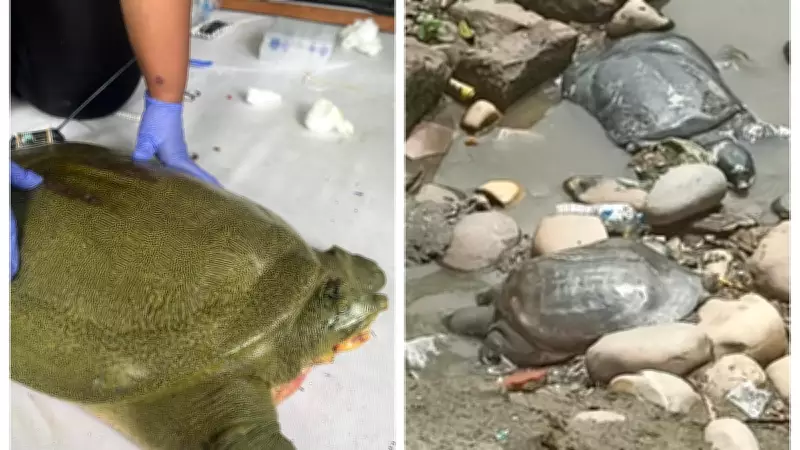
India achieved a significant milestone in wildlife conservation on Endangered Species Day with the release of its first satellite-tagged Ganges softshell turtle (Nilssonia gangetica) in Kaziranga National Park, Assam. This initiative aims to monitor the species' habitats within the Brahmaputra basin, providing crucial data for conservation efforts.
Distinctive Features of the Ganges Softshell Turtle
The Ganges softshell turtle can be differentiated from other riverine turtles by its distinct arrowhead-shaped markings on the top of its head. This species is native to the river systems of South Asia, including the Ganges and Brahmaputra basins.
Conservation Significance
The satellite tagging project marks a first for India and represents a major step forward in understanding the movement patterns and habitat preferences of this endangered species. The data collected will help inform strategies to protect the turtles from threats such as habitat loss, pollution, and poaching.

Assam Chief Minister Himanta Biswa Sarma announced the release on social media, stating, "A proud moment for Assam as we continue to protect every species that calls our forests..." The event underscores the state's commitment to biodiversity conservation.
Future Implications
By tracking the turtle's movements via satellite, researchers hope to identify critical habitats and migration corridors in the Brahmaputra basin. This information is vital for designing effective conservation measures and ensuring the long-term survival of the species.
The initiative also highlights the importance of technological advancements in wildlife monitoring. Satellite tagging allows for real-time tracking over large distances, overcoming limitations of traditional methods. As more such projects are implemented, they could set a precedent for conservation of other endangered aquatic species in India.