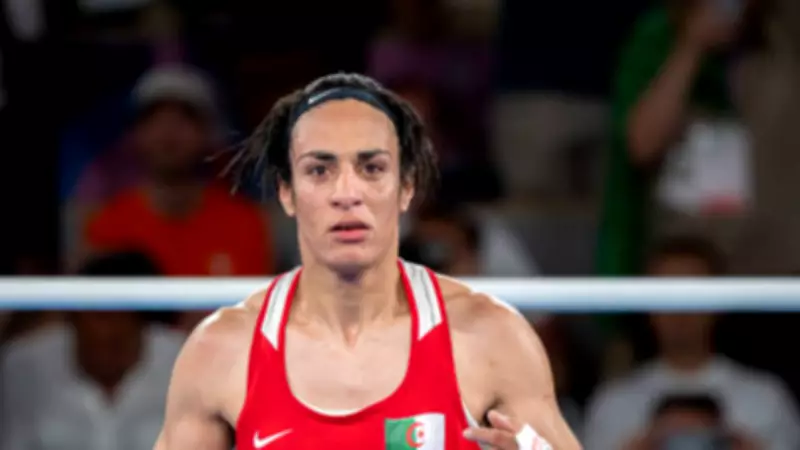
Olympic Boxing Champion Imane Khelif Ready for Sex Test to Compete at 2028 Los Angeles Games
In a significant development in the ongoing gender-eligibility controversy in sports, Olympic boxing champion Imane Khelif has declared her willingness to undergo a sex test to participate in the 2028 Los Angeles Games. This statement comes as a direct response to repeated claims by US President Donald Trump, who has frequently described the Algerian boxer as a "male boxer" and questioned her eligibility in women's competitions.
Background of the Controversy
The 26-year-old athlete won gold at the Paris 2024 Olympics, but her victory was overshadowed by a global controversy regarding gender eligibility. Allegations emerged that Khelif had failed a sex eligibility test in 2023, though these claims have been disputed. The situation escalated in 2025 when World Boxing announced mandatory sex screening for all fighters, specifically mentioning Khelif by name before later issuing an apology for singling her out.
Since the implementation of mandatory testing protocols, Khelif has refrained from competing and has instead taken her case to the Court of Arbitration for Sport (CAS). She is challenging the requirement to undergo testing while seeking to continue her boxing career. A hearing date for her legal challenge has not yet been announced.

Khelif's Stance on Testing and Competition
Despite her ongoing legal battle, Khelif told CNN that she would comply with testing requirements if it meant she could return to Olympic competition. "Of course, I would accept doing anything I'm required to do to participate in competitions," she stated. The boxer emphasized the need for balance in sports policies, saying, "They should protect women, but they need to pay attention that while protecting women, they shouldn't hurt other women."
Khelif maintains that she "will not surrender" in her legal challenge against mandatory testing, but her recent comments indicate a pragmatic approach to ensuring her participation in future events.
Political Dimension and Trump's Involvement
The controversy took a political turn when Donald Trump repeatedly targeted Khelif while promoting his executive order titled "Keeping Men Out of Women's Sports." The US president has referred to her as a "male boxer" who had "transitioned" and "stole the women's gold medal" at the Paris Games. These claims are factually incorrect according to available information.
Khelif was born female but is believed to possess the SRY gene, which is associated with male sex chromosomes. This biological variation falls under differences of sexual development (DSD), a complex area of sports medicine and eligibility criteria.
Trump doubled down on his claims during a speech to Republican lawmakers in January 2025, further intensifying the public debate around Khelif's participation in women's sports.
Khelif's Personal Response and Identity
Speaking to French sports outlet L'Equipe, Khelif addressed Trump's remarks directly, stating that she never sought the political spotlight that followed her Olympic success. "I didn't ask for any of this," she said, adding that the politics surrounding her situation are "beyond" her understanding or control.
"I respect everyone, and I respect Trump because he's the president of the United States," Khelif told L'Equipe. "Trump cannot distort the truth. I'm not trans, I'm a girl. I was raised as a girl, I grew up as a girl, people in my village have always known me as a girl."
Future Implications for Olympic Sports
While a ban on transgender women competitors is widely expected to be implemented for the 2028 Olympics, it remains unclear whether athletes with differences of sexual development (DSD) will face additional barriers following the boxing controversy at Paris 2024. The International Olympic Committee and various sports federations continue to grapple with creating fair and inclusive eligibility criteria that balance competitive integrity with individual rights.

Despite the uncertainty surrounding future regulations, Khelif says her focus remains firmly on competing in Los Angeles. In a remarkable display of sportsmanship and diplomacy, she even joked that she hopes Trump himself will present her medal if she succeeds in 2028.
"I respect him if he respects the truth," she said. "If I could say something to him? Mr. President, I'm a girl, a young Arab Muslim woman, a boxer. And I'm working so you can come and give me a medal on the podium in Los Angeles."
Broader Context and Significance
This case highlights several critical issues in contemporary sports:
- The intersection of sports, politics, and identity in global competitions
- The evolving understanding of biological variations in elite athletics
- The challenges of creating fair eligibility criteria for women's sports
- The impact of public figures' statements on individual athletes
- The legal dimensions of sports governance and athlete rights
As the 2028 Los Angeles Olympics approach, Khelif's case will likely continue to influence discussions about gender verification, athlete privacy, and the fundamental principles of fair competition in international sports.