Shane Lowry's Emotional Masters Week: Friendship Tested by Personal Disappointment
While Rory McIlroy made history at Augusta National Golf Club with back-to-back Masters victories—a feat last accomplished by Tiger Woods in 2002—his close friend Shane Lowry experienced a dramatically different emotional journey. Despite McIlroy's monumental achievement, Lowry found himself unable to join the celebrations, revealing the complex intersection of professional disappointment and personal friendship in elite sports.
The Heartbreaking Sunday Collapse
Shane Lowry entered the final round of the Masters in a strong competitive position, sitting fourth on the leaderboard and well within contention for the coveted green jacket. However, Sunday brought a devastating reversal as Lowry struggled through a challenging final round, ultimately finishing six over par and plummeting down the standings.
"I texted him on Sunday night, and I said, 'Honestly, I am so happy for you, but I do not have it in me tonight to go over and celebrate,'" Lowry revealed in an interview with Golf Channel, as reported by the Irish Independent. The Irish golfer explained that the emotional toll of his performance left him feeling too low to participate in McIlroy's victory celebration, choosing instead to remain at home and process his disappointment privately.

A Friendship Forged On and Off the Course
Despite this emotional distance during Masters week, the bond between McIlroy and Lowry remains remarkably strong. The two golfers share a deep friendship that extends beyond tournament competition, frequently playing together and even teaming up successfully in events like the Zurich Classic of New Orleans, which they won in 2024 on their first attempt as partners.
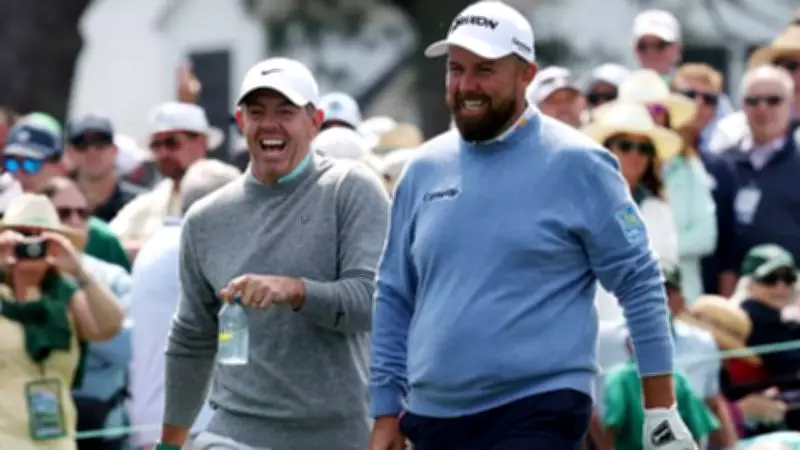
Their families have also developed close connections, with their wives—Erica McIlroy, Wendy Lowry, and Clare Fleetwood—often spending time together during tournaments. During Masters week, they were spotted enjoying the lighter moments of the Par-Three contest, with children playing freely around the course while the adults walked together, demonstrating the personal relationships that underpin their professional lives.
Historical Achievement Amid Personal Struggle
Lowry did experience one moment of Masters glory during the week, creating a special piece of tournament history by making a hole-in-one on the sixth hole. This remarkable shot made him the first player ever to record more than one ace at the Masters, adding to his previous hole-in-one achievement from 2016.
Reflecting on his overall performance, Lowry acknowledged that he had played quality golf throughout much of the tournament but simply failed to achieve the desired result when it mattered most. "Even after the tough Sunday, Lowry said he played good golf overall but did not get the result he wanted," he explained, highlighting the fine margins that separate triumph from disappointment in professional golf.
Moving Forward After Augusta
The emotional aftermath of the Masters saw both golfers take different paths. Lowry returned to competition at the RBC Heritage, shooting one under par in the opening round as he worked to regain his competitive rhythm. Meanwhile, McIlroy chose to skip the event entirely, taking time to process and celebrate his historic Masters victory.
This isn't the first time emotions have created tension between the friends during tournament play. Last year, Lowry expressed frustration when reporters repeatedly asked him about McIlroy while he was still competing in his own round, emphasizing his need to maintain focus on his personal performance. Yet these moments of professional tension have never fundamentally threatened their friendship, which continues to thrive both on and off the golf course.
The Masters week ultimately revealed the complex emotional landscape professional athletes navigate, where personal relationships must coexist with intense competitive pressures. While McIlroy celebrated one of golf's greatest achievements, Lowry grappled with the disappointment of a missed opportunity, demonstrating that even the strongest friendships must sometimes accommodate the individual emotional journeys of elite competitors.