NFL Offseason Ignites Quarterback Controversy with Viral Trade Claim
The NFL offseason has erupted with an unexpected quarterback debate following a bold and provocative statement that quickly spread across social media and sports media platforms. Grant Cohn, a respected analyst with Sports Illustrated, set the football world abuzz by asserting that the Green Bay Packers "would trade Jordan Love for Caleb Williams in a heartbeat." This declaration has triggered intense reactions from fans, players, and analysts alike, creating a whirlwind of speculation and discussion.
Breaking Down the Quarterback Performances: Stats and Standings
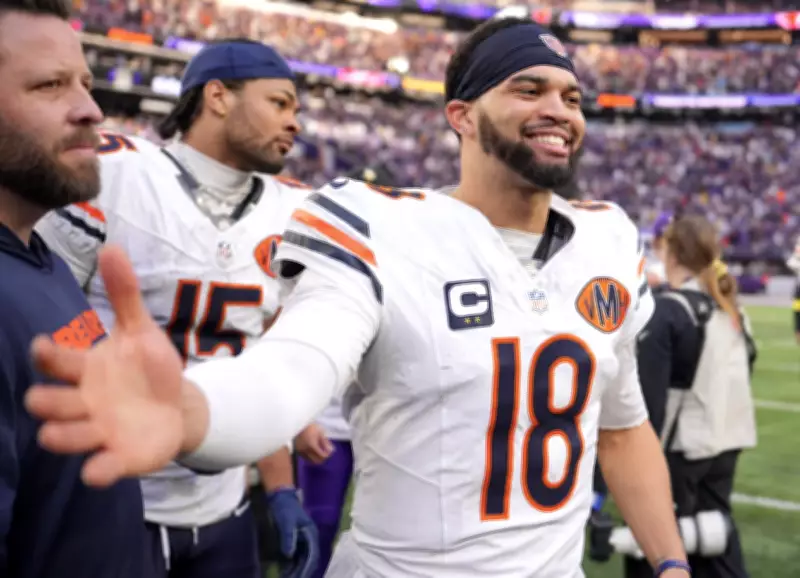
The debate gained significant traction largely due to the impressive 2025 campaign of Caleb Williams with the Chicago Bears. Williams emerged as one of the most electrifying young quarterbacks in the entire NFL last season, showcasing his talent with 3,942 passing yards, 27 touchdowns, and a remarkably low seven interceptions. His breakout performance was instrumental in propelling the Bears into playoff contention and fundamentally altering the competitive landscape of the NFC North division.
On the other side, Jordan Love delivered a consistently solid season for the Green Bay Packers, amassing 3,381 passing yards, 23 touchdowns, and only six interceptions. Love has effectively steadied the Packers' offense, demonstrating growth and reliability. The direct comparison between these two talented quarterbacks has now escalated into full-blown trade chatter, even as many experts view the scenario as highly speculative and unlikely.

Practical Realities: Why a Trade is Highly Improbable
From a practical and strategic standpoint, a trade involving Jordan Love and Caleb Williams appears far-fetched for several compelling reasons. Franchise quarterbacks are rarely traded in the NFL, especially between bitter division rivals like the Packers and Bears. The Chicago Bears have meticulously constructed their offensive system around Caleb Williams, viewing him unequivocally as the long-term cornerstone and face of their franchise.
With Williams still on his rookie-scale contract, which offers the team considerable financial flexibility, Chicago has virtually no incentive to entertain such a proposal. Conversely, Jordan Love has firmly established himself as the successor to Aaron Rodgers in Green Bay. His performance earned him a spot on Pro Football Focus' prestigious Top 101 players list for the 2025 season, ranking at number 37. This marked his second appearance on the list, underscored by an elite 88.7 PFF passing grade and a significant reduction in turnover-worthy plays compared to previous years.
The Green Bay Packers have invested substantial time, resources, and faith in Love's development, making a trade an extremely remote possibility. Furthermore, trading a franchise quarterback within the NFC North would entail considerable competitive risk, as teams are generally reluctant to strengthen a direct rival at the most critical position on the field.
Reactions and Ripples: The Debate Intensifies
The viral comment did not go unchallenged. Terrence Parsons Jr., brother of Dallas Cowboys star Micah Parsons, publicly criticized the analyst's claim on social media, vigorously defending Jordan Love's value and credibility. His pointed response added more fuel to the fiery debate, highlighting the strong convictions held within NFL circles regarding Love's standing and potential.
An intriguing detail in this comparison is that Jordan Love secured a place on the PFF Top 101 rankings, joining teammates Micah Parsons and safety Xavier McKinney as the only Packers players recognized. Caleb Williams, despite his outstanding statistical season, did not make the list—a fact that supporters of Love have been quick to emphasize in the ongoing discourse.
While the offseason speculation provides entertaining fodder for discussion, the reality of NFL team building, contract structures, and divisional rivalries suggests that this particular quarterback trade will remain firmly in the realm of hypothetical debate rather than becoming a tangible transaction.