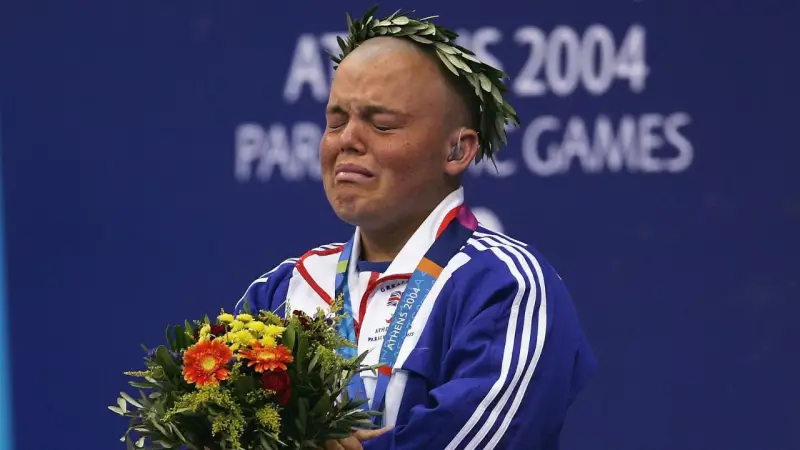
In a case that has shocked the sporting community, a decorated British Paralympian has narrowly avoided prison after being ensnared in an online sting operation conducted by a vigilante group targeting child predators.
Champion Athlete Caught in Online Sting
Gareth Duke, a 39-year-old former athlete who won gold at the Athens 2004 Paralympics and silver at Beijing 2008, was arrested after his online conversations were handed over to the police. The group, known as the Child Online Safety Team, created a decoy profile posing as a 14-year-old girl named 'Mia'. Duke, believing he was communicating with a minor, engaged in inappropriate chats between May 25 and June 2.
The court at Newport Crown Court heard that Duke asked the decoy to meet him in Cwmbran and suggested they would "kiss and cuddle." He also requested photographs. Alarmed by the nature of the exchange, the vigilante group intervened, capturing screenshots and reporting the evidence to authorities, which led to his subsequent arrest.

Suspended Sentence and Strict Conditions
Last week, Judge Matthew Porter-Bryant handed down a six-month jail sentence but decided to suspend it for 18 months. This means Duke will not serve immediate prison time provided he adheres to a strict set of rules during this probationary period. The judge condemned Duke's actions as "serious and predatory" and emphasised that age was "not just a number."
Despite acknowledging Duke's remorse and lack of prior criminal record, the court imposed severe long-term consequences. The conditions of his sentence include:
- Registering as a sex offender.
- Complying with a seven-year Sexual Harm Prevention Order.
- Completing a 30-day rehabilitation activity.
- Paying a £154 victim surcharge.
Police will monitor his behaviour closely to ensure he follows every condition.
Health Issues and Mitigating Circumstances
Duke's defence highlighted his significant health challenges, which the court considered. Since retiring from sport in 2011 after his second kidney transplant failed, his health has deteriorated. He is now registered blind, has only about 20% hearing, and requires kidney dialysis three times a week.
His lawyer argued that these profound health problems, combined with his demonstrated remorse, presented an opportunity for rehabilitation and behaviour change. The judge ultimately agreed that a suspended sentence was appropriate in this instance, allowing Duke a chance to reform while being subject to stringent oversight for years to come.