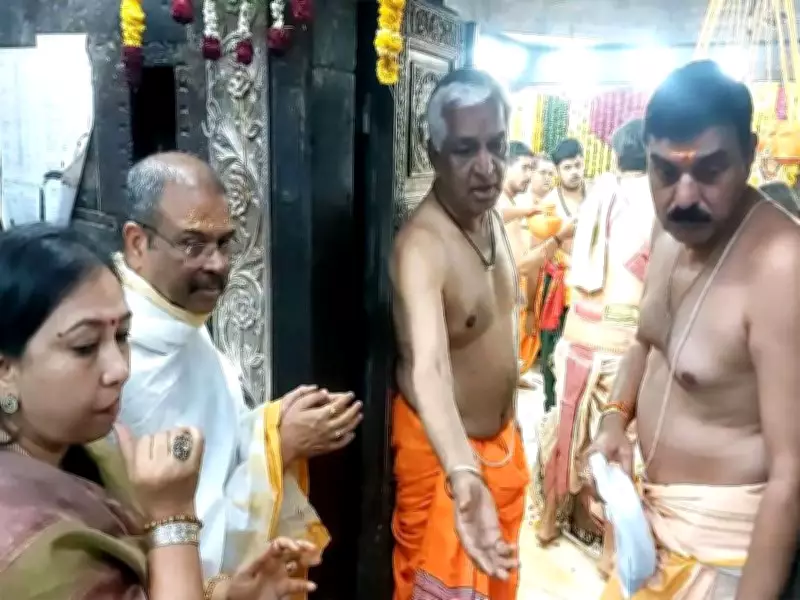
Union Ministers Dharmendra Pradhan and Umesh Yadav Participate in Sacred Bhasma Aarti at Ujjain's Mahakaleshwar Temple
In a significant event that merges political presence with spiritual devotion, Union Minister for Education and Skill Development, Dharmendra Pradhan, and Union Minister of State for Youth Affairs and Sports, Umesh Yadav, attended the revered Bhasma Aarti at the historic Mahakaleshwar Temple in Ujjain, Madhya Pradesh. This ceremony, known for its deep religious significance in Hinduism, drew attention as two prominent government figures engaged in the ritual, underscoring the cultural and spiritual heritage of the region.
Details of the Ceremony and Ministerial Participation
The Bhasma Aarti, a daily morning ritual where sacred ash is offered to the deity Lord Shiva, was conducted with traditional fervor at the Mahakaleshwar Temple, one of the twelve Jyotirlingas in India. Dharmendra Pradhan, a senior leader from the Bharatiya Janata Party (BJP), and Umesh Yadav, a former cricketer turned politician, were seen actively participating in the prayers, which are believed to bestow blessings and purify the soul. Their attendance highlights the intersection of governance and faith, particularly in a state like Madhya Pradesh, which is rich in religious tourism and historical sites.
Eyewitnesses reported that the ministers arrived early in the morning to join the devotees, adhering to the temple's protocols. The event was marked by:

- Chanting of Vedic hymns and the ringing of temple bells, creating an atmosphere of devotion.
- Presentation of floral offerings and sacred ash as part of the aarti, symbolizing surrender to the divine.
- Interactions with local priests and devotees, emphasizing community engagement and cultural preservation.
Context and Implications of the Visit
This visit by Union Ministers Pradhan and Yadav is not merely a religious act but carries broader implications. Ujjain, a city steeped in ancient history and spirituality, often sees political leaders paying homage to its temples, which can bolster local tourism and reinforce cultural identity. For Dharmendra Pradhan, who oversees education and skill development, such engagements may align with initiatives promoting India's heritage and values. Similarly, Umesh Yadav's presence, as a sports minister, could be seen as fostering a holistic approach to youth development that includes spiritual well-being alongside physical fitness.
The Mahakaleshwar Temple, renowned for its architectural grandeur and religious importance, attracts thousands of pilgrims annually. The ministers' participation in the Bhasma Aarti is expected to:
- Highlight the government's support for religious and cultural traditions.
- Encourage tourism in Madhya Pradesh, contributing to the local economy.
- Strengthen connections with the electorate by showcasing alignment with grassroots spiritual practices.
In recent years, such visits have become common among Indian politicians, reflecting a trend where public figures integrate faith into their public personas. This event, however, stands out due to the combined presence of ministers from different portfolios, emphasizing a unified approach to celebrating India's diverse cultural tapestry.
Broader Significance and Public Reaction
The attendance of Dharmendra Pradhan and Umesh Yadav at the Bhasma Aarti has garnered positive responses from local communities and religious groups, who view it as a gesture of respect towards Hindu traditions. Social media platforms and local news outlets have circulated images and videos of the ministers partaking in the ritual, sparking discussions on the role of spirituality in contemporary politics. Critics, however, may argue about the separation of religion and state, but supporters highlight it as a celebration of India's secular yet pluralistic ethos.
As the news spreads, this event is likely to influence public perception, especially in Madhya Pradesh, where temple visits by leaders can impact electoral dynamics. The Mahakaleshwar Temple, with its iconic status, serves as a perfect backdrop for such symbolic acts, reinforcing the ministers' commitment to both governance and cultural heritage.