From Chennai Suburb to Chess Stardom: The Rise of Praggnanandhaa
In the bustling city of Chennai, where evenings echo with the cacophony of traffic and vibrant street life, a modest home in the suburb of Padi once housed a young boy who found his world not in noise, but in silence. Across a chessboard, Rameshbabu Praggnanandhaa sat with intense focus, his mind captivated by the intricate patterns unfolding on sixty-four squares. Long before the global chess arena would recognize him as a formidable challenger to the world's strongest grandmasters, he was simply a child drawn to the silent drama of the game.
A Family Introduction to the Game
Born on August 10, 2005, into a middle-class family in Chennai, Praggnanandhaa's journey into chess began not through grand design, but through familial influence. His father, Rameshbabu, worked at a bank, while his mother, Nagalakshmi, managed the household and would later become the steadfast pillar of his career. The spark ignited when his elder sister, R. Vaishali, started learning chess. At around five years old, Praggnanandhaa watched her practice with keen interest, soon transitioning from observer to player. What began as casual curiosity rapidly evolved into a profound passion, revealing a natural aptitude that would soon capture attention.
The young boy demonstrated an almost instinctive grasp of chess logic, calculating moves with remarkable speed for his age. Coaches noted not just his technical skill, but his genuine enjoyment of the game's challenges—the patience, the strategic puzzles, and the mental struggle that defines chess at its highest levels.

Early Signs of a Prodigy
The chess world first took serious notice of Praggnanandhaa in 2013, when at just seven years old, he clinched the World Youth Chess Championship in the Under-8 category. This victory was no fluke; two years later, he repeated the feat in the Under-10 section, solidifying his reputation as a rising star. For most children, such achievements would be lifetime highlights, but for Praggnanandhaa, they were merely the opening moves of a much grander narrative.
In 2016, he achieved the title of International Master at the age of 10 years, 10 months, and 19 days, becoming the youngest player in the world to reach that milestone at the time. Within the chess community, whispers grew louder: India was witnessing the emergence of another prodigy, one with the potential to reshape the global landscape.
Becoming a Grandmaster Before His Teens
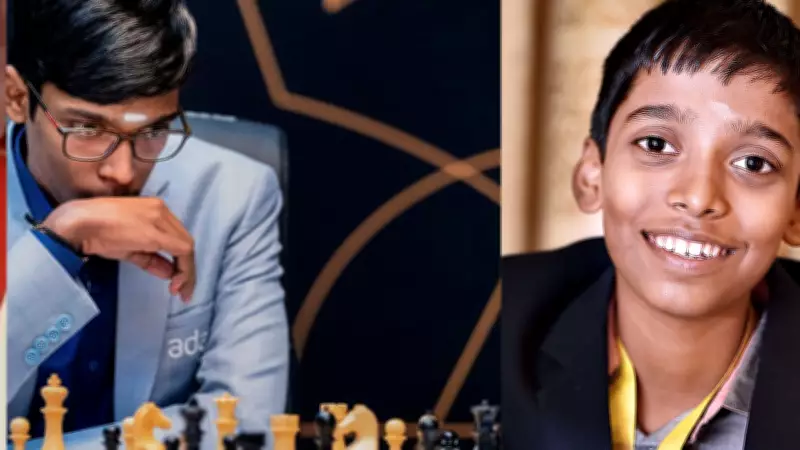
The pinnacle of early recognition came in 2018, when Praggnanandhaa crossed the ultimate threshold for any serious chess player. At just 12 years, 10 months, and 13 days old, he earned the Grandmaster title, making him the second-youngest in history at that moment. This achievement placed him among an elite group of teenage prodigies known for their precocious brilliance. Yet, those who encountered him at tournaments often remarked on his exceptional calmness. Unlike the swagger sometimes associated with young talents, Praggnanandhaa carried himself with quiet focus, speaking softly and preferring to return swiftly to game analysis.
The Mother Behind the Journey
Behind this composed teenager lay a story of immense family sacrifice. His mother, Nagalakshmi, became his constant companion on the global chess circuit, traveling across continents to manage logistics—flights, accommodations, meals, and schedules—so he could concentrate solely on the board. This was no easy life; international tournaments demanded significant time, financial resources, and unwavering discipline. But the family's belief in Praggnanandhaa never wavered, fueled by his unique ability to perceive possibilities on the chessboard that others overlooked.
Breaking into the Elite Ranks
By the early 2020s, Praggnanandhaa began regularly challenging top-tier players, but one result in particular catapulted him into the global spotlight. In 2022, he defeated reigning world champion Magnus Carlsen during the Airthings Masters online tournament, a victory that made headlines worldwide. For many observers, this marked a turning point: Praggnanandhaa was no longer just a "young talent" but a serious contender on the world stage.

A Historic Run at the World Cup
Any remaining doubts were彻底 erased in 2023 at the FIDE Chess World Cup, where Praggnanandhaa embarked on one of the most dramatic runs in recent chess history. Defeating elite players like Hikaru Nakamura and Fabiano Caruana, he showcased fearless creativity and remarkable composure under pressure. His fairytale journey carried him to the final, where he faced Magnus Carlsen once again. Although Carlsen emerged victorious, Praggnanandhaa's performance was widely hailed as a monumental achievement, signaling the arrival of one of the brightest stars in the new generation of chess.
Despite the accolades and attention, the essence of Praggnanandhaa remains captured in a simple image: a young man leaning over a chessboard, studying quietly, searching for that one move others cannot see. His story transcends headlines and trophies, residing in the silent concentration of a mind that learned, very early in life, to think several moves ahead.