When veteran British cyclist Graham Jones initially learned that India would host a Union Cycliste Internationale (UCI) graded race, he harbored significant doubts. As a five-time Tour de France participant and former Giro d'Italia rider, Jones questioned whether India possessed the necessary infrastructure, empty pathways, obstruction-free routes, and most critically, the high-quality roads required for such an event.
From Skepticism to Surprise: The Pune Grand Tour Experience
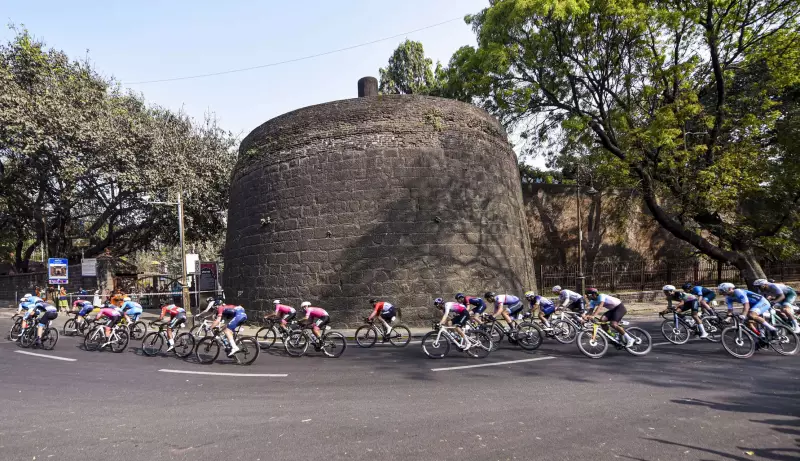
The recently-concluded Pune Grand Tour, however, transformed skepticism into admiration. As India's inaugural UCI 2.2 category race – representing the fourth tier in UCI stage race ratings – the four-stage event unfolded with remarkable smoothness, comparable to a well-oiled bicycle tyre. Both international participants and local organizers expressed pleasant surprise at the professional execution.
International Recognition and Olympic Implications
Being a UCI-recognized competition, the Pune Grand Tour carries substantial significance for participants. Racers earn valuable points that contribute directly to improving their global rankings. This individual ranking system serves as one of the crucial criteria for securing quota places in the Olympic Games, adding competitive importance to India's new cycling event.

"My first awareness of the Pune Grand Tour came through an Instagram post by Amarjit Singh Gill, president of the Asian Cycling Confederation," Jones revealed. "I never imagined India hosting a UCI road race of this caliber. My skepticism stemmed from this being their inaugural event – where would the organizational experience originate? Who would provide guidance?"
Unbelievable Organization and Professional Standards
Jones continued, "But arriving here and witnessing the organizational level has been truly unbelievable. For me, this already ranks among the world's best 2.2 races in terms of funding, organization, road closures, and overall professionalism."
UCI Director General Amina Lanaya echoed this sentiment, confirming that the Pune Grand Tour left both participants and officials thoroughly satisfied. "Many have remarked that their experience compares favorably with top-level UCI WorldTour races," Lanaya stated, highlighting the event's exceptional standards.
Strategic Positioning in Global Cycling Hierarchy
While acknowledging these achievements, Jones emphasized strategic perspective. "These represent baby steps for stage cycling in India. Within the global hierarchy, the 2.2 category remains at entry level, positioned below WorldTour, ProSeries, and 2.1 races. Yet every prestigious race must begin somewhere," he reminded observers.
Pathway to Higher Categories
The successful execution of the 2.2 level creates promising pathways for elevation. Should host countries demonstrate consistent organizational excellence, races can potentially upgrade to the 2.1 category, attracting more professional teams and heightened competition. Category determination depends on multiple factors including route toughness, elevation challenges, and stage numbers.
"If India maintains this standard, the Pune Grand Tour could realistically aspire to 2.1 status," Jones suggested. "The foundation has been impressively established through meticulous planning and execution."
The event's success story extends beyond sporting achievement, showcasing India's growing capabilities in hosting international sporting events with world-class professionalism and infrastructure management.