Ronda Rousey vs Gina Carano: A Historic Clash of MMA Pioneers
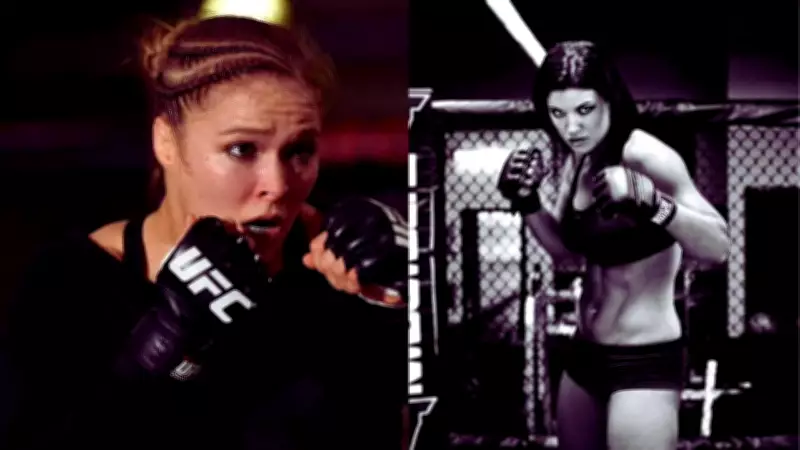
Two of the most formidable women in combat sports history are stepping back into the cage, and the significance of this event extends far beyond the anticipated violence. It carries the weight of a shared legacy that transformed women's mixed martial arts. Ronda Rousey has achieved champion status in three distinct realms: as an Olympic bronze medalist in judo, the dominant early champion in UFC women's history, and later a titleholder in WWE, where sport and spectacle blend into a modern phenomenon.
Gina Carano's Path to Cultural Influence
Gina Carano forged a different kind of impact. She emerged as the first true cultural icon from women's MMA, successfully crossing over into Hollywood. Her roles included appearances in major action films, sharing the screen with superheroes in Deadpool, and portraying one of the most recognizable protectors of Grogu in The Mandalorian. For years, their names existed in separate spheres—one symbolizing inevitability inside the cage, the other representing legitimacy beyond it.
Now, they meet not as rising stars or reigning champions, but as pioneers returning to confront the unfinished edges of their own legacies. This fight embodies the emotional depth of two women who helped build an entire sporting revolution, only to discover that pioneering often means losing control over how the world narrates your story.

The Rise and Legacy of Ronda Rousey
Ronda Rousey's ascent remains one of the most explosive in modern sports. Entering MMA with an Olympic judo background, she quickly dominated the UFC, becoming the inaugural women's bantamweight champion. Her victories were swift, often ending within minutes via her signature armbar, creating an aura of inevitability. She was not just a champion but the central figure in the UFC's global promotion of women's MMA, expanding divisions and attracting mass audiences.
Her influence transcended fighting; after leaving the UFC, she captured a championship in WWE, showcasing her ability to translate combat credibility into theatrical dominance. However, her abrupt decline, marked by defeats to Holly Holm and Amanda Nunes, shifted public perception dramatically. The aura of inevitability faded, and she withdrew from MMA, leaving her competitive narrative unresolved.
Gina Carano's Role in Building Legitimacy
Gina Carano's significance lies in an earlier era of women's MMA, when the sport faced skepticism about its commercial viability. Her athletic skill and mainstream charisma drew viewers beyond the core audience, helping to legitimize women's combat sports. After her fighting career ended with a loss to Cris Cyborg in 2009, she transitioned into acting, securing roles in major films and a prominent part in The Mandalorian as Cara Dune.
Her dismissal from the series due to controversial social media posts sparked widespread debate, overshadowing her athletic and acting achievements and associating her more with cultural conflicts. This transformation highlights how public narratives can redefine pioneers.
Details of the Upcoming Bout
The fight is scheduled for May 16, 2026, in Los Angeles, as a professional MMA bout at 145 pounds, reflecting both fighters' physical frames rather than their historical divisions. It will be a five-round contest following championship-length regulations, though not tied to a formal title. The event will be distributed globally through a major streaming platform, indicating a shift toward digital accessibility over traditional pay-per-view models.
Both fighters have undergone rigorous medical evaluations, including neurological testing, due to the long gaps since their last professional fights—Rousey in 2016 and Carano in 2009. Stylistically, Rousey's elite judo background emphasizes clinch control and submissions, while Carano's approach from early women's MMA focuses on striking and defensive grappling. This bout serves as a historical convergence rather than a contemporary contender match.

The Burden and Return of Pioneering
Rousey and Carano experienced distinct forms of public redefinition. Rousey's came from the pressures of elite sport, where defeat shattered her image of invincibility. Carano's stemmed from cultural controversies that eclipsed her contributions. Their return to the cage represents an attempt to reconnect with the arena where their reputations were forged—for Rousey, to address an unfinished competitive story; for Carano, to prioritize her identity as a fighter over cultural debates.
This meeting links the era when women's MMA struggled for acceptance with the time it achieved global prominence. As they stand across from each other, the narratives that have defined them will momentarily fade, replaced by the direct clarity of competition. What remains is the recognition that both were essential architects of a transformation, bearing the personal costs of pioneering change in a sport that now thrives on their foundational work.