Srihari Nataraj Sharpens His Approach Ahead of Asian Games
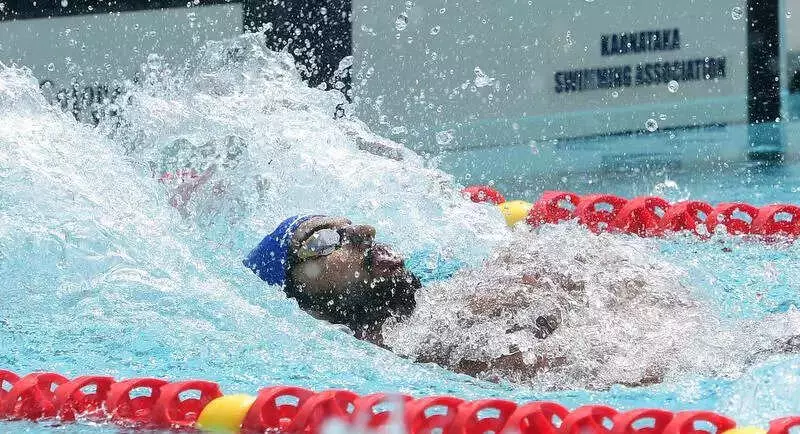
In Bengaluru, Olympic swimmer Srihari Nataraj is entering a new phase of his career. The 24-year-old athlete from Karnataka is moving beyond raw promise. He is now embracing precision and calculated performance as the Asian Games approach on the horizon.
A Strategic Reset for the Season
Srihari Nataraj has streamlined his entire season. He is sharpening his training regimen with clear purpose. The previous season served as a crucial reference point for this strategic shift.
In 2025, Srihari made a significant decision. He chose the World University Games over the Asian Championships as his primary focus meet. This choice recalibrated both his competitive calendar and his technical priorities.

The swimmer narrowed his racing portfolio considerably. He leaned more heavily into freestyle events. Meanwhile, he treated backstroke—his primary strength—as a continuous work in progress rather than a fixed destination.
Results and Reassurance from the Experiment
This calculated gamble paid dividends. It delivered both tangible results and personal reassurance. "It was something new for me," Srihari told TOI during the Jain University awards ceremony. "I switched events, changed my training methods, and even altered my focus meets. Usually, the Asian Championships would be the main target, but last year it was the University Games. Overall, it was a very good year."
More importantly, the experiment generated valuable data. This included physical, technical, and psychological insights that now inform his Asian Games preparation. For 2026, the emphasis shifts to continuity rather than correction.
"I'll go back to my backstroke events," Srihari explained. "I'll still compete in freestyle races, but backstroke will be my focus. I want to train the same way I did in 2025, with some minor changes. We now have added support in biomechanical and race analysis, and that plays a big role."
The swimmer emphasized his daily commitment. "I'm a big believer in being fast in training, so I do that every single day."
Candid Assessment of Indian Swimming's Challenges
Beyond his personal preparation, Srihari offered a frank evaluation of Indian swimming's broader landscape. He highlighted a persistent problem—the inability to sustain talent over the long term.
While India continues to produce promising junior swimmers, few make smooth transitions into durable senior careers. "I'll be 25 during the Games. I feel old!" Srihari remarked with a smile. "But I train and swim fast regularly, which helps me handle multiple events in a day. At the Asian Championships, I swam five races in a day. Most junior swimmers, or even those my age, wouldn't be able to compete the next day."
Developmental Planning Under Scrutiny
Drawing from a decade of observation, Srihari placed responsibility squarely on developmental planning. "Over the past 10 years, I've seen swimmers burn out," he stated. "The primary reason is that many coaches fail to prioritise long-term development and instead focus on achieving quick results."
He cited the example of fellow swimmer Dhinidhi Desinghu. "For someone like Dhinidhi, it wasn't planned at 12 that she would make the Olympics at 14. If many coaches had a swimmer like her, they would squeeze everything out by 14 or 15, and she would probably quit."
Srihari concluded with a pointed observation. "Not too many coaches know how to develop young athletes in this country. Coaches and parents need to be very patient." The swimmer recently returned from a productive training camp in Australia, bringing fresh perspectives to his preparation.
Srihari Nataraj represents a new generation of Indian athletes. They combine competitive excellence with thoughtful critique of the systems that produce them. His journey toward the Asian Games reflects both personal evolution and broader concerns about sporting development in India.