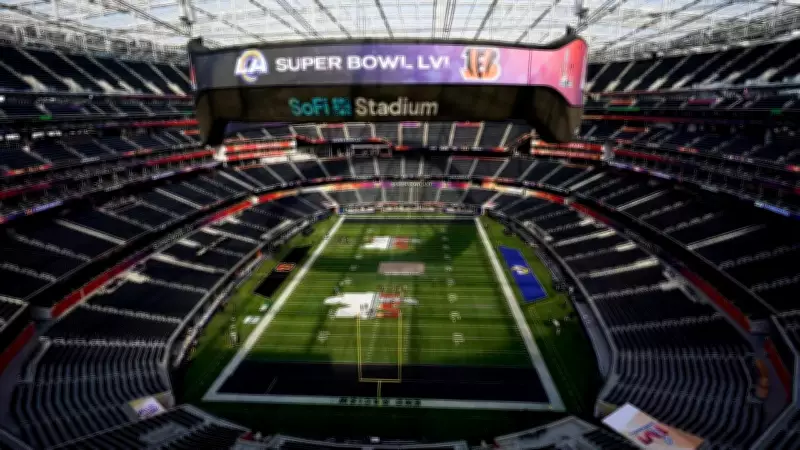
The Super Bowl Coin Toss: A Bet That Ends Before the Game Begins
The Super Bowl coin toss represents the only wager where victory can be secured before a single play is executed on the field. It also serves as the fastest method to convince yourself that you have just witnessed an omen or sign regarding the game's outcome. However, historical data presents a much colder reality than the surrounding hype and excitement.
Statistical Reality Versus Superstition
Across the history of 59 Super Bowl games, the team that emerged victorious from the coin toss has only managed to win the championship contest between 25 to 26 times, depending on the specific dataset analyzed. Conversely, these same coin toss winners have lost the actual game between 33 to 34 times. This statistical breakdown clearly demonstrates that the coin flip does not predict which team will hoist the Lombardi Trophy. Instead, it primarily determines which fanbase earns temporary bragging rights during your watch party.
An examination of Super Bowl coin toss history indicates that any perceived "edge" is purely based on vibes and superstition, not on tangible winning outcomes. AS English reported that coin-toss winners hold a record of 25 wins and 34 losses in Super Bowl history. The report also highlighted a significant eight-game losing streak for coin-toss winners, spanning from Super Bowl XLIX in 2015 through Super Bowl LVI in 2022.

Detailed Analysis and Scientific Perspective
Chris Landers provided a further breakdown, framing the coin toss as statistical noise with winners sitting at a record of 26 wins and 33 losses. Notably, coin-toss winners have lost nine of the last eleven Super Bowl matchups. In terms of the coin itself, tails has been called slightly more often, leading the all-time Super Bowl coin toss results by a margin of 31 to 28. However, this minor advantage does not translate into game outcomes; it simply indicates that tails has appeared with slightly greater frequency.
Landers also referenced a comprehensive 2023 study conducted in Amsterdam, which logged an astonishing 350,757 coin flips. The research discovered a small but measurable bias of 50.8 percent toward the starting side of the coin, attributed to factors like wobble and precession during the flip. While this represents legitimate scientific inquiry into coin toss mechanics, it still does not provide any predictive power for determining a Super Bowl champion.
Super Bowl 60 Coin Flip Details Generate Intrigue
Forbes contributor Darren Cooper outlined why this year's coin toss carries additional narrative weight. Shawn Smith will be working his first Super Bowl as the head referee, and the Seattle Seahawks, designated as the road team for the contest, will be responsible for calling the toss. Cooper noted that Smith's coin-toss track record during the regular season sits at a perfectly balanced 7-7-1, which aligns perfectly with the random nature of the event.
The identity of the Seahawks' designated caller remains fluid as well. Head coach Mike Macdonald employs a rotation system for team captains. According to reports from Cooper and Landers, players including Ernest Jones IV, Sam Darnold, and AJ Barner have each served as captains five times throughout the season. This uncertainty, combined with a recent moment where defensive lineman Jarran Reed initially signaled to kick before Seattle corrected to a deferral, underscores the true nature of the coin toss: it is primarily theater and ceremony.
The ritual serves as a dramatic prelude to the main event, filled with anticipation but devoid of predictive power for the game that follows. Fans and bettors should view it as an entertaining tradition rather than a reliable indicator of sporting success.