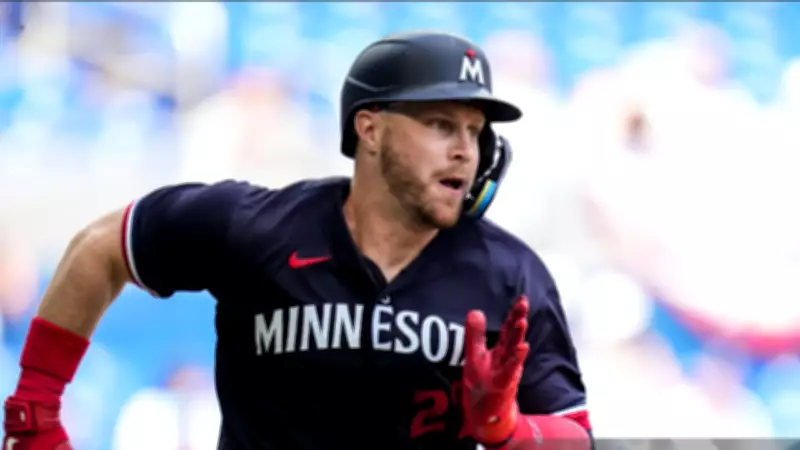
Minnesota Twins Face New Roster Dilemma After Settling Catching Timeshare
The Minnesota Twins appear to have resolved their long-running catching timeshare, but this newfound clarity has introduced a fresh and complex roster dilemma. With Ryan Jeffers firmly positioned to handle a full workload as the undisputed primary catcher heading into the 2026 season, the organization now confronts a critical question: is there room or even a necessity for three catchers on the Opening Day roster?
Jeffers Embraces the Role of Undisputed Starter
After sharing duties for three consecutive seasons, Ryan Jeffers is now poised to shoulder the responsibilities of a full-time starter. Manager Derek Shelton addressed this shift early in the offseason, stating unequivocally, "Jeffers is going to be the C1." Shelton elaborated on the strategic thinking behind this decision, noting, "We've talked to Victor about it. The thing we thought about there is get a guy we think … is going to play behind Ryan, but he can also play first, he can also DH."
Last season, Jeffers logged approximately 700 innings and appeared in 119 games, with 88 of those appearances coming behind the plate. A projected increase to 110-120 games caught would place him among baseball's elite, full-time catchers. For context, only J.T. Realmuto and William Contreras exceeded 1,080 innings at the catcher position last year.

Jeffers has fully embraced this expanded role. Reflecting on his preparation, he said, "Every year, I've grown up in this game, I've gotten better at the routine and what I do in the offseason to prepare for the year. I've always prepared to catch a full workload, so nothing for that really changed for me this offseason." If Jeffers successfully reaches this workload threshold, the structural argument for carrying a third catcher becomes significantly less compelling.
Versatility and Depth: The Caratini and Jackson Conundrum
A central element in this roster debate is the multifaceted skill set of Victor Caratini, who signed a two-year contract with the Twins. His ability to catch, play first base, and serve as a designated hitter provides Minnesota with valuable lineup flexibility, allowing the team to keep his bat active without being constrained by a rigid platoon system.
The role of Alex Jackson, however, emerges as a primary point of contention. Acquired via trade for a minimal return, Jackson is out of minor league options. Despite posting an OPS+ of just 46 across more than 400 major league plate appearances, the organization still values his defensive contributions, including his pitch framing and arm strength, as well as incremental offensive improvements such as enhanced bat speed observed last season.
Carrying Jackson as a third catcher would offer additional depth and insurance but likely comes at a cost. It could necessitate sacrificing a traditional bench bat and potentially impact the roster spot of players like James Outman, who boasts a .945 Triple-A OPS and a 131 wRC+, indicators of considerable untapped offensive potential.
Reevaluating the Twins' Catching Philosophy
For years, the Twins' strategy focused on evenly distributing the catching workload to preserve player durability and mitigate injury risks. With Jeffers now unequivocally established as the C1, the franchise must critically assess whether this insurance-based model remains necessary. The increased confidence in their primary starter suggests that a third catcher may be rendered nonessential, pushing the front office to prioritize other areas of roster construction.
This decision will not only shape the Twins' Opening Day lineup but also reflect a broader philosophical shift in how the team manages its catching resources in the pursuit of competitive advantage.