Warriors vs Mavericks NBA Clash Overshadowed by Extensive Injury Lists
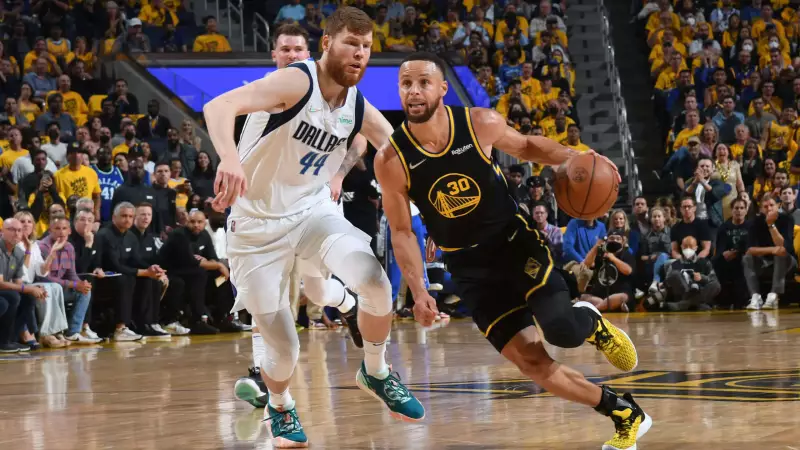
The highly anticipated NBA matchup between the Golden State Warriors and Dallas Mavericks scheduled for January 22 is generating significant buzz, but not necessarily for the reasons basketball fans might expect. Rather than focusing on star-studded lineups, this game appears to be shaping up as a battle of attrition, with both franchises grappling with concerning injury situations that could dramatically alter the contest's dynamics.
Dallas Mavericks Facing Roster Depletion Challenges
The Dallas Mavericks enter this crucial game with a staggering eight players listed on their official injury report, creating significant challenges across nearly every position group. The team continues to miss the services of Kyrie Irving, who remains sidelined following left knee surgery, creating a substantial void in their offensive schemes that has persisted for an extended period.
Additional key absences include Dante Exum, who is recovering from right knee surgery, and Dereck Lively II, who remains unavailable due to a right foot injury that leaves Dallas particularly vulnerable at the center position. The situation becomes even more complicated with Anthony Davis being ruled out because of a left finger sprain, with medical evaluations still weeks away.

The Mavericks' injury concerns extend to Daniel Gafford, who is listed as questionable with a right ankle sprain, and Moussa Cisse, whose status is uncertain due to illness. While Ryan Nembhard is considered probable despite his current G League assignment, two-way guard Miles Kelly's availability remains unclear. This extensive list of unavailable or limited players forces Dallas to heavily rely on their remaining starters and bench contributors to handle expanded roles and minutes.
Golden State Warriors Also Grappling with Health Issues
The Golden State Warriors find themselves in a similarly challenging position with multiple key players dealing with various health concerns. The team has suffered a significant blow with Jimmy Butler III ruled out for the entire season after tearing his right ACL, removing a crucial wing option from their rotation and defensive schemes.
Shooting specialist Seth Curry is also sidelined due to sciatic nerve and thigh issues, substantially reducing Golden State's perimeter shooting depth at a critical juncture. The Warriors' defensive capabilities could be further compromised with Gary Payton II listed as questionable while managing a foot injury.
Additional concerns include Al Horford's questionable status due to a toe issue, but the most significant uncertainty revolves around Stephen Curry's availability. The superstar guard is dealing with a left ankle sprain and remains questionable heading into the game, with his potential absence representing a massive factor that could severely limit Golden State's offensive creativity and firepower.
Game Implications and Strategic Adjustments
With injuries significantly reshaping both rosters, this contest appears likely to be decided by depth management and strategic adaptability rather than pure star power. The Dallas Mavericks will need to lean heavily on players like Naji Marshall, who has been averaging an impressive 16.3 points per game, and Max Christie, who is coming off a recent 26-point performance, to carry increased scoring responsibilities.
For the Golden State Warriors, their performance could hinge entirely on whether Stephen Curry takes the court and how effectively their remaining rotation players handle extended minutes against Dallas's fast-paced offensive approach. The Mavericks' tempo could particularly test Golden State if the Warriors are forced into shorter rotations due to their injury limitations.
As currently constituted, this matchup remains remarkably fluid, with even minor late injury updates potentially shifting expectations dramatically. The game promises to be defined more by availability and adaptability than traditional name recognition, creating an intriguing scenario where role players and bench contributors may ultimately determine the outcome.