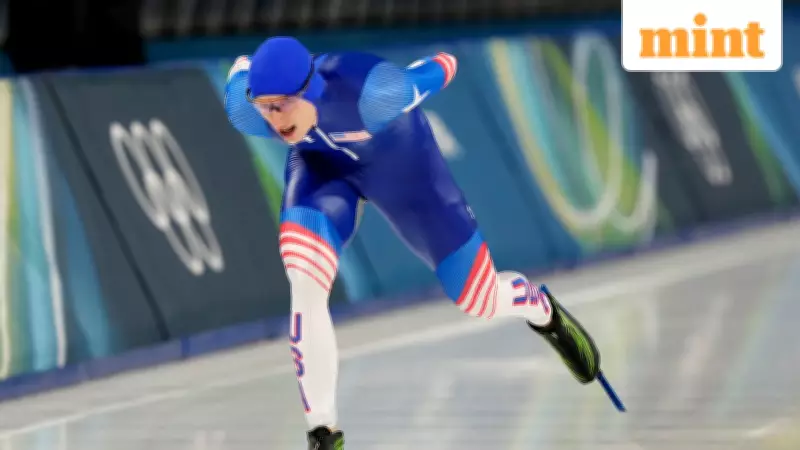
From Cheese Curds to Gold Medals: The Wisconsin Speedskating Phenomenon
Jordan Stolz is not just another American athlete at the 2026 Winter Olympics in Milan. He is a phenomenon, a young man with tree-trunk thighs, impeccable balance, and a staggering tolerance for the excruciating pain required to chase an unprecedented four gold medals. Yet, before he ever laced up a pair of skates, a single, uncontrollable twist of fate set him on this path: he was born in Wisconsin.
The Unlikely Cradle of Champions
Wisconsin is globally renowned for cheese curds, craft beers, and the frozen fervor of Lambeau Field. However, introduce a 400-meter oval and razor-sharp skates, and this proud Midwestern state transforms into something else entirely: a breeding ground for the world's fastest athletes. "He's very lucky," remarked Jeff Brand, Stolz's first coach, "to have been born in this area."
That area is home to the most influential rink in American speedskating history: the Pettit National Ice Center in Milwaukee. As one of only two Olympic-grade long-track ovals in the entire United States, it possesses an almost mystical power to turn local kids into veritable motorcycles on ice.

Since the 1980 Winter Games, American athletes have secured 19 gold medals in long-track speedskating. Astonishingly, 16 of those were won by skaters either raised or rigorously trained in Wisconsin. Jordan Stolz, at just 21 years old, is the latest prodigy to roll off this remarkable conveyor belt of talent.
Forged on a Frozen Backyard Pond
Stolz's journey began at age five, when he and his sister became captivated by American short-track legend Apolo Anton Ohno. His father, Dirk Stolz, a deputy sheriff, embraced the harsh Wisconsin climate. The family had a pond in their Kewaskum backyard, and Dirk hooked a plow to his ATV to clear the snow, creating a miniature oval. He even erected lights to extend practice into the short winter evenings.
"Jane was kind of against it, because she didn't want the kids to fall through the ice," Dirk recalled, speaking of Stolz's mother. "So we put on life jackets. That was the compromise."
While the backyard pond nurtured a passion, it was the nearby Pettit Center, free from drowning hazards, that truly catalyzed Stolz's career. When his parents sought a proper facility for their budding phenom, they naturally turned to the Pettit. "He would have been a good skater no matter what," Coach Brand reflected, pondering if Stolz had been from California or Massachusetts. "But it would have been a long time until he found the right track."
The Pettit: America's Speedskating University
The Stolz family had stumbled upon more than a convenient rink; they had discovered the greatest incubator of speedskating talent outside the Netherlands. The Pettit Center has a proven knack for churning out gold medalists with the consistency of a world-class conservatory producing virtuosos.
The building is a living repository of American speedskating wisdom. On any given day, it hosts not only promising young talent but also a significant portion of the sport's collective knowledge. Olympic champions return for impromptu workouts, and all-time greats spend their retirements mentoring the next generation.
"You've got five-time Olympic gold medalists, the best-known skaters in history calling out splits and holding clipboards," said former Olympic champion Joey Cheek. "There's this incredible institutional knowledge." Day after day, a young Jordan Stolz soaked up every lesson, often watching elite Olympians endure grueling training sessions just before his own practices began.

Joining the Pantheon of Wisconsin Greats
Stolz is now poised to join the elite ranks of Wisconsin's speedskating legends, a group that includes Madison native Eric Heiden. In 1980, Heiden achieved the extraordinary feat of winning five gold medals across five distances, a record for an American at a single Winter Olympics. Stolz aims to become the first American in any winter sport since then to win four golds at one Games.
In a testament to his Wisconsin roots, Stolz has deliberately chosen to train differently. He declined to join the rest of the U.S. speedskating team at their high-altitude home oval in Salt Lake City, where thinner air allows for easier gliding. Instead, he preferred the intense, sea-level training conditions of the Pettit Center. Stolz understood that to dominate on the ice in Milan, there was only one place to prepare: it had to be Wisconsin.
From a life-jacketed child on a backyard pond to an Olympic contender on the world stage, Jordan Stolz's story is a powerful testament to place, opportunity, and the unique alchemy that turns Wisconsin's winter into golden destiny.