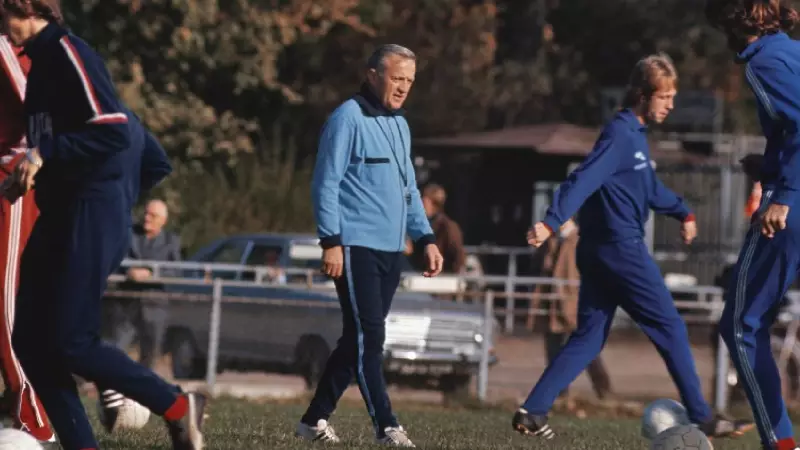
Legendary Ajax Coach Stefan Kovacs Exposed as Communist Secret Police Informant
In a shocking revelation that has sent ripples through the football world, newly uncovered documents have exposed that Stefan Kovacs, the celebrated coach who led Ajax Amsterdam to consecutive European Cup victories in the 1970s, served as an informant for Romania's communist secret police for eight years during one of Europe's most repressive periods.
Secret Police Files Uncover Football Legend's Double Life
An investigation by Romanian sports newspaper Gazeta Sporturilor has discovered a 31-page file at the National Council for the Study of Securitate Archives (CNSAS) revealing Kovacs worked as an agent from 1955 to 1963 under the code name "Vasile Munteanu." The file, numbered 5858 in the Cluj Region registry, contains Kovacs' signed commitment dated October 28, 1955, when he was 35 years old and working as a football coach in Cluj.
In the document, Kovacs pledged to report on activities deemed hostile to the Romanian People's Republic and agreed to carry out tasks assigned by security organs. "I voluntarily undertake to promptly report to the State security organs everything I know about the subversive work carried out by hostile elements," the engagement reads according to the documents, with Kovacs promising absolute secrecy under threat of criminal prosecution.

Recruitment During Football's Darkest Era
The recruitment occurred during what historians describe as one of European football's darkest periods, when communist governments across Eastern Europe systematically used security services to control citizens, including prominent sports figures. Romania at the time was a Soviet satellite state under the leadership of Gheorghe Gheorghiu-Dej, where surveillance and informant networks permeated all aspects of society.
Lieutenant Noros Iacob, who recruited Kovacs for the Surveillance and Investigation Service, described him as having "a fairly high political and cultural level" and being "an element attached to the regime." Reports indicate Kovacs was particularly valued for his extensive contacts within athletic circles, specifically for monitoring athletes seeking to travel abroad during an era when international movement was heavily restricted.
Eight Years of Secret Collaboration
According to surveillance reports contained in the file, Kovacs met with his handlers two to three times monthly at various locations including his workplace, streets, parks, and eventually conspiratorial safe houses. During his eight-year collaboration, he submitted 34 briefing notes to the secret police, though the specific contents of these notes are not included in the archived file.
Internal assessments described Kovacs as:
- Punctual in his meetings and reporting
- Objective in his observations
- Committed to his assigned tasks
Notably, Kovacs refused any payment for his services, with one officer writing that he "demonstrated sincerity in the materials provided" and showed "keen interest" in completing assigned tasks. The file contains one specific reference to information Kovacs provided about someone named Jenei, likely legendary Romanian footballer Emeric Jenei, though a report noted this particular information appeared influenced by "old personal disagreements" rather than objective observation.
From Informant to Football Immortality
Kovacs' cooperation with the secret police ended in 1963 when he moved to Bucharest to join Romania's national federation structure. A final report stated he could "no longer attend meetings punctually" due to frequent travel with teams, making organized contact impossible, and authorities formally abandoned him as an agent that year.
Following this period, Kovacs achieved remarkable success in football that would cement his legendary status:

- Won Romania's championship with Steaua Bucharest in 1968
- Took charge of Ajax Amsterdam in 1971
- Captured consecutive European Cups in 1972 and 1973 while coaching Johan Cruyff and other Dutch masters
- Won three Dutch league titles with Ajax
- Later managed France's national team, Greek powerhouse Panathinaikos, and Monaco
Kovacs died in Cluj in 1995 at age 74, leaving behind a complex legacy that now includes this newly revealed chapter of collaboration with one of Eastern Europe's most feared security apparatuses during the Cold War era.