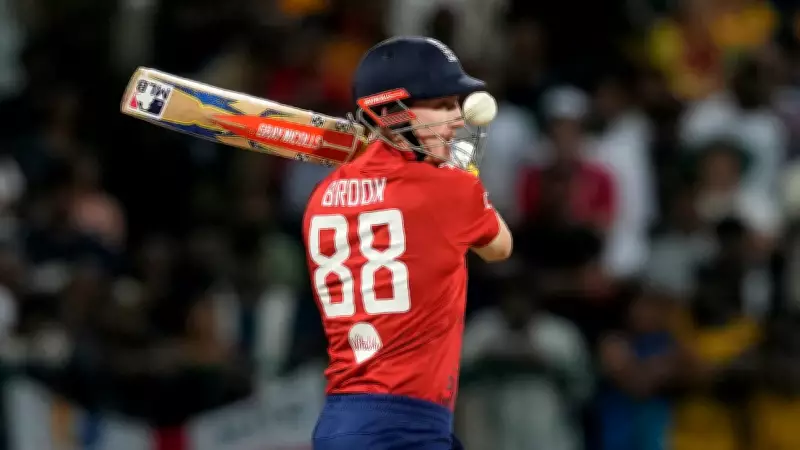
Michael Atherton Slams Harry Brook Over Controversial Beer Smash Celebration
Former England cricket captain Michael Atherton has strongly criticized current white-ball skipper Harry Brook for his recent on-field antics, describing a WWE-inspired beer smash celebration as "slightly inappropriate" given Brook's recent disciplinary issues.
The Controversial Celebration
Following his century against Sri Lanka in the third ODI at Colombo last month, Harry Brook engaged in a celebration mimicking WWE wrestler 'Stone Cold' Steve Austin, smashing beer cans in a theatrical display. This performance came amidst ongoing scrutiny of Brook's off-field conduct, particularly an incident during England's New Zealand tour prior to the Ashes series.
"I thought the celebration when he got the 100 in Sri Lanka was slightly... I mean, you don't want to be po-faced about all this, you can have a bit of humour about it, but I just thought it was slightly inappropriate and didn't suggest someone who had shown much contrition," Atherton stated during the Sky Sports Cricket podcast.

Background: The New Zealand Incident
The celebration controversy follows reports by Daily Telegraph revealing that Brook was involved in a physical altercation with a nightclub bouncer in Wellington during England's New Zealand tour. The England and Wales Cricket Board (ECB) subsequently fined the 26-year-old cricketer 30,000 pounds for this breach of conduct.
Brook initially claimed he was alone during the Wellington incident when speaking to BBC Sports, but later admitted that teammates Jacob Bethell and Josh Tongue were present after Daily Telegraph published contradictory reports. The ECB has since launched a comprehensive review of both the Ashes and New Zealand tours.
Atherton's Strong Views on Player Responsibility
The former England captain expressed particular frustration with how modern players handle accountability for their actions. "It irritates me a little bit when players make mistakes, as Brook did in Wellington. But the focus then shifts away from that individual responsibility," Atherton remarked.
He continued with pointed criticism of contemporary attitudes toward player misconduct: "This cliché that the cover-up is worse than the crime is trotted out all the time. Give me a break. It's ridiculous. If he goes out on the eve of a game, has one too many, gets clocked by a bouncer, and people are saying the problem is in the comms and the PR. At some point, you have to take individual responsibility."
Support from Former Captains with Reservations
While acknowledging that players deserve support after mistakes, Atherton emphasized that certain standards remain non-negotiable for England captains. His sentiments were echoed by fellow former captain Nasser Hussain, who added his perspective on the podcast.
"There's been so much noise about it in the last couple of weeks, and rightly so, because he's an England cricket captain, and you've just got to get the certainties out," Hussain stated. "One thing that is certain: it is totally unacceptable for an England cricket captain, the night before a game, to be going out, having too much to drink, and being clocked by a bouncer. That is just non-negotiable."
The Path Forward
Despite his criticism, Atherton acknowledged the importance of supporting players through their errors. "But I agree that people make mistakes. You have to support them after that and help them grow and get better," he concluded, striking a balance between accountability and rehabilitation.
The incident raises important questions about:
- Player conduct standards for international cricket captains
- The appropriate balance between on-field expression and off-field responsibility
- How cricket boards should handle disciplinary matters involving key players
- The role of veteran players in mentoring younger teammates through controversies
As England continues its white-ball commitments, all eyes will be on how Harry Brook responds to this criticism and whether his future conduct reflects greater awareness of his responsibilities as team captain.