BCCI's Progressive Framework for Blind Cricket Earns Widespread Acclaim
The Differently Abled Cricket Council of India (DCCI) has enthusiastically welcomed the recent landmark decision by the Board of Control for Cricket in India (BCCI) to establish a structured support framework for the Cricket Association for the Blind in India (CABI), one of DCCI's founding members. This initiative represents a significant milestone for inclusive growth within Indian cricket, marking a progressive shift in how disability cricket is supported at the national level.
Comprehensive Support Framework Details
The newly announced BCCI initiative focuses on three key areas that will substantially enhance opportunities for visually impaired cricketers across India. First, the framework provides international exposure opportunities, allowing blind cricket teams to compete on global platforms. Second, it offers dedicated home series support, ensuring proper organization and resources for domestic competitions. Third, and perhaps most importantly, the initiative guarantees access to BCCI-affiliated venues, giving visually impaired cricketers the chance to play in the same world-class facilities used by mainstream cricket teams.
DCCI Leadership Hails Transformative Decision
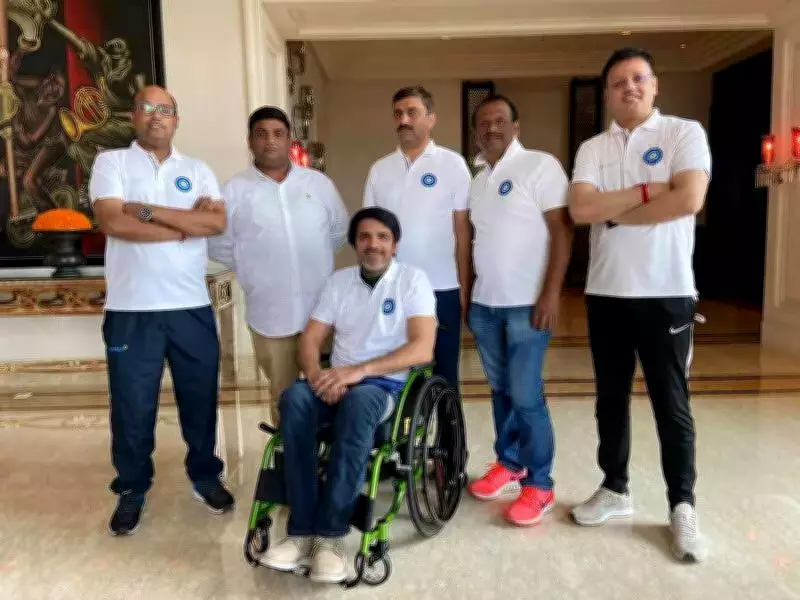
DCCI General Secretary Ravi Kant Chauhan expressed profound satisfaction with the decision, stating: "Jay Shah represents a thought, a belief, and a transformation. When leadership rises beyond position and becomes purpose-driven, history is created. His vision has consistently demonstrated that with clarity of direction and strong intent, meaningful change can be achieved in sport."

DCCI Vice President Sumit Jain emphasized the qualitative impact of this development: "There is a significant difference between simply working and elevating work to new heights. Under his leadership, Indian cricket — particularly women's cricket — has witnessed remarkable progress. This evolution is visible not just in numbers, but in the confidence and opportunities available to players."
Joint Secretary Abhay Pratap Singh highlighted the broader implications: "Providing organised support for disability cricket and enabling a robust framework for blind cricket reflects that his vision extends beyond the game itself. It reaches every talented athlete who only needs a platform. This decision is equivalent to giving direction to thousands of dreams."
BCCI's Commitment to Inclusive Growth
The BCCI has officially stated that this initiative reflects the importance of inclusive growth in cricket, an approach that ICC Chairman Jay Shah has consistently advocated during his tenure as BCCI Honorary Secretary and continues to support in his current role at the International Cricket Council. This structured framework represents a formal recognition of disability cricket's importance within India's broader cricket ecosystem.
Impact on Disability Cricket Ecosystem
Across the disability cricket community, the announcement has been met with widespread appreciation and optimism. The initiative is expected to create professional pathways for visually impaired cricketers that were previously limited or non-existent. By providing access to proper venues, international opportunities, and organized support structures, the BCCI's decision addresses fundamental barriers that have historically constrained the growth of blind cricket in India.
This development comes at a crucial time when disability sports are gaining increased recognition globally. The structured framework not only benefits current players but also creates a sustainable model for future generations of visually impaired cricketers. The move signals a maturing approach to sports inclusion in India, where talent development is prioritized regardless of physical ability.
The DCCI's positive reception underscores the collaborative potential between mainstream cricket administration and disability sports organizations. As this framework is implemented, it is expected to serve as a model for other cricket boards worldwide, demonstrating how structured support can transform opportunities for athletes with disabilities.