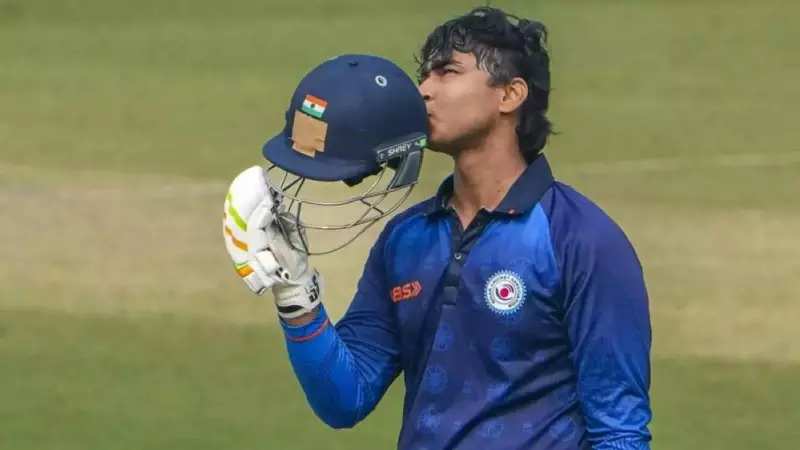
Indian domestic cricket witnessed a historic and record-shattering performance on Wednesday, as 14-year-old batting prodigy Vaibhav Suryavanshi hammered an astonishing 190 runs off just 84 balls for Bihar against Arunachal Pradesh. His innings, featuring a blistering 36-ball century, included the fastest 150 ever scored in List A cricket, surpassing benchmarks set by global stars like AB de Villiers and Jos Buttler.
A Day of Monumental Records and One-Sided Contests
Vaibhav Suryavanshi's assault powered Bihar to a colossal total of 574 for 6 in 50 overs at the JSCA Oval Ground in Ranchi. This monumental score is now the highest team total in the history of List A cricket, obliterating the previous record of 502/2 set by Tamil Nadu against the same opponent, Arunachal Pradesh, in November 2022.
The day was prolific for batsmen across the country, with 22 centuries scored in the Vijay Hazare Trophy. Stars like Virat Kohli, Rohit Sharma, and Ishan Kishan (who hit a 33-ball hundred) all registered tons. Ten team totals crossed 300, two went over 400, and Bihar's 574 stood alone above 500.

However, the sheer scale of Bihar's 397-run victory underscored a persistent and worrying gap in the domestic structure. It highlighted the vast quality differential between established cricketing states and the newer northeastern teams, which were granted First-Class status in 2018.
Experts Debate the Path Forward for Talent and Structure
The record-breaking feat has ignited a crucial conversation about the competitive balance in Indian domestic cricket and the development pathway for exceptional talents like Suryavanshi. While the young batter is already a prized asset for the BCCI after a standout IPL season, he currently competes in the Plate Group against teams whose players often lack formal training infrastructure.
Former national selector and BCCI General Manager of Cricket Operations, Saba Karim, acknowledged the challenge. He emphasized the role of the BCCI's Centre of Excellence (CoE) in Suryavanshi's growth and suggested that northeastern states might benefit from initially playing only T20 cricket at the top level for exposure.
Devang Gandhi, another former national selector, was blunt about the value of such records. "As selectors, you will never take these records into account," he stated, urging the BCCI to create a parallel system to ensure talents from these groups face tougher competition. He warned that prolonged exposure to poor-quality bowling could allow bad habits to creep into a young player's game.
Structural Reforms and Mentorship Proposed
Former India opener and National Cricket Academy coach, WV Raman, proposed a innovative solution: the BCCI's Centre of Excellence could field its own team in domestic competitions. This, he argued, would ensure that emerging talents consistently play high-quality cricket without leaving the system.
Both Gandhi and Raman also pointed to the need for deeper development work in the northeastern states. Gandhi noted that reliance on outstation players in key roles wasn't helping local talent flourish. Raman suggested a mentorship model, where veteran former India players, who often play domestic cricket mainly to prepare for the IPL, could be incentivized to guide and coach players in these regions.
The BCCI has been working to improve facilities in these states since their induction. However, as Wednesday's match proved, translating infrastructure and match fees into on-field competitiveness remains a significant hurdle that the board must urgently address to preserve the integrity and value of its premier domestic tournaments.