The history of Test cricket's highest run-scorers is a saga of legendary batsmen setting and breaking monumental records. Before the era of Sunil Gavaskar and Sachin Tendulkar, it was the West Indies' iconic all-rounder, Sir Garry Sobers, who set a towering benchmark. Sobers retired in 1974 with 8,032 runs from 93 Tests, a record that stood for seven years until an English legend etched his name in history on Indian soil.
The Stage Was Set at Feroz Shah Kotla
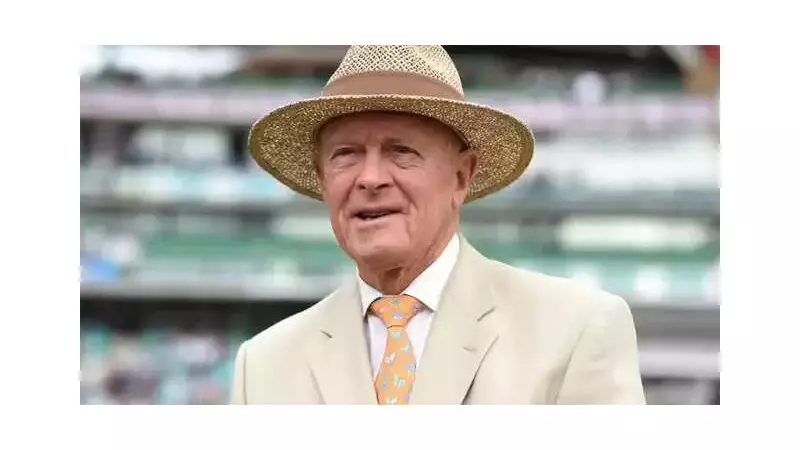
On December 23, 1981, the fourth Test between India and England at Delhi's Feroz Shah Kotla Stadium became the venue for a historic shift. England's opening batter, Geoffrey Boycott, was in the final series of his illustrious 18-year career. The 41-year-old needed just 82 more runs to overtake Sobers' long-standing record of most runs in Test cricket.
After England captain Keith Fletcher won the toss and chose to bat, Boycott, alongside Graham Gooch, laid a solid foundation. The openers put on a 132-run partnership, with both crossing fifty. Dilip Doshi eventually broke the stand, dismissing Gooch for 71. By the close of play on that fateful opening day, Boycott had not only secured the record but remained unbeaten on 86 runs, taking his career tally to a new world record of 8,037 runs.

A Century to Seal the Feat
Boycott returned the next day to complete his 22nd and final Test century. He was finally dismissed by Doshi for a patient 105, an innings that spanned 285 balls and included seven boundaries. He added another century partnership, this time 116 runs with Chris Tavare, who scored a magnificent 149.
The match itself progressed towards a draw. England declared their first innings at 476 for 9. India, led by Sunil Gavaskar's 46 and a century from Gundappa Viswanath (107), replied with 487. England briefly batted again, declaring at 68 without loss, and the teams shook hands on a draw. However, the result was secondary; the match was forever immortalized by Boycott's record-breaking achievement on the first day.
An Abrupt End to a Storied Career
Boycott's Test career concluded in the following match of the series at Kolkata's Eden Gardens. It was a quiet farewell, as he scored only 18 and 6 in his final Test, which also ended in a draw. Interestingly, Boycott returned to England before the tour concluded, bringing an abrupt end to his 108-Test career as the format's leading run-getter. India went on to win the six-match series 1-0.
This record was another milestone in the evolving narrative of Test cricket's greatest accumulators. Boycott's reign at the top was later surpassed by Sunil Gavaskar, who became the first to cross 10,000 Test runs in 1987, finishing with 10,122. The pinnacle was eventually reached by Sachin Tendulkar, who retired in 2013 with an almost mythical tally of 15,921 runs. Yet, the day in Delhi remains a crucial chapter, marking the moment when Geoffrey Boycott dethroned the great Garry Sobers to become Test cricket's new run king.