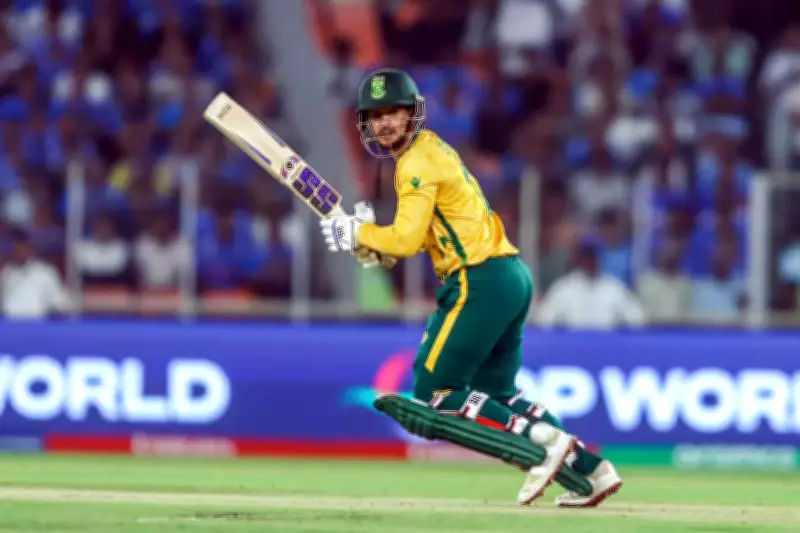
De Kock Questions ICC's Fairness as England Secures Earlier Departure
South African wicketkeeper-batter Quinton de Kock has publicly criticized the International Cricket Council (ICC) following reports that the England cricket team will return home before both the South African and West Indies squads after their eliminations from the ICC Men's T20 World Cup 2026. The disparity in travel arrangements has sparked controversy, with de Kock suggesting that certain teams wield greater influence within international cricket circles.
Travel Disruptions Due to Geopolitical Conflicts
The travel plans for multiple cricket teams have been significantly affected by international airspace restrictions linked to ongoing conflicts involving the United States, Israel, and Iran. As a direct consequence, several sides have remained stranded in India while awaiting charter flights organized by the ICC to facilitate their safe return home.
The West Indies team was knocked out of the tournament on March 1 following a defeat to the India national cricket team during the Super 8 stage. Meanwhile, South Africa's campaign concluded with a semi-final loss to the New Zealand national cricket team. Since their respective eliminations, both squads have been waiting in India for travel arrangements to be finalized.

The Caribbean side has been in the country for approximately one week following their elimination, while the Proteas have been waiting for three days. In stark contrast, England suffered defeat against India in the second semi-final on Thursday but are scheduled to depart for home on Saturday, just two days after their exit from the tournament.
De Kock's Social Media Outburst
The apparent imbalance prompted de Kock to question the ICC's handling of the situation through a pointed Instagram Stories post. "Funny @icc, we have heard nothing! Meanwhile, England are leaving before us somehow? @westindies and @proteasmencsa are just in the dark! Strange how different teams have more pull than others," wrote the South African cricketer.
This sentiment was echoed by former England captain Michael Vaughan, who raised similar concerns about the travel situation on social media platform X. "So England got knocked out on Thurs, get a charter home today .. West Indies go out last Sunday and are still in Kolkata .. SA in the same position .. That's where the power is all wrong .. All teams in this situation should be treated the same .. just because you are more powerful at the ICC table shouldn't count .. #JustSaying," Vaughan posted.
Flight Logistics and Team Frustrations
According to reports from ESPNCricinfo, England are expected to depart India on Saturday, while both South Africa and the West Indies are likely to leave on Sunday once charter flights arranged by the ICC become available. England's flight is scheduled to travel directly to London, whereas South Africa and West Indies are set to travel first to Johannesburg, after which the Caribbean side will continue their journey to Antigua.
However, neither team has officially confirmed the exact timing of their departures, adding to the uncertainty and frustration within the camps. West Indies head coach Daren Sammy highlighted the team's extended stay by posting "Day 6" on X on Friday, emphasizing how long the squad had been stranded in Kolkata since their match against India at the historic Eden Gardens stadium.
This is not the first instance of travel delays affecting teams during the tournament. Earlier, the Zimbabwe national cricket team also faced similar challenges after playing their final match against South Africa on March 1 in New Delhi, eventually departing India on March 4 following logistical hurdles.
Broader Implications for Cricket Governance
The situation has raised important questions about equity and fairness in international cricket administration. De Kock's comments underscore growing concerns that some cricket boards may receive preferential treatment based on their financial or political influence within the ICC framework.

As teams await confirmation of their travel plans, the incident serves as a reminder of how geopolitical events can unexpectedly impact international sports tournaments. The ICC now faces scrutiny over its crisis management protocols and whether all member nations receive equal support during such challenging circumstances.