The second One Day International between India and South Africa in Raipur is set to be heavily influenced by one uncontrollable factor: evening dew. The team management's biggest selection headache revolves around whether to pick the off-spin of Washington Sundar or the pace-bowling all-rounder Nitish Kumar Reddy, with the final call likely to be dictated by the toss and the anticipated condensation.
The Dew Dilemma: A Bowler's Nightmare
The first ODI in Ranchi served as a stark warning. What seemed a par score of 330 while batting first transformed into a potential 400-run chase under lights, all due to the heavy dew. The ball became incredibly slippery, resembling a bar of soap, forcing fielders and bowlers to constantly use towels. Indian spinner Kuldeep Yadav later described the challenge, stating the ball was getting "really wet" and that bowlers had to constantly innovate, mixing up deliveries to keep batters guessing.
This phenomenon directly impacts team composition. South Africa, learning from Ranchi, packed their side with pacers, fielding only one specialist spinner. For India, the choice is nuanced. While Washington Sundar is undoubtedly the superior bowler in normal conditions and if bowling first, a dew-soaked ball severely hampers a spinner's grip and control. This scenario could push the think-tank towards Nitish Reddy, whose seam-up bowling might be easier to manage in the wet.

Raipur's Stadium and the New ICC Rule
The match will be played at the Shaheed Veer Narayan Singh International Cricket Stadium, a massive venue with a capacity of 60,000-65,000, making it India's third-largest. Local reports suggest boundaries of at least 80 metres, which could be a saving grace for bowlers, as hitting sixes with a dewy, soft ball becomes harder. However, South Africa's captain Temba Bavuma dismissed crowd noise as a concern, focusing instead on the toss and dew.
Compounding the bowlers' challenge is a new ICC rule trialled in Ranchi. The rule mandates the use of two new balls for the first 34 overs, after which the fielding side chooses one ball for the remainder of the innings. The intention was to aid reverse swing later on, but with heavy dew, the single ball simply becomes more saturated and difficult to handle, further tilting the balance in the batsman's favour. South Africa's long batting lineup, evidenced by Marco Jansen's blistering knock in the first game, is arguably better equipped to exploit this than India's tail.
Contrasting Team Philosophies Amidst the Moisture
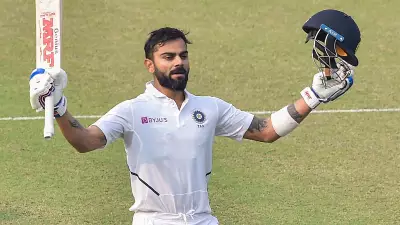
The series highlights the different stages the two cricketing giants are in. For India, the focus has intensely returned to seasoned stars like Virat Kohli and Rohit Sharma. Conversely, South Africa views this as a building phase. Captain Bavuma explicitly stated their approach is about "giving chances to young guys" as they construct their ODI team for the future.
Thus, the Raipur ODI sets up a fascinating clash: a team re-embracing its experienced core versus a team investing in youth, with the ever-present dew acting as the great equalizer. The team that best adapts its strategy and personnel to the slippery conditions will gain a crucial advantage in the series.