England's March Window Ends on Disappointing Note at Wembley
England's March international window concluded with a flat and concerning performance at Wembley Stadium, where the absence of captain Harry Kane was felt far more profoundly than anticipated. Following an already questionable 1-1 draw with Uruguay, the Three Lions suffered a 1-0 defeat to Japan that sharpened existing doubts about the team's attacking capabilities without their talismanic leader.
Mitoma's Goal Exposes England's Attacking Deficiencies
Kaoru Mitoma's decisive goal for Japan exposed England's lack of cutting edge in the final third, leaving head coach Thomas Tuchel to address what has become a familiar concern. Despite boasting considerable squad depth, England appeared incomplete and unconvincing without their captain leading the attacking line. The team managed only one goal across both March fixtures, coming from a set piece finished by a defender—a detail that underscores their offensive struggles more clearly than any statistic.
Tuchel Defends Reliance on Kane as Normal for Elite Teams
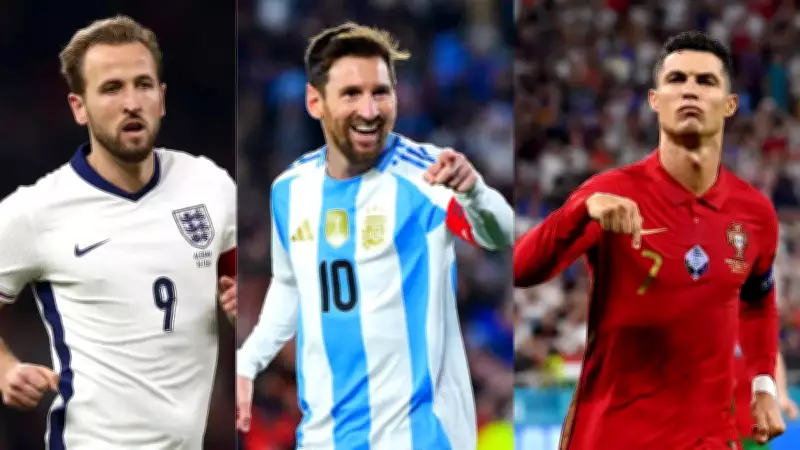
Thomas Tuchel did not shy away from the growing debate about England's dependency on Harry Kane. Instead, he embraced the discussion, placing Kane alongside the game's most influential figures. "Why would Argentina not rely on Messi or Portugal not rely on Cristiano Ronaldo? This is totally normal," Tuchel stated. "Key figures left camp for us, and we saw that a bit. We lacked a punch."

The German coach expanded on this perspective later, emphasizing that elite teams naturally build around their best players. "In the absence of Harry Kane, we don't have the same threat. Bayern Munich, in the absence of Harry Kane, don't have the same threat. For top teams and top nations, it's normal to rely on top players. We can win without Harry, but it's easier to win with him, of course."
Kane's Influence Extends Beyond Goals
It is difficult to argue against the statistical evidence supporting Kane's importance. His remarkable record for England speaks for itself, and his current form at Bayern Munich only strengthens the case for his indispensability. Beyond goals, Kane's presence provides:
- Structural clarity in England's attacking setup
- Rhythm and flow in the final third
- Belief and conviction among teammates
Without their captain, England appeared as a team searching for answers in real time, lacking the organizational framework and confidence that Kane typically provides.
Contrasting Models from Argentina and Portugal
However, Tuchel's comparison to Argentina and Portugal invites closer examination. While Lionel Messi and Cristiano Ronaldo remain central figures for their respective national teams, both Argentina under Lionel Scaloni and Portugal guided by Roberto Martínez have demonstrated greater ability to cope without their superstars.
Argentina has managed strong results in competitive fixtures even when Messi has been unavailable, suggesting a system that extends beyond one player. Similarly, Portugal has shown impressive balance and attacking cohesion while collecting results without Ronaldo. This contrast places England in an uncomfortable position—despite their deep talent pool, their dependency on Kane appears more pronounced and problematic.
The Path Forward for Tuchel's England
For Thomas Tuchel, the primary challenge is not to eliminate England's reliance on Harry Kane completely, but rather to build sufficient structure and alternative attacking options around their captain so that his absence does not unravel the entire approach. Currently, England have not reached this level of tactical maturity, and the Wembley performances against Uruguay and Japan served as stark reminders that significant progress remains necessary.
The March international window has highlighted that England's journey toward becoming a truly complete team still has multiple layers to develop, particularly in creating attacking systems that can function effectively without their world-class captain leading the line.