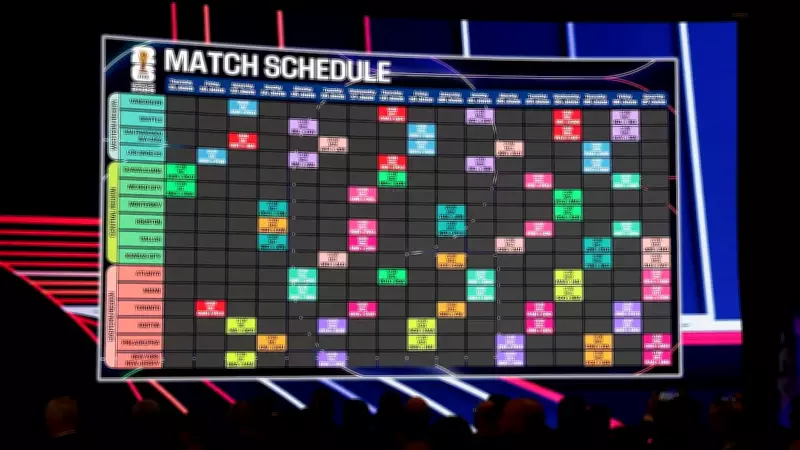
The FIFA World Cup 2026 will feature an expanded 48-team tournament, the largest in its history, replacing the previous 32-team format. This new structure brings significant changes to the group stage and knockout qualification process.
Expanded Field and Group Stage Structure
The tournament will consist of 48 teams divided into 12 groups of four. Each team will play three matches in a round-robin format within their group, totaling 72 group-stage matches. This expansion aims to increase global participation and provide more opportunities for nations to compete on the world stage.
Knockout Qualification System
Under the new format, the top two teams from each group—24 teams in total—automatically advance to the knockout stage. Additionally, the eight best third-placed teams across all groups will also qualify, resulting in a 32-team knockout bracket. This system ensures that more teams remain competitive throughout the group stage.

Tiebreaker Criteria for Third-Placed Teams
To determine which third-placed teams advance, FIFA has established a clear ranking order: points, goal difference, goals scored, head-to-head results, and fair-play points (fewer yellow and red cards). If teams remain tied after these criteria, a draw will be conducted. This structured approach minimizes ambiguity and ensures fairness.
Knockout Stage Progression
The knockout stage begins with a round of 32, followed by the round of 16, quarter-finals, semi-finals, and the final. Matches that are level after regulation time will proceed to extra time (two 15-minute periods) and, if necessary, a penalty shootout. The tournament is scheduled to be hosted across the United States, Canada, and Mexico, marking the first time three nations jointly host the event.
Key Statistics
- 48 teams in the expanded tournament
- 12 groups of four teams each
- 24 teams qualifying directly from group top-two positions
- 8 additional teams from best third-placed finishes
- 32 total teams in the knockout stage
The 2026 World Cup represents a historic shift in the competition's structure, aiming to balance inclusivity with competitive integrity. According to FIFA, the changes are designed to enhance the tournament's appeal while maintaining high-quality matches throughout.