Gambhir Stands Firm in Support of Arshdeep Singh After Controversial On-Field Incident
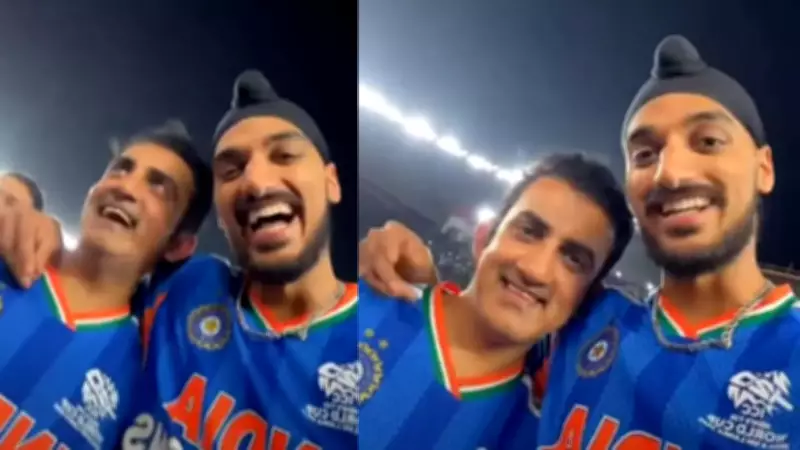
India's head coach Gautam Gambhir has issued a robust defense of fast bowler Arshdeep Singh in the wake of the pacer's on-field altercation with New Zealand's Daryl Mitchell during the climactic final of the 2026 ICC Men's T20 World Cup. Gambhir asserted he would have been "absolutely fine" even if the bowler had not extended an apology following the heated exchange, which resulted in an ICC sanction.
The Flashpoint: A Tense Moment in Ahmedabad
The contentious episode unfolded during the 11th over of New Zealand's innings in the championship match held at Ahmedabad. After Mitchell powerfully dispatched Arshdeep for two consecutive sixes, the Indian pacer, fielding the ball on his follow-through, hurled it back towards the batter. The projectile struck Mitchell on the pads, escalating tensions on the field.
Although Arshdeep subsequently apologized to the New Zealand vice-captain after the match concluded, the International Cricket Council took disciplinary action. The governing body fined the pacer 15 percent of his match fee for a Level 1 breach of the ICC Code of Conduct and added one demerit point to his disciplinary record.

ICC's Ruling and Gambhir's Dismissive Response
Arshdeep was found guilty of violating Article 2.9 of the ICC Code of Conduct, which specifically addresses throwing a ball at or near a player in an inappropriate or dangerous manner during an international fixture. The charge was formally leveled by on-field umpires Richard Illingworth and Alex Wharf, supported by third umpire Allahuddien Paleker and fourth umpire Adrian Holdstock.
Match referee Andy Pycroft imposed the sanction, which Arshdeep accepted, thereby obviating the need for a formal hearing. However, Gambhir significantly downplayed the controversy, insisting the bowler's reaction was a natural expression of competitive spirit and should not be overly scrutinized.
Gambhir's Unwavering Stance on Player Aggression
In an exclusive interview with ANI, Gambhir elaborated on his perspective, emphasizing the importance of aggression when representing one's nation. "That is okay. You're representing your country. You're bound to show aggression. There's nothing wrong with that. No bowler likes to get hit for two sixes. And that is the kind of response I want to see from my players," Gambhir stated unequivocally.
He further reinforced his position by noting, "And that there is nothing wrong. Or in fact, even if sorry is not said, I was absolutely fine with it. I was absolutely fine. He doesn't need to say sorry. Yes, it's good on him that he apologised. But on a cricket field, there are no friends. Neither are there any enemies."
Social Media Amplification and Historical Context
The seasoned coach also suggested that such moments are frequently exaggerated in the contemporary era due to intense social media scrutiny and instant viral potential. "Your job is to represent your country. Your job is to win a game of cricket for your country. And you don't want to get hit for two sixes. And that was fine. I thought we should not blow all these things out of proportion because these things used to happen before. Today, because of social media, things escalate a lot," he added, providing context to the incident.
Triumph Amidst Controversy: India's Historic Victory
This incident occurred within a match that ultimately culminated in historic glory for India. The host nation decisively crushed New Zealand by a commanding margin of 96 runs to clinch their third T20 World Cup title. This monumental achievement also marked India as the first side ever to successfully defend the T20 World Cup trophy and to secure victory on home soil, adding a layer of historic significance to the tournament's conclusion.
Gambhir's steadfast defense of Arshdeep Singh underscores a broader philosophy within the team management, prioritizing competitive fire and national pride while navigating the fine line between acceptable aggression and disciplinary breaches as defined by international cricket's governing bodies.