Richard Hadlee's Historic 400th Test Wicket: Redefining Bowling Limits
By the late 1980s, Test cricket had witnessed numerous legendary fast bowlers, endured marathon spells, seen careers shortened by physical strain, and observed the toll of excessive workload on athletes. However, one concept remained elusive: the certainty that a single individual could fundamentally expand the perceived boundaries of what a bowler could achieve in the longest format of the game. Richard Hadlee was steadily approaching that very frontier, quietly reshaping expectations through his exceptional performances.
The New Zealand Reality: A One-Man Bowling Army
Throughout much of Hadlee's illustrious career, New Zealand cricket operated under a unique reality. The team lacked extensive depth in their bowling resources and did not possess a continuous pipeline of emerging star players. What they did have, however, was Richard Hadlee. He shouldered immense responsibility, opening the bowling with the new ball, returning for crucial spells with the old ball, and effectively performing the roles of multiple bowlers combined. By 1990, at 39 years of age and approaching the twilight of his international journey, Hadlee remained the absolute cornerstone of New Zealand's cricketing strategy on the field.
The Christchurch Test Against India: A Familiar Script
The Test match against India at Christchurch unfolded according to a well-established pattern for New Zealand. The hosts constructed a formidable first-innings total of 459, largely thanks to John Wright's masterful display of controlled and patient batting. His monumental 185-run innings, spanning over nine hours at the crease, provided a solid foundation. India then found themselves confronting a scenario they had encountered repeatedly during that era: facing Richard Hadlee with the new ball in hand.

Hadlee, partnering effectively with Danny Morrison, systematically dismantled the Indian batting lineup. The visitors lost wickets at regular intervals and were eventually bowled out for a mere 164 runs. Hadlee contributed significantly with figures of 3 for 45, while Morrison claimed an impressive five-wicket haul. New Zealand enforced the follow-on, putting India under immense pressure once again.
India's Resistance and the Historic Moment
In their second innings, India demonstrated greater resilience. Openers W.V. Raman and Manoj Prabhakar forged a promising partnership of 80 runs. Raman advanced to a commendable 96, and Prabhakar scored 40 before his dismissal brought Sanjay Manjrekar to the crease. Manjrekar faced only four deliveries.
Hadlee delivered a precise ball that shattered the stumps, dismissing Manjrekar for just four runs. While this appeared as a routine dismissal within the context of the match, it carried monumental significance in the annals of cricket history. This particular wicket marked Richard Hadlee's 400th Test scalp, an unprecedented achievement at that time. Neither Malcolm Marshall, nor Dennis Lillee, nor Fred Trueman had reached this milestone before. Hadlee celebrated by raising his arms and looking skyward, acknowledging the historic feat.
India were eventually bowled out for 296 in their second innings, with Hadlee finishing with figures of 4 for 69, giving him seven wickets for the match. Morrison added six wickets to his tally. New Zealand were set a trivial target of two runs, which they comfortably chased without losing a wicket to secure a comprehensive ten-wicket victory.
The Significance of 400 Wickets: Breaking Psychological Barriers
The match itself was relatively straightforward for New Zealand, but the moment of Hadlee's 400th wicket was anything but ordinary. His statistical achievements already positioned him among the pantheon of cricketing greats. He had single-handedly won matches for his country and was far more than just a fast bowler. With his capable batting skills in the lower order, Hadlee could alter the course of games, earning him recognition alongside Ian Botham, Imran Khan, and Kapil Dev as one of the defining all-rounders of the 1980s.

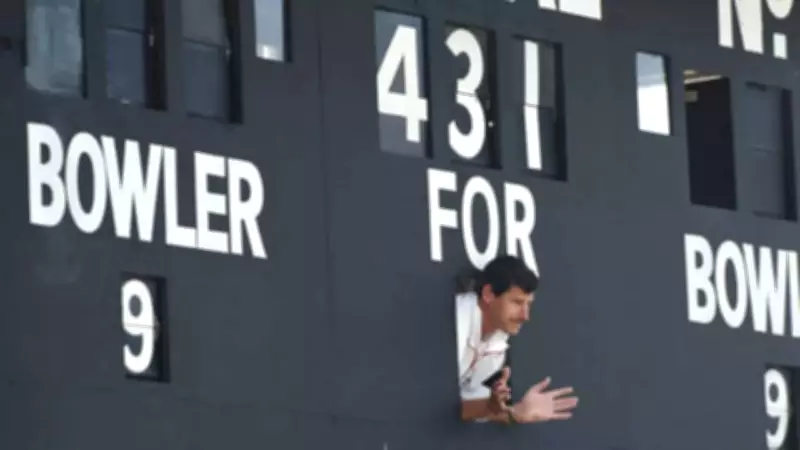
What made the 400-wicket milestone particularly remarkable was not merely the round number itself, but the psychological barrier it shattered. Years earlier, Fred Trueman had famously remarked about reaching 300 wickets, stating, "Whoever does it will be bloody tired." Hadlee, at 39, defied this notion. He appeared in complete control and far from fatigued. He would go on to capture 31 more wickets before retiring later that year, concluding his Test career with 431 wickets from 86 matches at an outstanding average of 22.29. In his final appearance for New Zealand against England, he claimed a five-wicket haul, taking a wicket with his very last delivery in international cricket.
A New Ceiling in Cricket History
Muttiah Muralitharan and Shane Warne would make their Test debuts just two years later, eventually propelling wicket-taking records to unimaginable heights. However, on February 4, 1990, that future remained unknown and uncertain. The landmark of 400 Test wickets represented uncharted territory, a new pinnacle that had never been scaled before. On that historic day, cricket discovered a new ceiling, thanks to the relentless excellence of Richard Hadlee.