Hardik Pandya's Decade: From Adelaide Debut to World Cup Glory
On January 26, 2016, a young Hardik Pandya ran in to bowl his first over for India in Adelaide against Australia in the opening T20 international of the series. That initial over proved expensive, conceding 19 runs, but by the end of the match, he had claimed two wickets. This debut encapsulated much of what would define his career over the next ten years: immediate impact, volatility, intense scrutiny, and remarkable resilience.
The Making of a Modern All-Rounder
A decade later, Pandya has evolved into one of India's most significant white-ball all-rounders. His journey has spanned multiple formats, franchises, and personal phases—from explosive beginnings to debilitating injuries, from leadership ascension to public criticism, and ultimately, a return to prominence at the highest level of the game.
Signature Style and Early Promise
Brisk seam bowling and powerful hitting have been the hallmarks of Pandya's game from the outset. He has never been a player who accumulates runs slowly; instead, his value lies in his timing, leverage, and ability to swiftly alter the course of a match.

This was evident even before his international debut. During the 2015 IPL season, playing for Mumbai Indians, Pandya announced his arrival with an unbeaten 61 off just 31 balls against Kolkata Knight Riders. This innings marked the beginning of a long and successful association with Mumbai, where he would go on to win four IPL titles and establish himself as one of the league's most dependable and destructive finishers.
Across T20 cricket globally, Pandya has amassed over 5,800 runs at a strike rate exceeding 143, while also taking more than 200 wickets. In international T20s alone, he has surpassed 2,000 runs and claimed 100 wickets, showcasing his dual-threat capability.
International Debut and Early Setbacks
Pandya's international career commenced on India's limited-overs tour of Australia in 2016. He soon impressed on seamer-friendly pitches during the Asia Cup in Bangladesh, reinforcing the belief that India had finally discovered a genuine seam-bowling all-rounder.
This optimism carried into the 2016 T20 World Cup. Although he did not bat frequently, his influence was profound. Against Bangladesh, he defended two runs off the final three balls to secure a thrilling one-run victory for India. However, a week later, he experienced heartbreak when he bowled a no-ball to Lendl Simmons in the semi-final, a match India ultimately lost, with West Indies going on to win the tournament.
These contrasting moments represented extremes but accelerated his learning curve and mental fortitude.
Becoming Indispensable to Team India
Pandya quickly became central to India's white-ball balance. In ODIs, he has scored over 1,900 runs at an average close to 33 while taking more than 90 wickets. His batting strike rate has consistently remained above 110, reflecting his role as a momentum shifter rather than a traditional anchor.
In Test cricket, he played only 11 matches before injuries curtailed his participation, but he still left his mark, notably with a century in Galle in 2017.
Challenges and Controversies
His ascent was interrupted by a serious back injury in 2018, the effects of which have persisted throughout his career. At various points, Pandya has been restricted from bowling, necessitating careful workload management by the Indian team.
In early 2019, he faced controversy over remarks made on a television show, leading to disciplinary action from the BCCI and a temporary absence from the game. This episode served as a reminder that his career, much like his cricket, has unfolded under constant public and media scrutiny.
Leadership Evolution and Reinvention
The 2020s marked a significant shift for Pandya as he embraced a senior role and earned increasing trust for his tactical clarity.
This evolution was most visible during IPL 2022 when he was appointed captain of the newly formed Gujarat Titans despite having no prior leadership experience. He led an unfancied squad to the title in their debut season, scoring 487 runs—the highest for the franchise—and contributing effectively with the ball.

In 2023, the Titans reached the final once again. Across these two seasons, Pandya excelled both as an all-rounder and a captain, reshaping perceptions of his capabilities within Indian cricket. By the conclusion of the 2022 T20 World Cup, discussions had begun about his potential as a future captain for India.
Return to Mumbai and a Turbulent Phase
The most testing period arrived during IPL 2024. Pandya was traded back to Mumbai Indians and named captain, replacing the iconic Rohit Sharma. This decision triggered strong reactions from fans. At multiple venues, including Mumbai, he faced booing from sections of the crowd. The team struggled throughout the season, finishing last, and the atmosphere remained tense.
Pandya chose not to publicly engage with the backlash. In 2025, Mumbai recovered to qualify for the playoffs, but the previous year's experience left a lasting imprint on his personal and professional journey.
World Cup Final and Career Affirmation
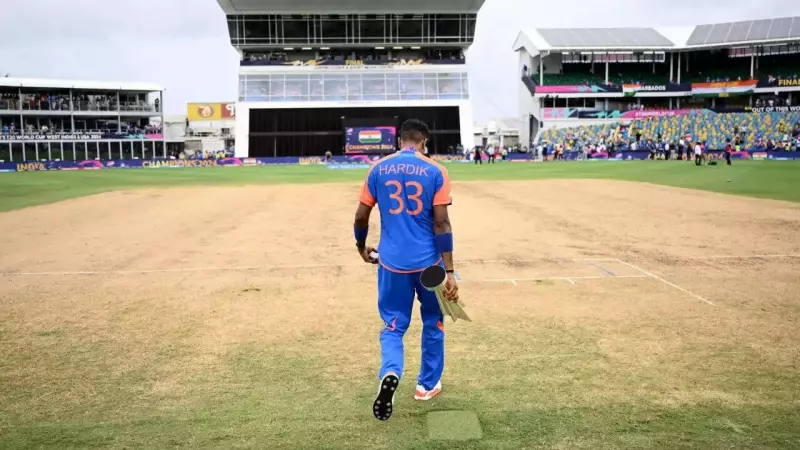
In 2024, a defining moment reframed the narrative around Pandya. During the T20 World Cup final, he delivered under immense pressure with the ball, controlling critical phases as India clinched the title. In a team built around specialists, his ability to influence both batting and bowling disciplines stood out prominently.
This was not a traditional comeback story but rather a powerful reaffirmation of his indispensable role when the stakes were at their highest.
Statistical Impact and Sustained Relevance
Pandya's career statistics underscore the unique cricketer he has become. Across all international formats, he has scored more than 4,400 runs and taken over 200 wickets. In IPL cricket, he has accumulated 2,749 runs at a strike rate nearing 147 and claimed 78 wickets.
His finest IPL season as an all-rounder occurred in 2019 when he scored 402 runs at a strike rate above 190 and took 14 wickets in a title-winning campaign for Mumbai Indians.
These numbers do not narrate a tale of sheer dominance but rather one of sustained relevance and consistent impact over an extended period.
Beyond Statistics: Influence and Legacy
While statistics are significant—and Hardik Pandya has plenty of them—his influence extends beyond mere numbers. His ability to clear boundaries with ease alters how opponents strategize during the final overs of a match. With the ball, his combination of cutters, pace, and aggression unsettles even the most experienced batters.
His role in India's white-ball strategy inherently involves risk, reward, and volume. In the modern cricket era, such flexibility is highly prized, and Pandya consistently delivers on that front.
A Decade Defined by Movement and Resilience
Hardik Pandya's ten years in Indian cricket have been characterized by constant movement—across roles, public perceptions, and expectations. He has experienced celebration, questioning, criticism, and renewed trust, often within remarkably short timeframes.
From that costly first over in Adelaide to delivering under pressure in a World Cup final, Hardik Pandya's career arc has been anything but smooth. Yet, it has endured, showcasing his resilience and unwavering commitment to the sport.