ICC and Pakistan Cricket Board Restart Crucial Talks Over T20 World Cup Boycott Threat
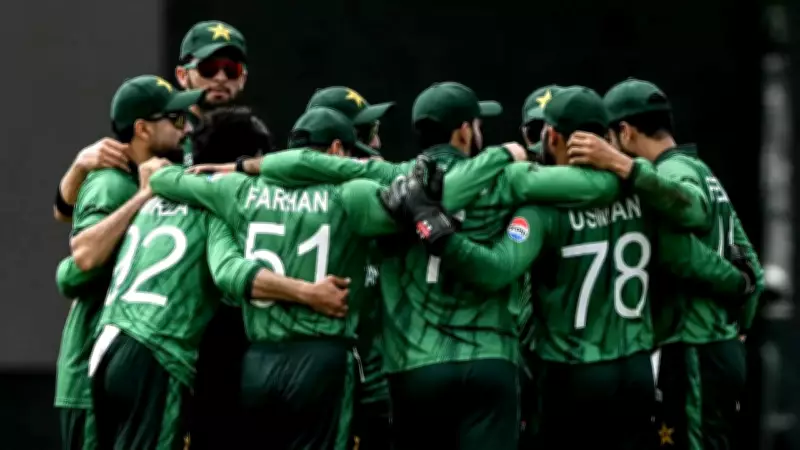
After a tense week of uncertainty in international cricket circles, the International Cricket Council (ICC) and Pakistan Cricket Board (PCB) have officially resumed critical discussions regarding the Pakistan government's controversial directive to boycott their upcoming T20 World Cup match against arch-rivals India. The high-stakes match is scheduled to take place in Colombo on February 15, with the boycott threat creating significant disruption in tournament preparations.
PCB Initiates Dialogue Following ICC's Legal Assessment
The PCB approached the ICC for renewed dialogue after the global cricket governing body characterized Pakistan's legal arguments to justify the potential boycott as "weak" and insufficient. This development comes as the PCB attempts to navigate complex international cricket regulations while responding to political pressure from its home government.
In a strategic legal move, the Pakistan board has invoked the force majeure clause within cricket's regulatory framework, seeking to avoid potential sanctions from the ICC for what would constitute a violation of the Member's Participation Agreement (MPA). This clause typically allows for non-performance of contractual obligations under extraordinary circumstances beyond a party's control.

ICC Demands Detailed Explanation and Questions PCB's Actions
It has now emerged that the International Cricket Council has formally requested the Pakistan Cricket Board to provide comprehensive and detailed explanations for their potential boycott decision. The ICC has specifically questioned whether PCB officials undertook sufficient measures to prevent this situation from arising in the first place.
While the Pakistan board has not officially communicated a final boycott decision to the ICC, they have formally written to the global body invoking force majeure provisions. In their correspondence, PCB officials cited the "government instruction received to not take the field versus India" as their primary justification for considering non-participation.
ICC Outlines Strict Conditions and Warns of Severe Consequences
The International Cricket Council has clearly outlined the specific conditions under which force majeure can be legitimately invoked within cricket's regulatory framework. These conditions represent the fundamental prerequisites for any non-participation to be considered valid under international cricket law.
Beyond the legal technicalities, the ICC has emphasized the far-reaching implications of such a boycott decision, including:
- Significant sporting consequences for tournament integrity
- Substantial commercial losses for multiple stakeholders
- Serious governance challenges for international cricket administration
In a formal warning reminiscent of their February 1 statement, the ICC has cautioned PCB officials about the potential financial damages that could result from proceeding with the boycott. These damages could potentially run into hundreds of millions of dollars, creating severe financial strain for Pakistan cricket.
Political Context and Regional Cricket Dynamics
Pakistan Prime Minister Shehbaz Sharif has publicly declared that the boycott call represents a gesture of solidarity with Bangladesh, following the ICC's decision to expel the Bangladesh team from the T20 World Cup. This expulsion occurred after the Bangladesh Cricket Board (BCB) refused to travel to India for tournament matches, creating a complex geopolitical dimension to the current cricket controversy.
The potential boycott carries enormous financial implications for Pakistan cricket, with losses potentially reaching hundreds of millions of dollars. This financial impact would affect not just the PCB's immediate operations but could have long-term consequences for cricket development and infrastructure in Pakistan.
As negotiations continue between the ICC and PCB, the international cricket community watches closely, aware that the outcome could set important precedents for how cricket navigates the intersection of sport, politics, and international relations in future tournaments.