India's Pitch Focus Intensifies Ahead of Crucial Zimbabwe Encounter at T20 World Cup
Traditionally, when playing T20 cricket on home soil, the Indian team has not placed excessive emphasis on pitch conditions. However, the narrative has shifted dramatically following a heavy defeat against South Africa and the persistent batting difficulties experienced by Indian players throughout the ongoing T20 World Cup. Suddenly, the characteristics of the 22-yard strip have become a central topic of discussion within the team's strategy sessions.
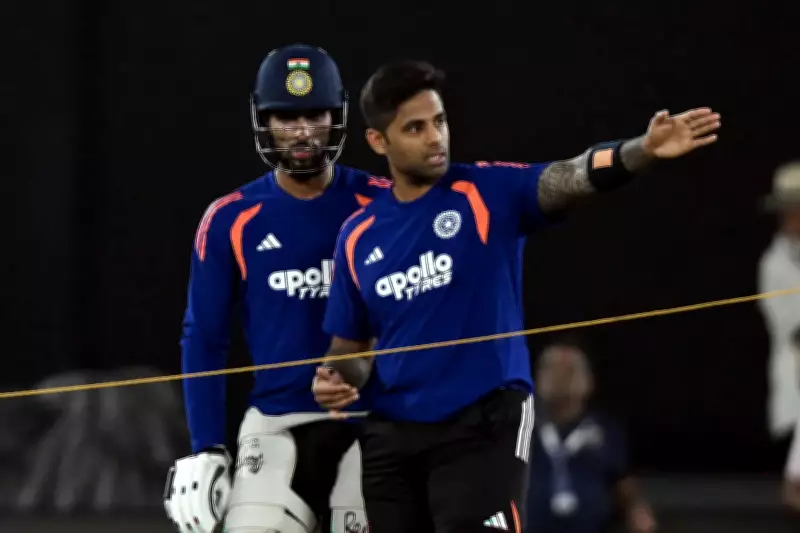
As the Indian squad arrived in Chennai on Monday afternoon, preparing for their must-win match against Zimbabwe scheduled for Thursday, it was evident that the team management had conducted thorough research on the pitch expected at the MA Chidambaram Stadium, commonly known as Chepauk. This heightened attention comes at a critical juncture for Suryakumar Yadav's team.
Chepauk's Transformation: From Slow Turner to Batting Paradise
India's power-hitters, who typically thrive when the ball comes onto the bat with pace, have encountered significant challenges during this tournament. Compounding this issue, Zimbabwe boasts several 'pace-off' bowlers who could exploit sluggish conditions. Fortunately for India, the Chepauk surface might offer some respite. Historically renowned as a slow, turning track that would favor Zimbabwean bowlers like Sikander Raza and Blessing Muzarabani, recent developments suggest a notable change.

The ground underwent extensive renovation before the World Cup, with one of the pitches completely relaid. Crucially, the Tamil Nadu Cricket Association ensured that no competitive cricket was played at the stadium for over five months, allowing the surfaces to remain fresh and potentially altering their traditional behavior.
Consequently, the ball is now coming onto the bat much more favorably on both the red and black soil pitches compared to recent years. This shift was evident in the tournament's opening day-game at the venue, where Afghanistan faced New Zealand. Afghan coach Jonathan Trott surprisingly omitted left-arm wrist spinner and Chennai Super Kings star Noor Ahmad from the playing eleven. Afghanistan failed to defend a total of 182, with New Zealand chasing down the target in just 17.5 overs. This represented a stark departure from previous day-games at Chepauk, where a run rate of eight per over was typically considered par.
High-Scoring Trends and Expert Observations
Examining other matches at Chepauk during this World Cup further illustrates the changing conditions. New Zealand comfortably chased down 175 against the UAE in a mere 15.2 overs. In another encounter, Canada's Yuvraj Samra scored a fluent 110 from just 65 balls against the Black Caps, with the ball showing little tendency to turn or stop. New Zealand subsequently chased the target of 176 in 15.1 overs, underscoring the batting-friendly nature of the pitch.
New Zealand captain Mitchell Santner described the surface as "a pretty flat wicket in the end," while his teammate, pace bowler Lockie Ferguson, praised it as "exceptional." Ferguson noted, "I've played a bit in Chennai, it can turn... (pacers) Matt Henry and Jacob Duffy got quite a bit out of the pitch," suggesting some assistance for quicker bowlers despite the overall batting dominance.
In the two night-games played at the venue so far, teams batting first have secured comfortable victories, successfully defending totals of 196 and 200. Interestingly, the dew factor, which has historically influenced outcomes at Chepauk, has not played a significant disruptive role in this tournament. Given these conditions, captain Suryakumar Yadav might strongly consider opting to bat first if India wins the toss.
For Zimbabwe, a target around 180 runs—whether batting or fielding first—would typically be considered ideal. However, the current conditions at the MA Chidambaram Stadium suggest that such a total may not be sufficient to challenge the Indian batting lineup, marking a significant strategic consideration for both teams ahead of this pivotal encounter.