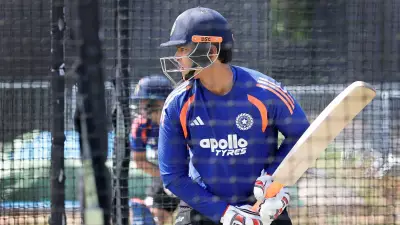
India's T20 Batting Philosophy Undergoes Radical Transformation
There was a period when India approached T20 World Cups with a palpable sense of apprehension. The team carried a quiet anxiety about whether batters should maintain their attacking approach through the middle overs if the Powerplay failed to unfold according to plan. That lingering question has now been decisively answered and eliminated from the conversation.
India's batting strategy has fundamentally evolved from being centered on adaptation and survival to embracing acceleration as its core principle. This tournament is poised to become a comprehensive referendum on India's new-age batting philosophy, characterized by high base strike-rates, minimal settling-in time, and a collective determination to maintain scoring momentum from the very first ball to the final delivery of the innings.
A Specialist T20 Batting Lineup Emerges
For the first time in T20 World Cup history, India will field a top six batting order comprised almost entirely of specialist T20 batters. This represents a significant departure from the past reliance on multi-format greats who adjusted their games to the shortest format. Instead, India now features players who have developed their skills with an inherent understanding that maintaining tempo is non-negotiable in modern T20 cricket.

This subtle yet profound shift signals how decisively India has embraced contemporary T20 logic. The selection of Abhishek Sharma at the forefront of this new batting order perfectly exemplifies this transformation. Abhishek's explosive Powerplay hitting is no longer viewed as a high-risk indulgence but rather as a tactical necessity that aligns with the team's aggressive approach.
Gambhir's Philosophy: High-Risk, High-Reward Cricket
India head coach Gautam Gambhir has consistently emphasized in recent discussions that T20 matches are frequently decided within the first six overs, and Abhishek embodies this strategic thinking. His role extends beyond merely scoring quickly; he aims to disrupt field settings, force opposing captains into early defensive decisions, and ensure India establishes dominance during the Powerplay phase.
"We want to play high-risk, high-reward cricket," Gambhir declared. "And these players have adopted that ideology and policy exceptionally well. The foundation of this T20 team is built upon selflessness and fearlessness. Unless you embrace that high-risk approach, you cannot achieve those substantial rewards. I believe we're moving in the right direction. When major tournaments arrive, we intend to maintain this style of play without fearing potential losses."
The Evolution of Finishing and Middle-Over Stability
At the opposite end of the innings, Rinku Singh represents a different dimension of India's batting evolution. While popular perception focuses on his brute force and last-over heroics, his true value lies in exceptional control under pressure. Rinku demonstrates remarkable composure in absorbing pressure, understanding match-up dynamics, and finishing innings with the clarity that former captain MS Dhoni has frequently highlighted when discussing modern finishers, noting that "power matters but decision-making matters more."
Between these two strategic poles exist the stabilizers and accelerators who complete India's batting framework. Tilak Varma has quietly emerged as crucial middle-overs insurance, providing stability that allows other batters to attack without risking the entire innings collapsing. His comfort against both pace and spin makes him particularly valuable in subcontinental conditions, where matches often hinge on performance between overs seven and fifteen.
Tactical Weapons and Specialized Roles
Former India batter VVS Laxman has emphasized the importance of players who can "hold tempo" during this critical phase, neither blocking excessively nor resorting to indiscriminate slogging, and Tilak fulfills this role perfectly.

Shivam Dube serves as another tactical weapon in India's arsenal. While most teams structure entire phases to neutralize spin bowling, India has chosen to confront it directly, with Dube playing a central role in executing this aggressive approach against spin. The batting framework is further strengthened by established names with clearly defined, specialized functions, including Ishan Kishan, captain Suryakumar Yadav, and the versatile Hardik Pandya.
This comprehensive transformation represents more than just personnel changes; it signifies a fundamental philosophical shift in how India approaches T20 cricket. The team has moved from cautious calculation to confident aggression, from reactive adaptation to proactive acceleration, creating a batting unit specifically designed for the demands of modern T20 international competition.