India's T20I Dynasty: Building on World Cup Triumph
Nothing succeeds like success, and the Indian men's T20I team embodies this principle perfectly. Since capturing the 2024 T20 World Cup in Barbados, the squad has evolved into an unstoppable force in international cricket. That victory marked a defining moment for a team that had endured years of near-misses in major ICC tournaments.
The Long-Awaited Breakthrough
Before June 2024, India's World Cup drought had stretched nearly 13 years. Their last T20 World Cup triumph dated back to the inaugural 2007 tournament. The painful memory of the 2023 ODI World Cup final defeat to Australia only intensified their determination. As cricket history was made with the first World Cup hosted on American soil (jointly with the West Indies), India achieved a remarkable feat: becoming the first team to win the T20 World Cup without losing a single match.
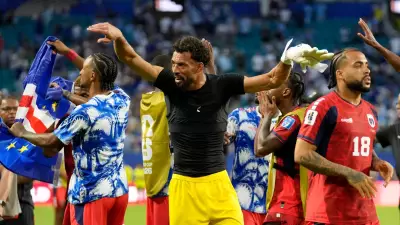
In a tense final against South Africa, India overcame nervous moments to secure a seven-run victory. The emotional release was palpable as years of disappointment washed away in that Caribbean celebration.

End of an Era, Beginning of a New Chapter
The championship represented crowning glory for two legends who had shaped Indian cricket for over a decade: Rohit Sharma and Virat Kohli. For captain Sharma, it was his first World Cup triumph. For Kohli, it completed a full circle from being a rising star during India's 2011 victory to being carried on teammates' shoulders in Barbados. Both announced their T20I retirement after the tournament, marking the end of an era.
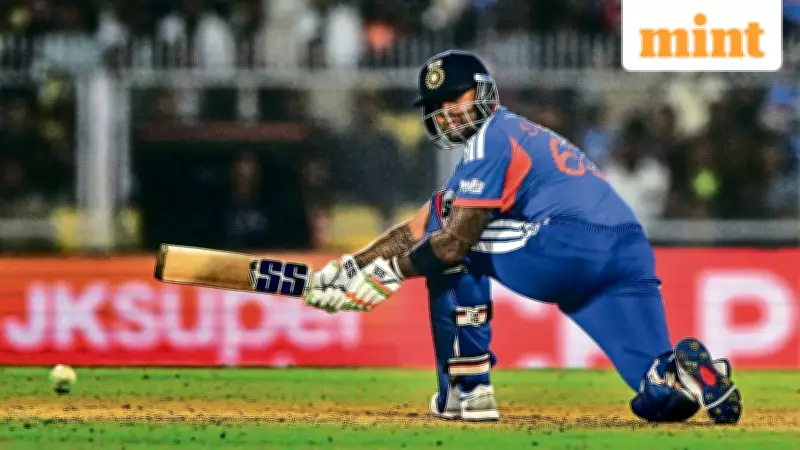
Under new captain Suryakumar Yadav, the team has embraced their legacy with remarkable success. From June 2024 through January 2026, India compiled an impressive record of 33 wins against just 6 losses in T20Is, including a decisive 4-1 series victory over New Zealand.
Road to 2026: Defending the Crown
India enters the 2026 T20 World Cup (hosted jointly by India and Sri Lanka from February 7 to March 8) as overwhelming favorites. They seek to achieve two historic firsts: becoming the first team to defend a T20 World Cup title and the first host nation to win the tournament. Currently ranked World No.1 with a rating of 273, India stands as the team to beat.
Wealth of Talent and Strategic Depth
The exclusion of star batter Shubman Gill from the World Cup squad highlights India's extraordinary depth in T20 cricket. As commentator Simon Doull observed, "If India fielded two teams for the T20 World Cup, both could finish in the top 4."
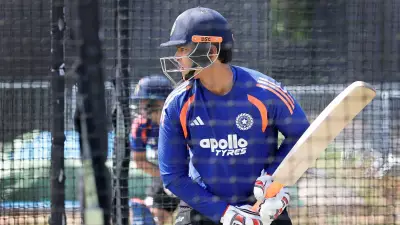
The team's preparation has been impressive. Ishan Kishan made a spectacular return with a 32-ball 76 against New Zealand, while captain Yadav found form with a quickfire 82 in the same match. Special attention falls on World Cup debutant Abhishek Sharma, who recently scored the second-fastest T20I half-century (50 in 14 balls) and currently holds the No.1 ICC batting ranking.
India's strength extends beyond batting. All-rounders Axar Patel, Shivam Dube, and Hardik Pandya provide crucial versatility, with Pandya particularly known for match-turning performances. The bowling attack features the consistently brilliant Jasprit Bumrah, whose accuracy and death-over prowess make him invaluable. In spin-friendly Indian conditions, Patel, Varun Chakaravarthy, and Kuldeep Yadav offer varied options.
Former coach Ravi Shastri summarized India's advantage: "When you look at variety, players at the right positions and balance, India can defend this title. Man to man, current form, match fitness, amount of cricket they've played in recent times, makes them clear favorites."
Challenges and Expectations
India finds itself in Group A alongside the USA, Pakistan, Netherlands, and Namibia. Their campaign begins February 7 against the USA, with the highly anticipated match against Pakistan scheduled for February 15 in Colombo (though Pakistan has threatened to boycott).
The primary threats to India's title defense come from traditional rivals Australia, South Africa, and England. South Africa, having recently shed their "chokers" tag by winning the World Test Championship, will be particularly motivated to avenge their 2024 final defeat.

Shastri identified the biggest potential obstacle: "T20 cricket is a lottery. When you're playing at home, there is pressure and it comes from nowhere. You have a bad 15 minutes, a bad 10 minutes in a T20 game, it can decide the outcome."
As this dominant Indian team prepares for the ultimate test, the question remains: Can they overcome home pressure and banish the ghosts of past home-tournament disappointments while creating history?