The Ishan Kishan Phenomenon: Redefining Powerplay Cricket for India
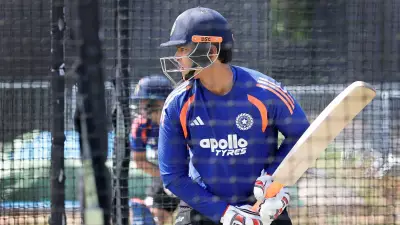
In the high-stakes arena of T20 international cricket, where early wickets often spell doom, Ishan Kishan has emerged as India's unexpected crisis manager. The ongoing T20I series against New Zealand has witnessed a remarkable transformation in India's approach to powerplay batting, largely driven by Kishan's fearless intent from the very first ball.
Turning Crisis into Opportunity
When Sanju Samson fell to the very first delivery in the third T20I at Guwahati on January 25, 2026, New Zealand's bowlers sensed an opening. What followed instead was a masterclass in counter-attacking cricket. Kishan, walking in at 0/1, immediately took the aggressive route, scoring 16 runs from his first five balls and setting the tone for what would become a record-breaking partnership.
The left-handed dynamo has developed a unique ability to treat precarious situations not as emergencies but as platforms for disruption. This mindset was equally evident in the second T20I at Raipur, where India found themselves reeling at 6/2 while chasing a daunting 209 runs. Rather than adopting a conservative approach, Kishan launched a breathtaking assault, accumulating 56 runs during the powerplay phase alone.

Statistical Dominance and Record-Breaking Performances
Kishan's impact transcends mere runs scored. His approach has fundamentally altered how India navigates the crucial first six overs:
- In the third T20I, Kishan faced 13 of the 19 balls during India's record-breaking 50-run partnership, scoring 28 runs while protecting young Abhishek Sharma
- During the powerplay in Raipur, Kishan contributed approximately 75% of India's 75/2 total, single-handedly turning the match's momentum
- India achieved their fastest-ever team fifty in T20Is, reaching the milestone in just 19 balls (3.1 overs), surpassing their previous record of 3.4 overs against Bangladesh in 2023
The boundary statistics reveal the sheer dominance of Kishan's approach. In those crucial 3.1 overs during the third T20I, the partnership produced nine boundary shots - Kishan smashed three fours and two sixes while Abhishek contributed two fours and two sixes.
The Psychological Warfare
What makes Kishan's approach particularly effective is its psychological dimension. His strike rate in the first two balls consistently exceeds 200, sending a clear message to opposition bowlers that early wickets won't translate into control. This aggressive mindset dates back to his international debut in 2021, when he hit a boundary off his first T20I ball and a six off his first ODI delivery.
Captain Suryakumar Yadav acknowledged this unique quality, stating after the match: "I've never seen anyone bat at 6 for 2 in that manner and still end the powerplay around 67 or 70. I thought it was incredible. Chasing 200 or 210, this is what we want from batters."
Creating a Risk-Free Environment for Teammates
Perhaps the most significant aspect of Kishan's powerplay heroics is how they benefit the entire batting lineup. By establishing early dominance, he effectively neutralizes the required run rate pressure, allowing subsequent batsmen to play their natural games without constraints.
In the third T20I, this approach created such a comfortable position that Suryakumar Yadav could play freely, finishing with an unbeaten 57 off just 26 balls and securing victory with ten overs to spare. The early impetus provided by Kishan transformed what could have been tense chases into comfortable victories.
A New Blueprint for Indian Cricket
As India continues to refine their T20 approach ahead of major tournaments, Kishan's powerplay performances offer a compelling template. His ability to convert early adversity into attacking advantage represents a significant evolution in India's white-ball strategy.
With Tilak Varma returning from injury and the middle order finding its rhythm, Kishan's role as the powerplay aggressor could become a permanent feature of India's T20 setup. His performances against New Zealand demonstrate that in modern T20 cricket, the best defense against early wickets might just be relentless, calculated aggression from the very first ball.