Virat Kohli, the modern-day batting maestro, once again demonstrated his unparalleled class by scoring consecutive One Day International centuries against South Africa. However, the two innings, in Ranchi and Raipur, were fascinating studies in contrast, revealing the versatile genius of the champion batter.
From Sydney Ducks to Centurion Delight
This rich vein of form comes after a period of reflection for Kohli. In late October, following an unbeaten 168-run partnership with Rohit Sharma in Sydney, he had pondered over two successive ducks that preceded it, acknowledging the humbling lessons of the game. Fast forward to December 2025, and the game has bestowed its gifts generously, with back-to-back hundreds in the ongoing series.
The pitches in both Ranchi and Raipur were batting-friendly, but Kohli's approach painted two different pictures. The Ranchi knock on December 1 was characterised by a sense of furious intent, where he aggressively charged the pacers. The Raipur innings on December 3 at the Shaheed Veer Narayan Singh International Cricket Stadium was the polar opposite—a portrait of serene, calculated dominance reminiscent of his vintage ODI self.

The Calm Assurance of a Master at Work
The assurance of Kohli's hundred in Raipur was palpable even to the security personnel. As he crossed 70 runs, walkie-talkies crackled with instructions to alert Team 6 to be ready near the boundary, aiming to prevent a repeat of the Ranchi incident where a fan had breached security to reach him. Guards lined the fence, facing the crowd that was soaking in another Kohli special.
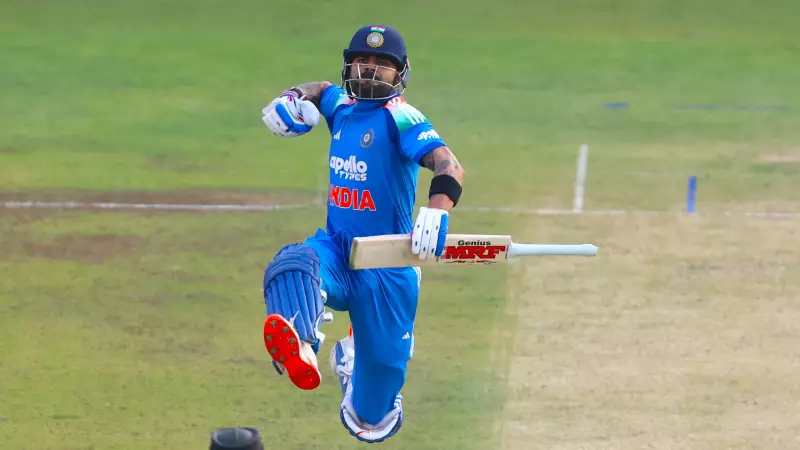
All the classic elements of a Kohli innings were on display: the brisk walk to the crease, passionate running between the wickets, composed taps, crafty nudges, feisty punches, and the occasional imposing pull. The celebratory leap, roar, and fist pump followed. Fans would have noted his distinct black wristband and his familiar posture at the non-striker's end, crossing his legs with his MRF bat resting on the ground.
A Guiding Hand and Calculated Acceleration
Kohli's role extended beyond his own batting. He was seen regularly guiding his younger partner, Ruturaj Gaikwad, through nervy phases, especially when Gaikwad struggled with his alignment and shot selection. Kohli's trademark habit of turning to stare at the scoreboard, as if doing mental calculations, was also evident.
His innings began with a swivel-pull six off Lungi Ngidi to get off the mark, but it was a shot of pure reaction, not premeditated aggression. After a flicked four soon after, he didn't hit another boundary for 12 overs, expertly rotating strike with drives to long-on and nurdles past square leg against the spinners. The aggression returned briefly with a bottom-handed whip down the ground off seamer Corbyn Bosch, but serenity soon resumed.
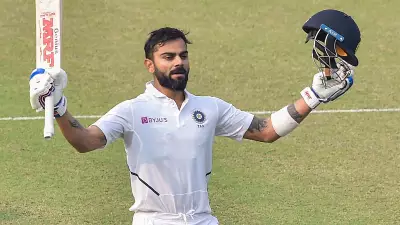
From the 30th over onwards, Kohli strategically increased his strike rate, taking calculated risks by charging Bosch and pulling Marco Jansen. He reached his century with a single to long-off on the last ball of the 38th over, but fell in the next over to Jansen, holing out to the same region. His dismissal prompted a brief show of frustration as he smacked his bat on his pad, but he composed himself to acknowledge the roaring Raipur crowd with a raised bat.
Despite Kohli's masterclass, India's total was potentially hampered by a long tail, which restricted the final acceleration from KL Rahul and Ravindra Jadeja. This was a concern given the anticipated dew factor in the chase, against which the ground staff had pre-emptively applied a chemical treatment.
These two innings, separated by just a few days, underscore Virat Kohli's extraordinary ability to adapt his game to the situation and his own mindset, proving why he remains the cornerstone of India's batting lineup. When the game gives, as Kohli noted, it truly pours.