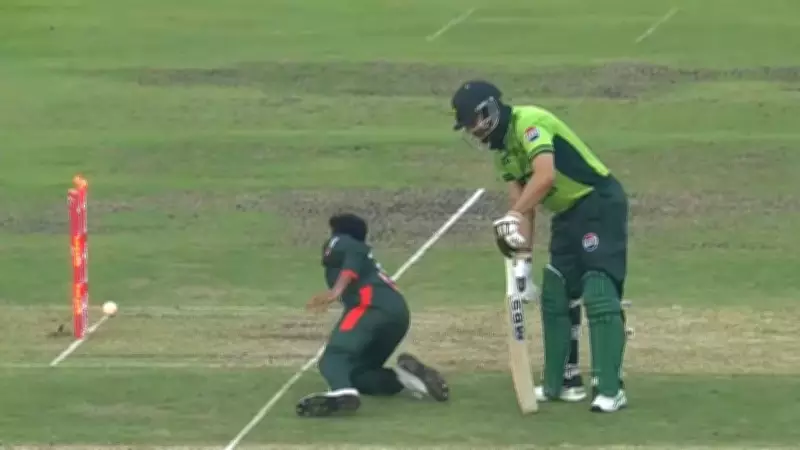
MCC Issues Definitive Statement on Controversial Bangladesh-Pakistan ODI Run-Out
The Marylebone Cricket Club (MCC), the recognized guardian and custodian of the Laws of Cricket, has provided comprehensive clarification regarding the controversial run-out incident that occurred during the recent One Day International match between Bangladesh and Pakistan. In an official statement released on Monday, the MCC unequivocally confirmed that the dismissal of Pakistan batter Salman Ali Agha was correctly adjudicated under the established Laws of Cricket.
The Official MCC Position on the Contentious Dismissal
The MCC statement declared: "Under the Laws, there is little that either umpire could have done differently. The non-striker was clearly out of his ground when the wicket was broken, and the ball was in play. That is out."
The MCC further elaborated on the specific circumstances surrounding the dismissal, emphasizing that Agha had left his ground while the ball was actively in play. The statement noted that the batter had only just begun attempting to regain his ground when he collided with Bangladesh captain Mehidy Hasan Miraz. Additionally, the MCC highlighted a crucial point regarding player conduct: "No batter should attempt to pick the ball up without the consent of the fielding side, and had he done so, he would have been at risk of an Obstructing the field dismissal. In retrospect, he would have been better using that time to attempt to regain his ground."
Detailed Breakdown of the Match Incident
The controversial dismissal unfolded during the second ODI between Pakistan and Bangladesh, hosted at the Sher-e-Bangla National Cricket Stadium in Dhaka. The incident occurred in the 39th over of Pakistan's innings, a critical juncture where the visitors were constructing a formidable partnership. Salman Ali Agha and Mohammad Rizwan had successfully added 109 runs for the fourth wicket, providing stability after Pakistan had lost three early wickets.
On the fourth delivery of the over, bowled by Bangladesh captain Mehidy Hasan Miraz, Rizwan executed a gentle push down the ground. The ball rolled toward Agha, who was positioned outside his crease at the non-striker's end after backing up. As the ball made contact with his pads, Agha bent down in an attempt to pick it up. Miraz swiftly collected the ball and dislodged the stumps with Agha still outside the crease, immediately appealing for a run-out.
The on-field umpire upheld the appeal and referred the decision to the third umpire for review. After careful examination, the third umpire ruled in favor of Bangladesh, confirming Agha's dismissal. The decision visibly frustrated Agha, who expressed his displeasure while walking back to the pavilion, with television visuals capturing his evident frustration.
MCC Addresses Ball Status and Dead Ball Controversy
The MCC statement directly addressed suggestions that the ball should have been declared dead during the incident, providing a thorough explanation of why this was not applicable under the Laws. "There have been some suggestions that the ball should have been treated as Dead. That is not viable under the Laws; the ball does not become dead when players collide – if it did, that would incentivise players to seek out collisions when the situation was advantageous."
The MCC outlined three specific reasons why a dead ball call was not justified:
- No Serious Injury: There was no question of a serious injury occurring, which eliminated one potential ground for declaring a dead ball.
- Players Still Considering Ball in Play: It could not have been clear to the umpire that all players had ceased to consider the ball in play, particularly since Mehidy Hasan Miraz clearly believed the ball was live, even if Agha did not share that perception.
- Ball Not Finally Settled: The ball could not have been considered finally settled in the hands of the bowler or wicket-keeper, as it was actively on the ground during the sequence of events.
This comprehensive clarification from cricket's ultimate law-making authority provides definitive resolution to the debate surrounding one of the most discussed dismissals in recent international cricket. The MCC's detailed explanation reinforces the importance of players understanding and adhering to the Laws of Cricket, particularly in high-pressure match situations where split-second decisions can determine outcomes.