The Changing Face of Global Cricket
Elite sports have dramatically evolved beyond traditional national boundaries, with athletes increasingly representing multiple countries throughout their careers. This transformation is driven significantly by migration patterns, economic opportunities, and global talent mobility rather than mere birthplace. The upcoming 2026 T20 World Cup, scheduled to be hosted across India and Sri Lanka, will powerfully demonstrate this modern reality through its remarkably diverse team compositions.
The South Asian Cricket Diaspora
Nowhere is this global shift more evident than among cricketers of South Asian heritage. Approximately forty players of Indian origin are projected to participate in the tournament, closely followed by around thirty cricketers tracing their roots to Pakistan. This phenomenon reflects how nations with abundant talent pools but limited international opportunities often see their players seeking alternative pathways to professional cricket through relocation.
During the 2024-25 Border-Gavaskar Trophy, Australian Broadcasting Corporation sports presenter Paul Kennedy highlighted a revealing statistic about Australian cricket's future. "At the Under-12 level in Australia, nearly forty percent of children playing cricket are of South Asian heritage," Kennedy noted. The former footballer turned journalist even suggested that "Indian or South Asian heritage cricketers might actually be the answer for the future of cricket in Australia."

Personal Journeys to the World Stage
The United Arab Emirates fields the largest contingent of Pakistan-origin players with ten representatives in their squad. Among them is pacer Muhammad Jawad Ullah, a twenty-six-year-old from Malakand whose unconventional journey exemplifies this migration narrative. Raised in a family of eight, Jawad initially played only tennis-ball cricket in Pakistan without formal coaching or structured opportunities.
"In Pakistan, I only played tennis-ball cricket. There was no coach or experienced player to guide me," Jawad revealed in an exclusive interview. "Many people told me to join an academy for hard-ball cricket. I felt there were so many talented players who did not even get a chance."
His decisive move to the UAE in 2020 brought stability through work as an electrician in Khor Fakkan, but left minimal time for cricket development. "I didn't get much time to play cricket, only about one to two hours. Even then, I played with a tennis ball because playing with a hard ball requires a lot of time," he explained. Jawad's story mirrors countless athletes who maintain their sporting passion while working abroad, eventually reaching the World Cup stage through perseverance.
Second-Generation Pathways and Leadership
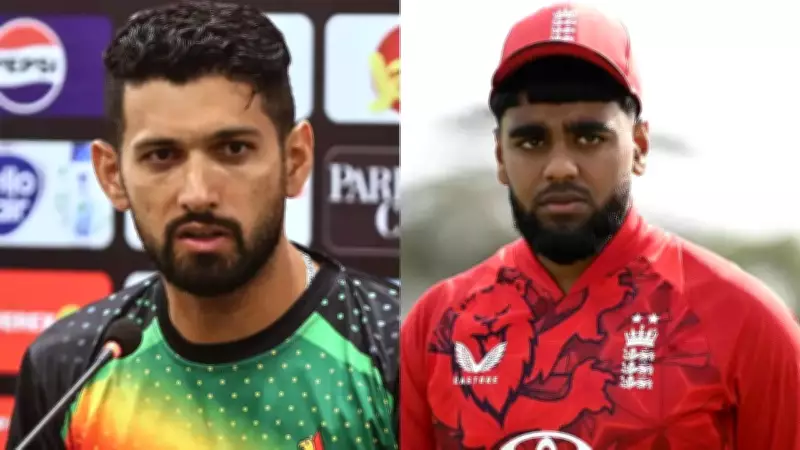
The Netherlands' Saqib Zulfiqar represents a second-generation narrative. His father Zulfiqar Ahmed, born in Sialkot in 1966, played and later coached Dutch cricket, establishing a pathway that enabled all three of his sons to represent the national team. Meanwhile, Zimbabwe captain Sikandar Raza's journey involved unexpected detours through pilot aspirations and a computing degree from Glasgow University before cricket became central after his family's relocation to Zimbabwe.
"The World Cup is really crucial in every cricketer's life," Raza emphasized. "For Zimbabwe to gain more respect in world cricket, participating in World Cups plays a huge part. We have the mindset to go there and try to do really well." At thirty-nine, Raza now focuses on inspiring future generations: "All I'm looking at is trying to keep doing the things I'm doing to the best of my ability, and hopefully my performances can inspire other Sikandars in Zimbabwe and across the world."
Global Representation and Historical Transformation
USA fast bowler Ali Khan, whose standout performance against Pakistan in the previous T20 World Cup generated significant attention, will face Pakistan again on February 10. From Shayan Jahangir in the United States to Rehan Ahmed and Adil Rashid representing England, and across teams from Italy and Scotland to Oman and Canada, the tournament essentially maps contemporary migration patterns.

This diversity marks a profound evolution for cricket, a sport historically segregated along racial lines in Africa and divided by social hierarchies in England and Australia. The current landscape demonstrates increased inclusivity and global representation, with the following thirty Pakistan-origin players scheduled for T20 World Cup 2026 participation:
- USA: Shayan Jahangir, Ali Khan, Mohammad Mohsin
- Netherlands: Saqib Zulfiqar
- Zimbabwe: Sikandar Raza
- Oman: Mohammad Nadeem, Shakeel Ahmad, Hammad Mirza, Wasim Ali, Shah Faisal, Nadeem Khan, Shafiq Jan, Aamir Kaleem
- England: Rehan Ahmed, Adil Rashid
- Italy: Zain Ali, Ali Hasan, Syed Naqvi
- Scotland: Safyaan Sharif
- Canada: Saad Bin Zafar
- UAE: Muhammad Waseem, Muhammad Arfan, Junaid Siddique, Alishan Sharafu, Haider Ali, Muhammad Farooq, Muhammad Jawad Ullah, Muhammad Zohaib, Rohid Khan, Sohaib Khan
This global distribution underscores how modern cricket has become a sport where national teams increasingly reflect diaspora communities and international mobility, transforming what was once a geographically confined game into a truly worldwide phenomenon shaped by human movement and opportunity.