Pakistan Government Orders Boycott of T20 World Cup Clash Against India
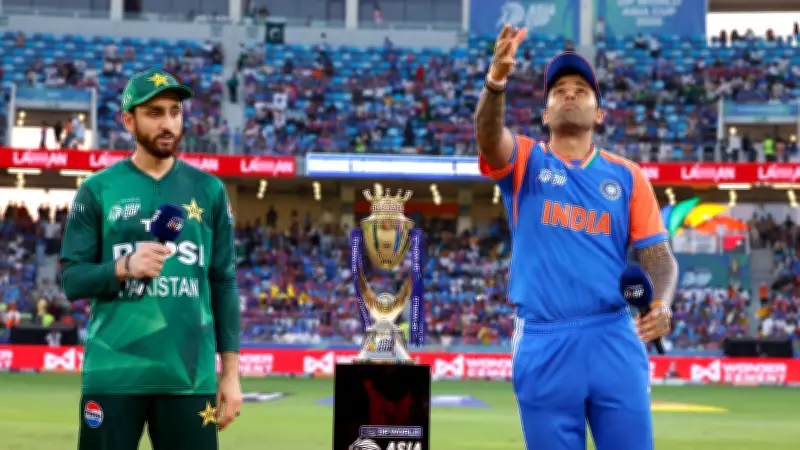
The Government of Pakistan has issued a directive instructing the national cricket team to boycott their scheduled T20 World Cup 2026 match against India. The high-voltage clash was set to take place on February 15 in Colombo, Sri Lanka, but political tensions have now overshadowed the sporting event.
Official Announcement and Immediate Consequences
In a formal statement released on their official X handle, the Government of the Islamic Republic of Pakistan declared, "The Government grants approval to the Pakistan Cricket Team to participate in the ICC World T20 2026; however, the Pakistan Cricket Team shall not take the field in the match scheduled on 15th February 2026 against India." This decision comes at a crucial time, following Pakistan's recent whitewash victory against Australia in a T20I series and with less than a week remaining before the mega tournament begins.
India's Unexpected Advantage in Group A
The boycott creates an immediate sporting advantage for the Indian cricket team, captained by Suryakumar Yadav. Both nations are placed in Group A alongside Namibia, Netherlands, and USA. Pakistan's refusal to play means India will enter the tournament with two points already secured without bowling a single ball. Furthermore, Pakistan's net run rate (NRR) will be negatively affected as the defaulting team, though the exact impact will be clarified once ICC announces the official playing conditions for T20 World Cup 2026.

Political Roots of the Boycott Decision
The boycott stems from a political protest related to tournament arrangements. The Bangladesh Cricket Board (BCB) had requested the International Cricket Council (ICC) to shift their matches from Indian soil to Sri Lanka due to security concerns, but ICC rejected this request. In solidarity with Bangladesh, Pakistan Cricket Board (PCB) chief Mohsin Naqvi accused ICC of "double standards" during a meeting with Pakistan Prime Minister Shehbaz Sharif, leading to the boycott decision.
Broader Implications and Historical Context
The ICC has yet to officially comment, but PCB faces potential heavy financial sanctions for breaching the "Tournament Participation Agreement." The boycott represents a significant revenue loss for ICC, as India-Pakistan matches traditionally generate the highest broadcast earnings in cricket. This situation could also create legal complications and raises questions about what would happen if both teams meet in knockout stages.
This isn't the first boycott in cricket World Cup history:
- 1996: Australia and West Indies boycotted matches against Sri Lanka due to security fears following Colombo bombings
- 2003: England boycotted Zimbabwe for political reasons, while New Zealand boycotted Kenya over security concerns
- 2009: Zimbabwe withdrew entirely from T20 World Cup in England due to political tensions
Pakistan's Revised Tournament Schedule
Despite the boycott, Pakistan will participate in other matches during T20 World Cup 2026, with all their games scheduled in Sri Lanka according to the BCCI-PCB agreement for neutral venues until 2027:
- February 4: Warm-up vs Ireland (Colombo)
- February 7: Group A vs Netherlands (Colombo)
- February 10: Group A vs USA (Colombo)
- February 18: Group A vs Namibia (Colombo)
The February 15 match against India at R. Premadasa Stadium now stands cancelled, marking a significant moment in cricket diplomacy where political considerations have directly impacted one of the sport's most anticipated rivalries.