Pakistan Confirms Boycott of T20 World Cup Match Against India
New Delhi: In a significant development that has sent shockwaves through the cricketing world, the Pakistan government has officially announced that its national team will not play the highly anticipated group-stage match against India scheduled for February 15 during the upcoming T20 World Cup. The announcement was made through a social media post on Sunday, confirming widespread speculation about Pakistan's participation.
Despite this high-profile boycott, the Pakistan Cricket Board has received clearance to participate in the tournament overall, which is set to commence on February 7. According to the terms agreed upon between the two neighboring nations in 2024, Pakistan will play all their matches in Sri Lanka rather than on Indian soil.
Former Captain Rashid Latif's Blunt Assessment
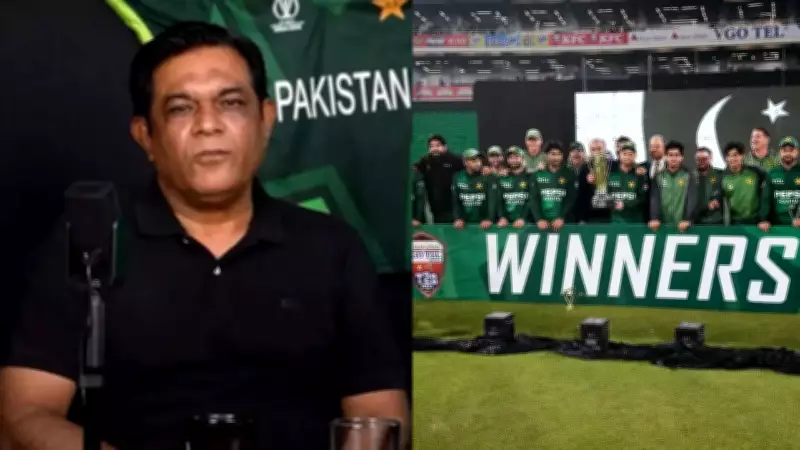
In an exclusive interview with TimesofIndia.com, former Pakistan captain Rashid Latif offered a candid perspective on this dramatic decision. Latif characterized Pakistan's boycott as a calculated strategic maneuver aimed directly at the International Cricket Council's financial and governance framework.

"This decision is not on India. It is hitting the ICC directly," Latif emphasized from Islamabad. "Pakistan generally don't take such decisions. The PCB is not even scared of sanctions. It will have a big impact."
The Bangladesh Episode: Catalyst for Escalation
Latif traced the current escalation to several interconnected factors:
- The removal of Bangladesh from the tournament after unsuccessful attempts to shift matches from India to Sri Lanka over security concerns
- The evolving political landscape across South Asia
- The enormous financial implications surrounding India-Pakistan cricket encounters
"Till now, everything was going well," Latif recalled. "Pakistan and India both agreed that we would play in a hybrid model for the next three years. The Asia Cup happened in Dubai. Pakistan's women's team played in Sri Lanka in the Women's ODI World Cup. Everything was going well, but things have changed since the Bangladesh episode happened."
When Bangladesh Cricket Board sought to relocate their matches and ultimately declined to participate in India, Pakistan demonstrated solidarity by voting in favor of their request at the ICC board meeting. Pakistan Cricket Board chairman Mohsin Naqvi even threatened a boycott in support of Bangladesh, which was subsequently replaced by Scotland in the tournament lineup.
The Financial Engine of World Cricket
Latif underscored the unparalleled significance of India-Pakistan matches in global cricket economics, describing them as the primary driver of World Cup viewership worldwide.
"Whether it is in India or Pakistan, 60-70 percent of people watch the World Cup because of India-Pakistan matches," he revealed.
The former captain elaborated on the commercial dimensions, noting that while matches involving teams like Australia consistently draw packed stadiums, encounters between India and Pakistan operate on an entirely different scale. These high-voltage clashes attract millions of viewers, trigger significant spikes in sponsorship valuations, and form the cornerstone of broadcasters' commercial strategies for major tournaments.
Potential Consequences and Wider Implications
Should Pakistan proceed with their boycott on February 15, the team faces the loss of two crucial points in the tournament standings, along with potential sanctions from the ICC. However, Latif dismissed concerns about punitive measures, suggesting that Pakistan's involvement fundamentally alters the equation.
"Now that Pakistan has joined, it will impact Australia and England financially as well," he explained, highlighting the interconnected nature of global cricket economics.
The ramifications extend far beyond the immediate tournament. Latif warned that the ripple effects would permeate the Asian Cricket Council calendar, future Asia Cup events, and even subsequent ICC tournaments. He estimated the India-Pakistan cricket economy as a billion-dollar enterprise spanning multiple formats and competitions.

Historical Precedents and Future Possibilities
Boycotts in ICC tournaments are not without precedent. During the 1996 World Cup, Australia and West Indies declined to travel to Sri Lanka citing security concerns. In 2003, England refused to play Zimbabwe for political reasons, while New Zealand opted not to travel to Nairobi for their match against Kenya.
Despite the current standoff, Latif did not rule out the possibility of a last-minute resolution. "There is always backdoor diplomacy," he suggested, drawing parallels with how previous Asia Cup deadlocks were eventually resolved through behind-the-scenes negotiations.
"In 24 hours, anything is possible," Latif concluded, noting that Pakistan had taken nearly a week to arrive at their current position, with timing carefully calculated following the conclusion of their series against Australia and as both teams prepare to travel to Colombo.
The former captain expressed confidence that broadcasters, recognizing their substantial investments in cricket properties, would actively seek solutions to prevent a prolonged standoff that could prove disastrous for the global cricket ecosystem.