Pakistan Prime Minister Endorses Boycott of India T20 World Cup Match
The diplomatic and sporting standoff surrounding the scheduled India-Pakistan T20 World Cup match continues to intensify, with no resolution in sight. Pakistan Prime Minister Shehbaz Sharif has publicly weighed in on the controversy, firmly backing his nation's decision to boycott the February 15th encounter in Colombo.
Sharif's Firm Stance on 'Appropriate Decision'
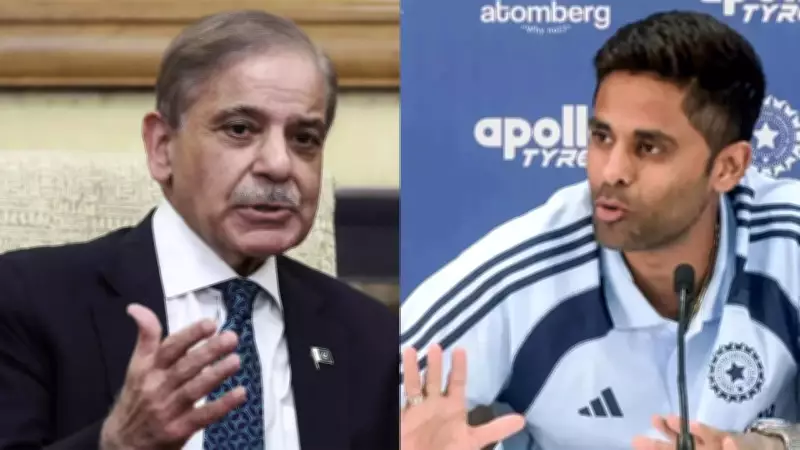
Prime Minister Sharif characterized Pakistan's withdrawal as a 'considered stance' and an 'appropriate decision' made in solidarity with Bangladesh. 'We have taken a very clear stand on the T20 World Cup that we won’t play the match against India because there should be no politics on the sports field,' Sharif stated. 'We have taken a very considered stance, and we should completely stand by Bangladesh, and I think this is a very appropriate decision. We are with Bangladesh.'
This political endorsement was acknowledged by Bangladesh Youth and Sports Advisor Asif Nazrul, who expressed gratitude towards Pakistan in a social media post, writing 'Thank you, Pakistan.'

Captains Break Silence from Mumbai and Colombo
As the tournament's commencement draws nearer, the captains of both teams addressed the escalating issue during pre-tournament press conferences held simultaneously from Mumbai's BCCI headquarters and from Colombo.
Indian skipper Suryakumar Yadav clarified his team's position, emphasizing that the refusal originated from Pakistan. 'We haven’t refused to play against Pakistan. They have refused. The mindset is pretty clear. We have not said no, it has come from them,' Yadav asserted. He confirmed India's readiness to compete, stating, 'The ICC has given a fixture, BCCI and the (Indian) government has decided with the ICC on playing at a neutral venue. Our flight is booked for Colombo and we are going.'
Pakistan captain Salman Ali Agha deferred the decision entirely to his nation's authorities. 'The India game is not in our control. It’s the government’s and PCB’s decision and we respect that. Whatever they are going to say, we will do that,' Agha explained. He further noted that should the teams meet again in the knockout stages, 'we will have to go back to them (government) and act on their advice.'
Yadav Acknowledges Complexity, ICC's Concerns
Suryakumar Yadav recognized the difficult position the impasse creates for all stakeholders, including the International Cricket Council. 'I feel it is not an easy job. It is not my call. I am sure they (the ICC) might be working out something as well but it has come from the other government or the nation, how can they (the ICC) help as well?' he remarked. 'Their (Pakistan’s) decision is not in my control. I wish I could take their decisions, but then it is their call.'
Yadav reiterated India's willingness to play, recalling their dominant performances against Pakistan in the recent Asia Cup. 'We have been told that we have to play a game in Colombo on Feb 15th. We played them three times in the Asia Cup, we played some good cricket. We won (all the matches) and we were very happy. Similarly, if we get an opportunity in Colombo, we will definitely play,' he added.
The ICC had previously voiced serious reservations about Pakistan's selective participation. The global governing body stated, 'This position of selective participation is difficult to reconcile with the fundamental premise of a global sporting event where all qualified teams are expected to compete on equal terms per the event schedule. This decision is not in the interest of the global game or the welfare of fans worldwide.'
The unresolved conflict casts a significant shadow over the upcoming T20 World Cup, highlighting the persistent intersection of geopolitics and international sport. With the captains having spoken and political leadership entrenched, the path forward remains uncertain as the tournament approaches.