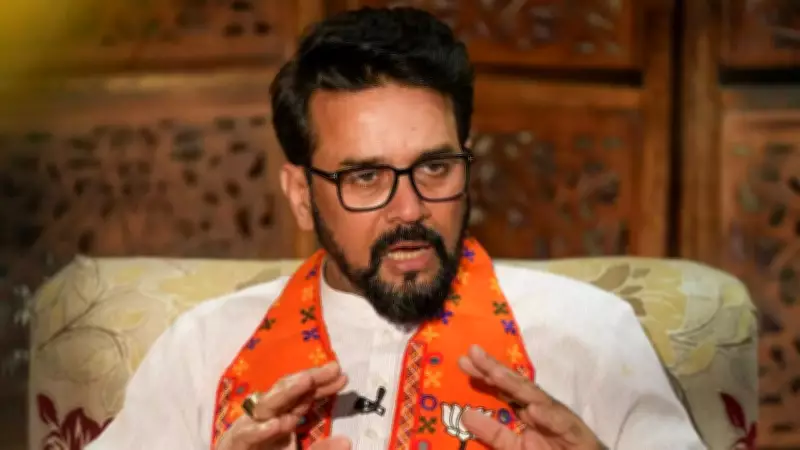
In a significant development for Indian cricket administration, the Supreme Court on Thursday granted relief to former Board of Control for Cricket in India (BCCI) president Anurag Thakur, potentially paving the way for his return to cricket governance after nearly a decade of exclusion.
Court Modifies 2017 Order That Barred Thakur
A bench comprising Chief Justice Surya Kant and Justice Joymalya Bagchi applied the doctrine of proportionality while modifying the apex court's January 2017 order that had directed Thakur to "cease and desist" from being associated with the affairs of the Indian cricket board. The court clarified that its original decision was never intended to operate as a lifelong disqualification.
Nine-Year Ban and Hardship Arguments
Senior Advocate PS Patwalia, representing Thakur, argued before the court that the ban had persisted for nine years and, if not lifted, could lead to serious hardships for the former cricket administrator. Thakur had approached the court seeking modification of the 2017 order that effectively barred him from BCCI affairs.

The legal proceedings trace back to the Supreme Court's July 2016 order mandating implementation of the Lodha Committee's reforms in BCCI, which included provisions for a Comptroller and Auditor General (CAG) nominee in the cricket board's governance structure.
Background: The 2017 Removal and Contempt Proceedings
On January 2, 2017, the Supreme Court removed Thakur as BCCI president and issued show-cause notices for contempt and perjury. The court found that Thakur had made "certain false statements on oath" and attempted to obstruct implementation of its orders regarding the Lodha Committee reforms.
Evidence presented during proceedings revealed that Thakur had approached then International Cricket Council (ICC) chairman Shashank Manohar and other ICC officials, seeking a letter stating that the CAG nominee provision would compromise BCCI's autonomy. When ICC correspondence denied this characterization, it contradicted what Thakur had stated under oath.
The bench, headed by then Chief Justice T S Thakur, removed both Thakur and BCCI Secretary Ajay Shirke for continued defiance in implementing the Lodha panel reforms.
Contempt Proceedings Dropped After Apology
On July 14, 2017, the Supreme Court granted relief to Thakur by dropping the contempt and perjury proceedings against him after he tendered an unconditional and unequivocal apology. However, the "cease and desist" order remained in effect until Thursday's modification.
Opposition from Lodha Committee Representative
During Thursday's hearing, Senior Advocate Gopal Sankarnarayanan, appearing for the Secretary of the Lodha Committee, opposed Thakur's application for modification of the 2017 order. The court's decision to grant relief despite this opposition marks a significant shift in the long-standing legal battle.
The Supreme Court's application of the doctrine of proportionality suggests the bench considered whether the duration and extent of Thakur's exclusion from cricket administration remained appropriate given the time elapsed since the original order and the circumstances of the case.
This development opens the possibility for Thakur to potentially re-engage with cricket administration in India, though the specific parameters and conditions of his potential return remain subject to further clarification and any applicable BCCI regulations or eligibility criteria that may have evolved during his absence.