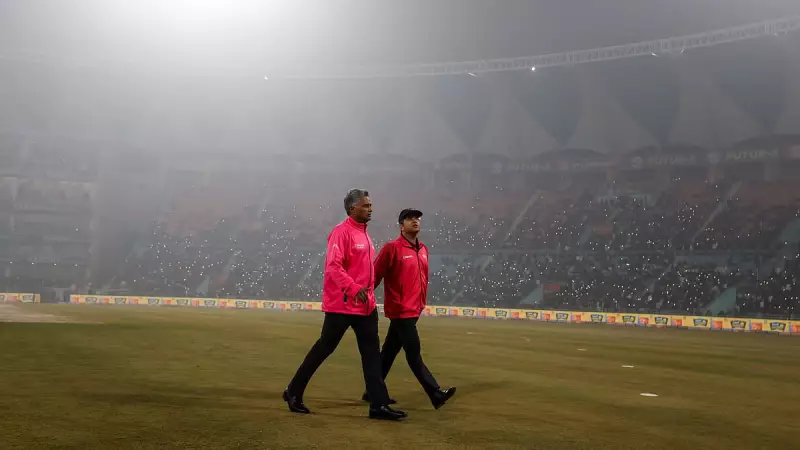
The Board of Control for Cricket in India (BCCI) is facing intense scrutiny after the fourth T20 International between India and South Africa was called off without a ball being bowled. The match, scheduled for December 17, 2025, at Lucknow's Ekana International Stadium, was abandoned due to dangerously dense smog, raising critical questions about the cricket board's decision-making.
Match Abandonment Amidst Hazardous Conditions
The playing conditions were deemed unfit and unsafe for players and officials as a thick blanket of smog engulfed the stadium. Despite the anticipation from fans, the umpires had no choice but to abandon the fixture, leading to a shared result. This incident has brought the BCCI's scheduling practices sharply into focus, as it occurred during a period known for severe air quality issues in several northern Indian cities.
Why Scheduling is Under the Scanner
Critics are pointing out that the board's calendar placed high-profile international matches in cities like Lucknow, New Chandigarh, and Dharamsala precisely when pollution levels typically peak. This period, often from late autumn to early winter, sees a dramatic deterioration in air quality across the Indo-Gangetic plain due to various factors including agricultural stubble burning and weather patterns.

The decision to host a crucial T20I in Lucknow in mid-December, therefore, appears retrospectively flawed. It not only deprived fans of a contest but also exposed athletes to potential health risks. The episode highlights a lack of contingency planning and environmental consideration in the sport's administrative planning.
Broader Implications and The Way Forward
This is not the first time environmental factors have interrupted cricket in India, but it underscores a recurring problem. The cancellation has several consequences:
- Financial Losses: Significant revenue loss for broadcasters, sponsors, and the host association.
- Fan Disappointment: Thousands of ticket-holders were left disappointed after traveling to the venue.
- Sporting Integrity: The series outcome can be unfairly influenced, reducing the contest's competitive balance.
Moving forward, there are growing calls for the BCCI to integrate air quality assessments and historical pollution data into its scheduling algorithm. Alternatives such as shifting day matches to night games during this season, using venues in regions with better air quality, or creating a more flexible calendar with built-in buffer days are being suggested by experts and former players alike.
The India vs South Africa series will now proceed with its final match, but the shadow of the Lucknow abandonment will linger, prompting a necessary debate on balancing a packed cricket calendar with player welfare and environmental realities.