The Changing Face of Global Cricket: Diaspora Stars Take Center Stage
The world of elite sport has long transcended rigid national boundaries. Athletes today often represent multiple countries throughout their careers, with their paths shaped as much by migration, opportunity, and heritage as by their place of birth. This modern reality is set for a spectacular display at the upcoming 2026 T20 World Cup, co-hosted by India and Sri Lanka, where numerous squads will tell stories that stretch far beyond the flags on their jerseys.
A Trend Mirrored Across Sports
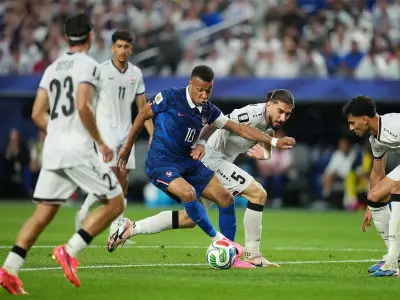
This phenomenon is not unique to cricket. Just weeks ago, the Li-Ning Star cycling team dominated the inaugural 2026 Pune Grand Tour with a squad that featured remarkably few leading Chinese riders. The scenario was strikingly reminiscent of France's 2018 FIFA World Cup-winning football team, whose triumph was powered by players like Kylian Mbappé, N'Golo Kanté, and Paul Pogba—stars with roots stretching across West and Central Africa, the Caribbean, and Southern Europe.
In cricket, the shift is particularly pronounced. During the 2024-25 Border-Gavaskar Trophy, Australian Broadcasting Corporation (ABC) sports presenter Paul Kennedy, a former footballer turned journalist, highlighted a telling statistic. He revealed that in Australia, at the Under-12 level, nearly 40 percent of children playing cricket are of South Asian heritage. Kennedy went so far as to assert, "Indian or South Asian heritage cricketers might actually be the answer for the future of cricket in Australia."

The 2026 World Cup: A Diaspora Showcase
Nowhere is this global tapestry more evident than among players of South Asian origin. The 2026 T20 World Cup is expected to feature around 40 cricketers of Indian origin. Close behind are those of Pakistani descent, whose journeys to the international stage are often tales of talent seeking opportunity beyond crowded domestic systems.
In nations rich with cricketing talent but limited spots at the pinnacle, changing one's address has become a viable route to an international career. The United Arab Emirates (UAE) exemplifies this, fielding the largest contingent with eight Pakistan-origin players in their squad.
Personal Journeys: From Humble Beginnings to World Stage
Among them is pacer Muhammad Jawad Ullah, a 26-year-old from Malakand. His path to the World Cup has been anything but linear. For Jawad, cricket began as mere recreation in a family of eight, played with a tennis ball between daily responsibilities, devoid of formal coaching or structure.
"In Pakistan, I only played tennis-ball cricket. There was no coach or experienced player to guide me. Many people told me to join an academy for hard-ball cricket. I felt there were so many talented players who did not even get a chance," Jawad revealed in an exclusive interaction with TimesofIndia.com last year.
The turning point arrived in 2020. With mounting family obligations, Jawad relocated to the UAE, settling in the quiet coastal town of Khor Fakkan along the Gulf of Oman. The move brought stability but little room for sport. Working long hours as an electrician left him physically drained, with only borrowed time—one to two hours—to play, still often with a tennis ball due to time constraints.
Jawad's journey mirrors that of countless others who left Pakistan for work abroad, kept their passion alive on the margins, and now find themselves on cricket's grandest stage.
Second-Generation Pathways and Unconventional Routes
The Netherlands' Saqib Zulfiqar represents a second-generation story. His father, Zulfiqar Ahmed, born in Sialkot in 1966, played and later coached Dutch cricket, carving a pathway that saw all three of his sons represent the national team.
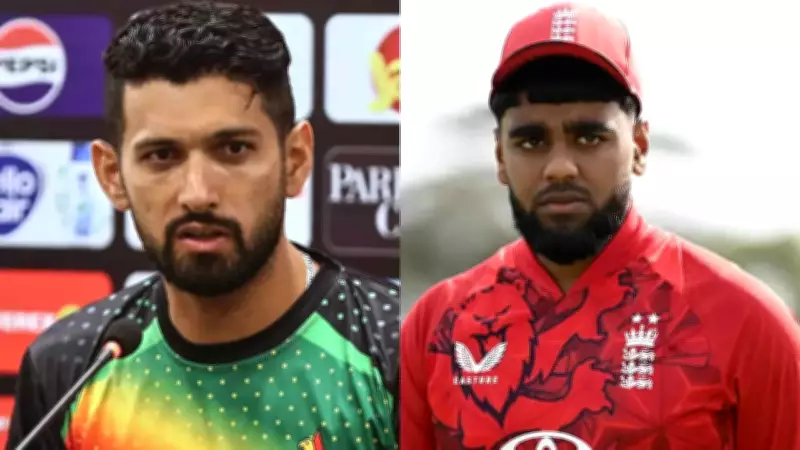
Zimbabwe captain Sikandar Raza's journey began with an entirely different dream. His move from Sialkot to Zimbabwe was far from straightforward, involving unexpected detours. He initially aspired to become a pilot and even earned a degree in computing from a university in Glasgow before cricket finally took center stage after his family's relocation to Zimbabwe.

"The World Cup is really crucial in every cricketer’s life. And I always think that for Zimbabwe to gain more respect in world cricket, participating in World Cups plays a huge part," Raza stated on the sidelines of the SA20. "All I’m looking at is trying to keep doing the things I’m doing to the best of my ability, and hopefully my performances can inspire other Sikandars in Zimbabwe and across the world." At 39, his goal is clear: to inspire the next generation.
Then there is USA fast bowler Ali Khan, whose performance against Pakistan in the previous T20 World Cup turned him into an overnight sensation. The two sides are scheduled to meet again on February 10, adding another chapter to this narrative.
A Global Map of Modern Migration
From Shayan Jahangir in the USA to Rehan Ahmed and Adil Rashid representing England, and from Italy and Scotland to Oman and Canada, the 2026 tournament roster reads like a map of modern migration. A sport once segregated along racial lines in Africa and divided by social strata in England and Australia has evolved into a more inclusive and diverse arena.
Notable Pakistan-origin players set to feature in the T20 World Cup 2026 include:
- USA: Shayan Jahangir, Ali Khan, Mohammad Mohsin
- Netherlands: Saqib Zulfiqar
- Zimbabwe: Sikandar Raza
- Oman: Mohammad Nadeem, Shakeel Ahmad, Hammad Mirza, Wasim Ali, Shah Faisal, Nadeem Khan, Shafiq Jan, Aamir Kaleem
- England: Rehan Ahmed, Adil Rashid
- Italy: Zain Ali, Ali Hasan, Syed Naqvi
- Scotland: Safyaan Sharif
- Canada: Saad Bin Zafar
- UAE: Muhammad Waseem, Muhammad Arfan, Junaid Siddiqui, Haider Ali, Muhammad Farooq, Muhammad Jawad Ullah, Muhammad Zohaib, Rohid Khan
The 2026 T20 World Cup promises to be more than just a cricket tournament; it will be a celebration of global interconnectedness, where heritage and opportunity converge on the world's sporting stage, redefining what it means to represent a nation in the 21st century.