Suryakumar Yadav Attributes India's Fearless T20 Approach to Rohit Sharma's Leadership
In the lead-up to the recent T20 World Cup, captain Suryakumar Yadav was questioned about the all-out attacking mindset that has become synonymous with the Indian cricket team. Despite India's impressive winning streak prompting such inquiries, Suryakumar swiftly corrected the narrative, shifting credit away from himself.
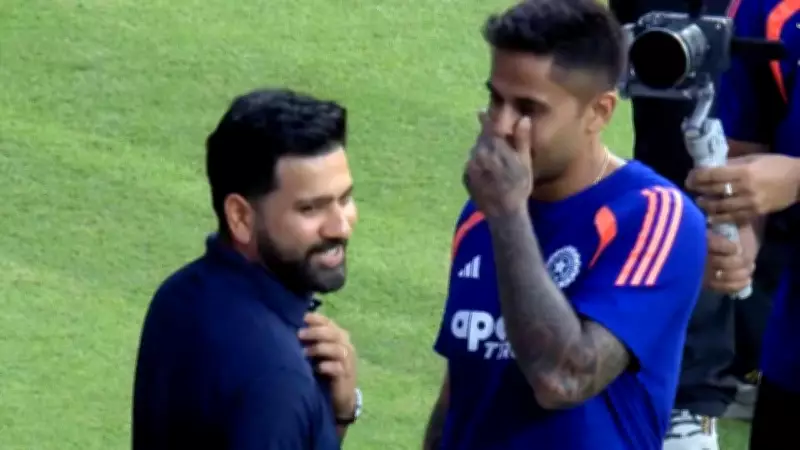
"It's true that we are playing that form of cricket, but it's not me who started it," Suryakumar emphasized. "We started playing this brand of cricket under Rohit," he explained, highlighting the profound debt the team owes to its former captain. Having played under Rohit Sharma for both India and the Mumbai Indians, Suryakumar's insights underscore a deep-seated transformation.
The Mindset Shift That Redefined Indian T20 Cricket
This revolutionary change in philosophy was first introduced by Rohit Sharma in collaboration with then-coach Rahul Dravid, laying the foundation for India's current dominance in T20 cricket. To grasp the full impact, one must revisit how this evolution unfolded.

After a stellar introduction to T20 with the inaugural World Cup victory under MS Dhoni in 2007, India gradually adopted a style that became increasingly outdated. Throughout the 2010s, the team remained competitive under Dhoni and later Virat Kohli, yet their failure to secure another World Cup title signaled underlying issues.
The Turning Point: A Semifinal Defeat That Sparked Change
The pivotal moment likely occurred during the 2022 T20 World Cup in Australia, where India suffered a crushing 10-wicket loss to England in the Adelaide semifinal. After posting 168 runs, India watched helplessly as England chased down the target in just 16 overs.
This harsh defeat prompted Rohit Sharma to recognize the urgent need for a complete overhaul in approach. The transformation began with the opening partnership, as Rohit personally embraced the role of an aggressive starter from the first ball. Previously, scoring 50 runs in the Powerplay was considered satisfactory.
Drawing inspiration from teams like Australia and England, Rohit determined that India should target 75 runs in the initial six overs, regardless of early wickets. This philosophy aimed to seize control from the outset, a strategy Rohit spectacularly demonstrated during the 2024 World Cup in St. Lucia with a blistering 41-ball 92 that eliminated Australia.
Strategic Sacrifices and Bowling Innovations
Implementing this fearless approach required significant tactical adjustments. Rohit shifted from four specialist bowlers to three, supported by three or four all-rounders. In 2024, this meant Ravindra Jadeja, Axar Patel, Shivam Dube, and Hardik Pandya backing up Jasprit Bumrah, Arshdeep Singh, and Kuldeep Yadav.
This structure allowed batters to play with freedom, knowing coverage extended to number eight, while specialist bowlers shouldered greater responsibility. The emergence of Jasprit Bumrah at his peak provided crucial support, with his economical spells consistently giving India an edge.
Suryakumar Yadav's Evolution and Continuation of the Philosophy
Following the retirements of Rohit Sharma, Virat Kohli, and Ravindra Jadeja after 2024, Suryakumar Yadav assumed leadership and elevated this philosophy. His partnership with coach Gautam Gambhir, who shares similar beliefs, proved instrumental.
Suryakumar identified Abhishek Sharma as his primary opener, encouraging him to maintain his aggressive style. "Surya-bhai keeps telling me to go on playing like this. He follows my game closely, which gives me a lot of confidence," Abhishek remarked after an IPL match.
Despite Abhishek's fluctuating form in the World Cup, India's deep batting lineup—featuring eight batters—never retreated. Sanju Samson, who secured his place later in the tournament, adopted the same mindset, with team management ensuring he retained his attacking approach despite earlier struggles.
This unwavering fearlessness enabled India to post scores of 256-4 and 253-7 in crucial matches against Zimbabwe and England, and successfully chase 199 against the West Indies.

Challenges and Conviction in the Face of Adversity
The aggressive strategy came with risks, placing immense pressure on all-rounders, especially with mystery spinner C Varun losing form. Yet Suryakumar, like Rohit before him, trusted in Jasprit Bumrah's prowess to mitigate these challenges. Hardik Pandya rediscovered his form, Arshdeep Singh remained reliable, and Axar Patel delivered in critical moments.
After a defeat to South Africa, questions arose about the philosophy's validity. However, Suryakumar remained steadfast, drawing confidence from his experiences as both player and captain under Rohit's mentorship.
"In sports, wins and losses keep happening. Everybody works hard, sometimes it works and sometimes it doesn't. I have learnt this from Rohit that in life, being balanced is important. I have never seen his character change, through good or bad times," Suryakumar reflected, paying tribute to his predecessor.
This clarity of thought propelled India to previous successes and now serves as the blueprint for their reign as undisputed T20 world champions, cementing a legacy of bold, transformative cricket.