Houston Texans Lock Down Will Anderson Jr. with Historic Contract Extension
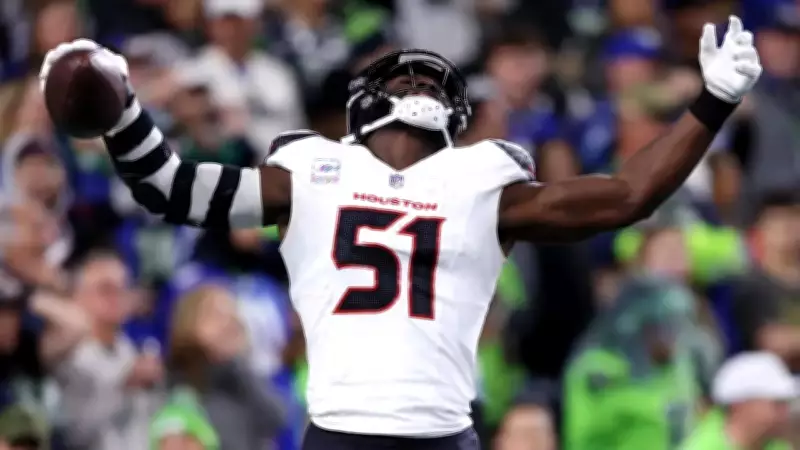
The Houston Texans have acted decisively to secure one of the NFL's most formidable defensive talents, finalizing a record-breaking contract extension with edge rusher Will Anderson Jr. after weeks of behind-the-scenes negotiations. The deal, confirmed on Friday, ensures the 24-year-old star remains with the franchise throughout his athletic prime, underscoring a clear strategic commitment to building a championship-caliber defense.
Unprecedented Financial Commitment to a Defensive Star
Why have the Texans positioned Will Anderson Jr. as the highest-paid non-quarterback in league history? The answer lies in his extraordinary and rapid ascent. Over just three professional seasons, Anderson has amassed an impressive 30 sacks, earned two Pro Bowl selections, secured the Defensive Rookie of the Year award, and received a first-team All-Pro honor. His performance last season was particularly dominant, setting personal bests with 54 tackles and 12 sacks, while finishing a close second to Myles Garrett in the Defensive Player of the Year voting.
The contract details are staggering. According to NFL Network insider Ian Rapoport, the Texans and All-Pro edge Will Anderson Jr. have agreed to a monumental 3-year, $150 million extension, with $134 million guaranteed. This agreement makes Anderson the highest-paid non-quarterback in NFL history. The deal structure includes a substantial $32 million signing bonus and $100 million in fully guaranteed money, along with a rare no-trade clause, negotiated by agent Nicole Lynn of Klutch Sports. These terms unequivocally demonstrate Anderson's central role in the Texans' future plans.

A Calculated Organizational Strategy Focused on Defense
This landmark signing is not an isolated event. General Manager Nick Caserio has been systematically investing heavily in the defensive unit over the past year, allocating significant resources to other key players like Danielle Hunter and Derek Stingley Jr. The pattern is unmistakable: Houston is not merely assembling a competent defense but is constructing a premium, high-cost unit engineered to dictate the flow of games and provide a consistent competitive edge.
What makes this approach particularly notable is the contrasting investment on the offensive side of the ball. Quarterback C.J. Stroud continues to play under his cost-effective rookie contract following a season of variable performance in 2025. Beyond standout receiver Nico Collins, the offensive roster carries relatively modest financial obligations. Even the combined salary cap impact of the entire offensive line remains lower than what many teams allocate to a single elite tackle. This represents a deliberate and calculated imbalance in team building.
Navigating Risks and Historical Precedents
However, this strategy is not without its inherent risks, as recent postseason disappointments have highlighted. Despite robust defensive performances, critical turnovers and inconsistent quarterback play have led to decisive playoff losses, including a 28–16 defeat in Foxborough characterized by five giveaways. While Houston's defense has consistently held its ground, the offense has occasionally failed to match that level of execution.
Historical context provides mixed guidance. While elite defenses have famously propelled teams to Super Bowl victories, sustaining that level of dominance over multiple seasons is exceptionally rare. This reality renders Houston's defensive-centric blueprint both audacious and potentially fragile, placing immense pressure on the unit to perform at an elite level consistently.
Nevertheless, the Texans' front office appears confident in this strategic wager. With C.J. Stroud's own contract extension decision approaching within the next two years, the current financial window provides the flexibility to continue augmenting defensive talent while simultaneously seeking offensive solutions through the draft. Recent draft selections indicate that this dual-track effort is already actively underway.

In essence, the Houston Texans are not adhering to the modern NFL blueprint that often prioritizes offensive firepower and quarterback investment. Instead, they are boldly challenging that convention. By securing Will Anderson Jr. with this historic contract, the franchise has made its philosophical stance and competitive ambition unmistakably clear to the entire league.