UAE Cricket Captain Muhammad Waseem Declares Team Unity Amidst India-Pakistan Tensions
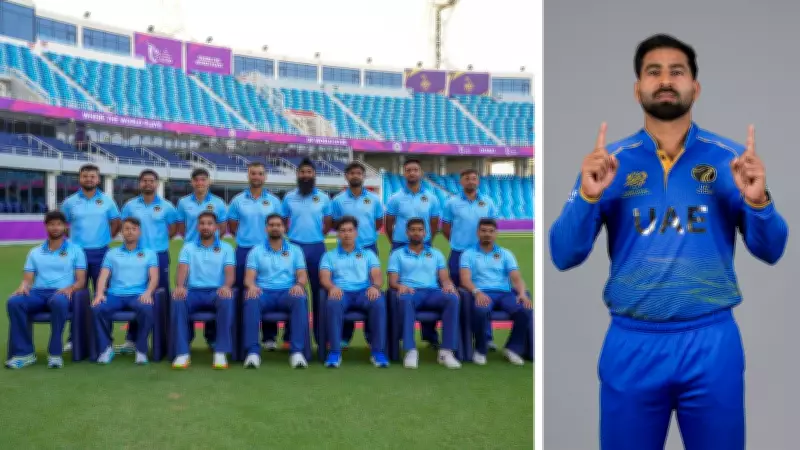
In a powerful statement ahead of the T20 World Cup, UAE cricket captain Muhammad Waseem has emphasized that there is no India-Pakistan divide within his squad. The team, composed of players with roots from both nations, stands united under the UAE flag, showcasing a model of harmony in international sports.
A Squad Reflecting Diverse Heritage
The UAE's World Cup squad is a unique blend of cricketing talent, with eight players either born in Pakistan or having Pakistani roots, and another eight hailing from India or possessing Indian heritage. This diversity extends to the coaching staff, where veteran India coach Lalchand Rajput serves as head coach, supported by former Pakistan all-rounder Yasir Arafat as his deputy.
Despite the escalating cross-border friction that has led Pakistan to consider boycotting their group game against India, this tension has not permeated the UAE dressing room. Captain Waseem proudly states that the team lives in perfect harmony, focusing solely on their shared goal of representing the UAE.

Waseem's Message of Unity
"In this team, there is no India or Pakistan divide. We are all representing the UAE, and we are proud of it," Waseem declared. He elaborated on the team's camaraderie, noting, "We play together, we eat together, and we spend a lot of time together. There is nothing like India or Pakistan in our time. We have come prepared and will look to win a few games."
This sentiment was echoed during the Asia Cup last September, where Waseem reiterated, "No, we are not talking about that (Indo-Pak tensions) as we play a lot of cricket together. We are like a family here. There is no Indian and no Pakistani. We play for the UAE team. We play as a family and live as a family."
Broader Context of India-Pakistan Cricket Relations
The backdrop to Waseem's comments is a period of strained cricketing ties between India and Pakistan. During the Asia Cup, India captain Suryakumar Yadav refused to shake hands with Pakistan counterpart Salman Agha in all three games. Additionally, India declined to accept the trophy after winning the final, as the ceremony involved shaking hands with Asian Cricket Council chief Mohsin Naqvi, who is from Pakistan and serves as its interior minister.
Heightened drama, including potential pull-out threats by Pakistan, surrounded the tournament. More recently, Bangladesh's decision to boycott the World Cup over the Mustafizur Rahman issue prompted the PCB to announce they would not meet India in the group game on February 15, though negotiations are ongoing to reconsider this stance.
Associate Nations as Models of Integration
The UAE is not alone in fielding a mixed squad. Other associate nations like Oman, Canada, the USA, and the Netherlands also include immigrants from Pakistan and India in their teams. While Canada and the Netherlands often feature players with dual citizenship or that of their adopted country, in the Middle East, many still hold passports from their countries of origin, yet compete under a unified national banner.
As the T20 World Cup approaches, the UAE team, led by Waseem, is focused on their campaign, aiming to make an impact on the global stage. Their unity serves as a testament to the power of sports in bridging divides and fostering collaboration beyond political boundaries.