USA's Unlikely Heroes Stun Cricket Superpower India in T20 World Cup Thriller
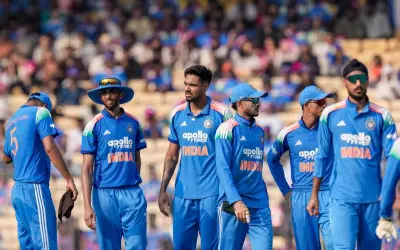
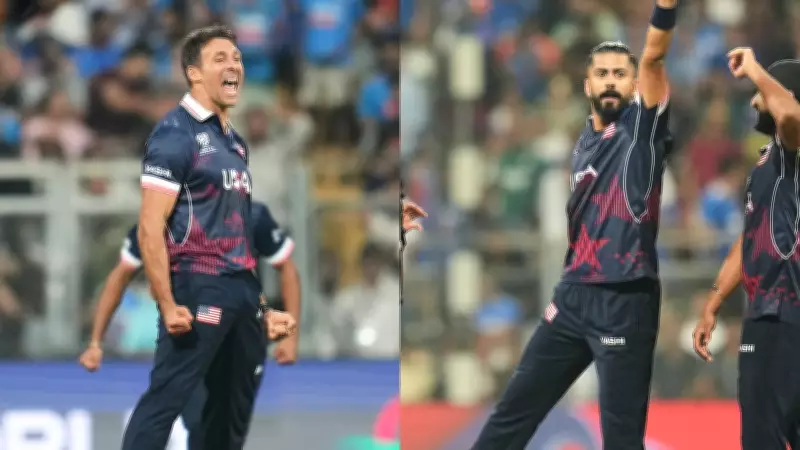
In one of the most dramatic upsets in cricket history, the United States cricket team delivered a stunning blow to tournament favorites India during the opening day of the T20 World Cup. The American bowling duo of Shadley van Schalkwyk and Ali Khan combined forces to dismantle India's star-studded batting lineup, reducing the cricketing giants to a shocking 77 for 6 in just 12.4 overs at Mumbai's packed Wankhede Stadium.
The Collapse That Shook Cricket
The Indian batting order, featuring some of the most celebrated T20 specialists in world cricket, crumbled under pressure from two bowlers whose journeys to this moment defied conventional cricket narratives. Van Schalkwyk, the crafty seamer from South Africa, and Ali Khan, the express pace bowler from Pakistan via America, orchestrated a collapse that left the capacity crowd in stunned silence.
The sixth over proved particularly devastating as Van Schalkwyk claimed three crucial wickets in rapid succession. Ishan Kishan fell first, attempting an aggressive shot that found the fielder at mid-off. Tilak Varma followed, surprised by a well-directed short ball that he could only pull tamely to midwicket. The final blow came on the last delivery of the over when Shivam Dube, facing his first ball, was completely deceived by a perfectly executed slower delivery that he edged to short fine-leg.

From Troublemaker to Match-Winner: Van Schalkwyk's Journey
Shadley van Schalkwyk's path to cricketing glory was anything but straightforward. Growing up in South Africa, he struggled academically at Wynberg High School, the same prestigious institution that produced cricket legend Jacques Kallis. Unlike his illustrious predecessor, Van Schalkwyk found himself frequently visiting the principal's office during his early school days.
"I hated the first week there so much I phoned home one day from the school to ask if I could leave," Van Schalkwyk recalled in an interview. "My mom said, 'You weren't accepted by any other schools, so you aren't leaving.'"
This initial rejection ultimately became his salvation. The school's approach of allowing him to be himself rather than forcing conformity helped Van Schalkwyk channel his energies into cricket. With academics proving challenging, he poured all his focus into developing his bowling skills, transforming classroom frustrations into sporting motivation. His journey eventually led to American citizenship and the most significant performance of his career on cricket's biggest stage.
The Immigrant Who Refused to Give Up: Ali Khan's Story
While Van Schalkwyk was finding his footing in Cape Town, Ali Khan was experiencing what he believed was the end of his cricket dreams. After moving from Pakistan to the United States with his family seeking better opportunities, the teenage Khan assumed his cricket career was over.
"When I first moved to America, I totally gave up on cricket as I thought nobody even knew what cricket was out there," Khan explained. His cricket equipment made the journey from Pakistan but seemed destined to become mere souvenirs of abandoned aspirations.
Undeterred by the lack of proper facilities or teammates, Khan found an unconventional training partner: a wall. "I would just play against myself using a wall and pretend to be Shoaib Akhtar bowling to Shahid Afridi," he revealed. "But in my heart, I thought the days of playing cricket properly were over for me and it would just be me against the wall."
Those solitary sessions against a wall transformed into genuine cricketing prowess. Against India, Khan consistently clocked speeds over 140kmph, dismissing Abhishek Sharma with a perfectly executed delivery that found the fielder at sweeper cover. His pace and movement troubled even the most experienced Indian batsmen, his bowling carrying the echoes of all those hours spent practicing alone in America.
A Statement Performance
The collapse of India's batting lineup to 72 for 5 didn't appear as a mere fluke but rather as a deliberate statement from a team of players who have temporarily left their regular professions to compete in the tournament. As USA captain Saurabh Netravalkar had stated before the match: "We shall then see what happens."

What happened was a performance that will be remembered in cricket history. Two men from vastly different backgrounds—Van Schalkwyk, the academic underachiever who discovered purpose through sport, and Ali Khan, the immigrant who kept his dream alive through sheer determination—combined to create one of the most remarkable moments in World Cup cricket.
Their triumph represents more than just a sporting upset; it symbolizes the power of perseverance, the value of embracing individuality, and the remarkable possibilities that emerge when talent meets opportunity. As the T20 World Cup continues, this performance serves as a powerful reminder that in cricket, as in life, the most compelling stories often come from the most unexpected places.